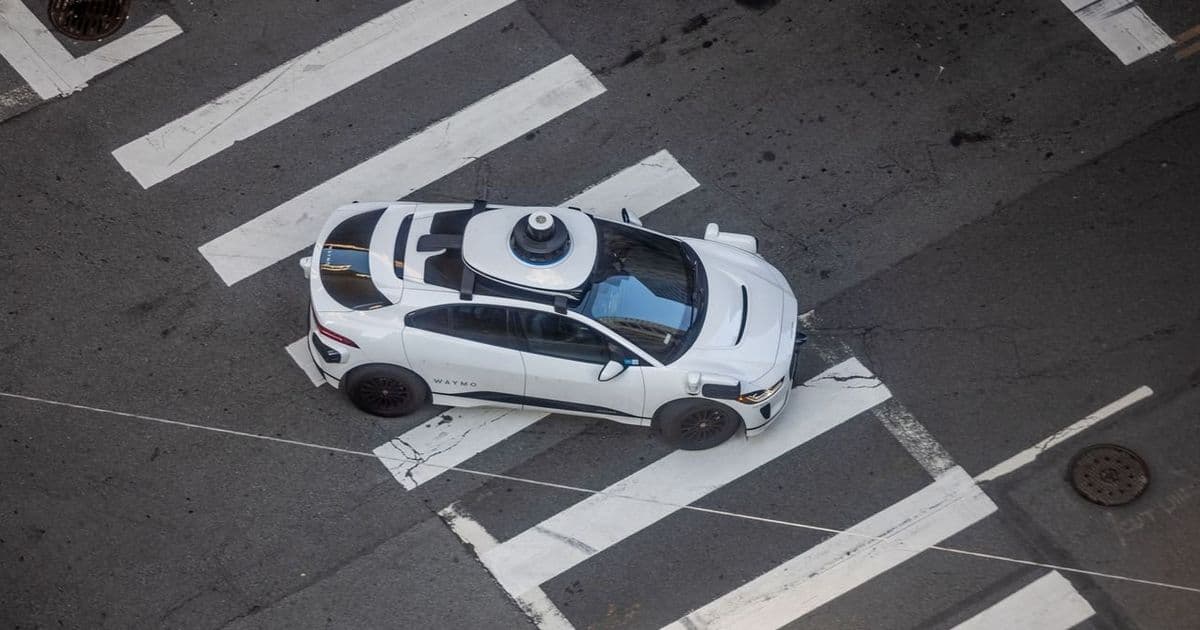
Emails and NTSB reports reveal Waymo's months-long struggle to teach robotaxis to stop for school buses in Austin, raising questions about autonomous vehicle learning and adaptation.
Emails, text messages, and National Transportation Safety Board (NTSB) reports obtained by Wired reveal that Waymo and an Austin school district struggled for months to train robotaxis to stop for school buses as required by law. The incidents in Austin raise questions about how self-driving cars "learn" and adapt to their surroundings.
The documents show that between September 2024 and February 2025, Waymo vehicles repeatedly failed to stop for school buses with flashing red lights and extended stop signs, violating Texas law. School district officials reported dozens of incidents where Waymo cars either passed stopped buses or failed to recognize them as requiring a stop.
According to the reports, Waymo engineers initially blamed the vehicles' cameras for not properly detecting the extended stop signs on school buses. The company then attempted to update its software to better recognize school bus signals, but the problem persisted. In some cases, Waymo vehicles stopped for school buses but then proceeded to pass them anyway, creating dangerous situations for children boarding or exiting the buses.
The documents reveal that the Austin Independent School District (AISD) had to create a dedicated email address to report Waymo incidents, receiving complaints from bus drivers, parents, and school staff. One email from an AISD transportation official stated that the district was "extremely concerned" about the safety implications and requested that Waymo provide real-time notifications when incidents occurred.
Waymo's response, according to the records, involved sending engineers to Austin to observe school bus routes and collect data. The company also worked with the school district to map specific bus stops and create geofenced areas where vehicles would be required to stop. However, these measures proved insufficient, as Waymo cars continued to encounter school buses outside of mapped areas or in unexpected situations.
The NTSB reports indicate that the fundamental issue was Waymo's autonomous system's inability to generalize the concept of stopping for school buses beyond specific, pre-programmed scenarios. While the vehicles could recognize individual school buses in controlled conditions, they struggled with the broader principle that any school bus with flashing lights and an extended stop sign requires a complete stop, regardless of location or time of day.
This case highlights a critical challenge in autonomous vehicle development: the difference between pattern recognition and true understanding. Waymo's system could identify school buses as objects but failed to grasp the underlying safety principle that governs human behavior around them. The months-long struggle to resolve this issue suggests that even sophisticated AI systems may require extensive, targeted training for seemingly basic driving tasks.
The Austin incidents are particularly concerning because they occurred in a city where Waymo has been operating since 2021. The fact that such a fundamental safety issue went unresolved for months raises questions about the adequacy of current testing and validation processes for autonomous vehicles. It also underscores the complexity of real-world driving scenarios that may not be fully captured in controlled testing environments.
Waymo has not publicly commented on the specific incidents documented in the NTSB reports, but the company has previously stated that safety is its top priority and that it continuously works to improve its autonomous systems. The Austin school bus problem represents a significant challenge to that commitment, as it involves the safety of children—one of the most vulnerable groups on the road.
The case also illustrates the broader tension between technological innovation and public safety. While autonomous vehicles promise to reduce human error and improve road safety, incidents like these demonstrate that current AI systems may have blind spots that human drivers would instinctively understand. The months-long struggle to teach Waymo cars to stop for school buses suggests that the path to fully autonomous driving may be more complex and time-consuming than many industry leaders have predicted.
As autonomous vehicle deployment continues to expand, incidents like the Austin school bus problem will likely become more common, highlighting the need for robust oversight, transparent reporting, and collaborative problem-solving between technology companies, regulators, and local communities. The question of how self-driving cars "learn" and adapt to their surroundings remains one of the most critical challenges in the field of autonomous transportation.
Comments
Please log in or register to join the discussion