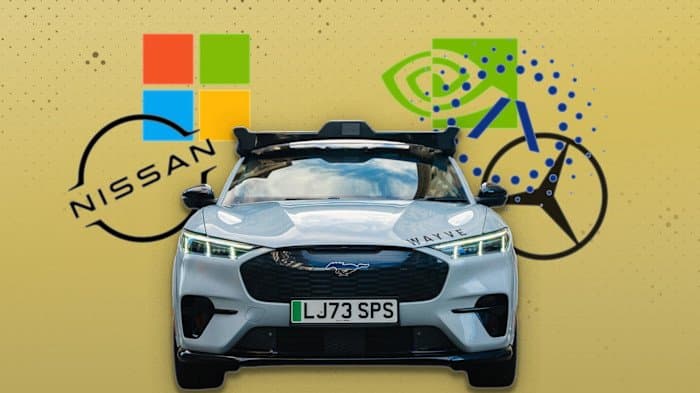
London-based autonomous vehicle startup Wayve has raised $1.2 billion in Series D funding at an $8.6 billion post-money valuation, with major automakers Mercedes-Benz, Stellantis, and Nissan joining the investment round as the company prepares to launch its robotaxi service in London this year.
London's autonomous vehicle scene just got a massive vote of confidence as Wayve, a self-driving technology startup, secured a staggering $1.2 billion in Series D funding at an $8.6 billion post-money valuation. The round attracted some of the biggest names in the automotive industry, with Mercedes-Benz, Stellantis, and Nissan joining as investors, signaling a significant shift in how traditional automakers view the future of transportation.
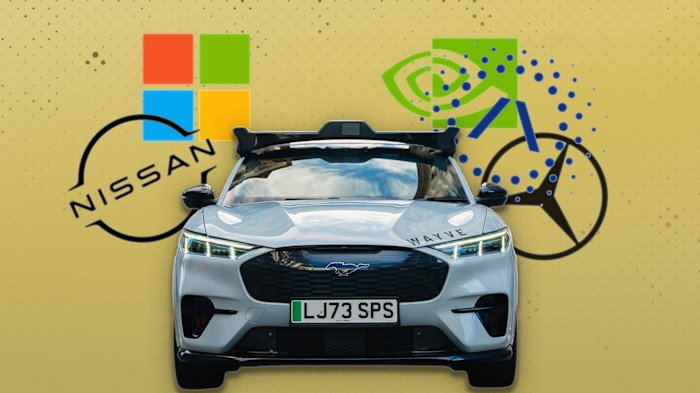
The funding comes at a crucial moment for Wayve, which is gearing up to launch its robotaxi service in London later this year. This ambitious timeline puts the company in direct competition with established players like Waymo and Cruise, but with a distinctly European flavor and approach.
What Makes Wayve Different
Unlike many of its competitors who rely on expensive sensor suites and pre-mapped environments, Wayve has taken a software-first approach to autonomous driving. The company's technology focuses on end-to-end machine learning that can adapt to new environments without extensive pre-mapping or specialized hardware.
This approach has attracted attention from automakers who see potential in a more scalable and cost-effective solution. Rather than building their own autonomous systems from scratch, companies like Mercedes and Nissan can potentially integrate Wayve's technology into their existing vehicle platforms.
The Automaker Perspective
The participation of Mercedes-Benz, Stellantis, and Nissan in this funding round is particularly noteworthy. These aren't just passive investors throwing money at a trendy technology – they're strategic partners who see autonomous driving as central to their future business models.
For Mercedes, which has been developing its own Drive Pilot system, Wayve's technology could complement their existing efforts and provide additional capabilities. Stellantis, the parent company of brands like Peugeot, Citroën, and Fiat, sees potential in bringing autonomous technology to a broader range of vehicles across different market segments.
Nissan's involvement is especially interesting given their history with autonomous driving through the ProPILOT system. The Japanese automaker has been working on self-driving technology for years, but partnering with Wayve could accelerate their timeline and provide access to cutting-edge AI capabilities.
The London Advantage
Launching a robotaxi service in London presents both opportunities and challenges. The city's complex urban environment, with its narrow streets, heavy traffic, and diverse weather conditions, makes it an ideal testing ground for autonomous technology.
However, London also has some of the strictest regulations for autonomous vehicles in the world. The company will need to navigate a complex approval process and demonstrate that its technology can operate safely in one of the world's most challenging driving environments.
The Bigger Picture
The investment in Wayve reflects a broader trend in the autonomous vehicle industry. After years of hype and disappointment, there's renewed optimism about the commercial viability of self-driving technology.
Several factors are driving this renewed interest:
Improved AI capabilities: Recent advances in machine learning, particularly in computer vision and decision-making, have made autonomous systems more reliable and capable.
Cost reductions: The cost of sensors and computing hardware has decreased significantly, making it more feasible to deploy autonomous systems at scale.
Regulatory progress: Governments around the world are beginning to create clearer frameworks for testing and deploying autonomous vehicles.
Commercial demand: There's growing interest from businesses in using autonomous vehicles for delivery, logistics, and transportation services.
Challenges Ahead
Despite the impressive funding round and high-profile investors, Wayve still faces significant challenges. The autonomous vehicle industry has a history of overpromising and underdelivering, and skepticism remains high among both investors and the general public.
Safety remains the paramount concern. Any incident involving a Wayve-operated vehicle could set back the entire industry and damage public trust in autonomous technology. The company will need to demonstrate not just technical capability, but also robust safety protocols and transparent communication with regulators and the public.
The competitive landscape is also intensifying. Waymo has been operating commercial robotaxi services in Phoenix for years and is expanding to new cities. Cruise, despite recent setbacks, has significant backing from General Motors and Honda. Chinese companies like Baidu and AutoX are making rapid progress in their home market.
The Road Ahead
Wayve's $1.2 billion funding round represents one of the largest investments in European autonomous vehicle technology to date. It suggests that investors and automakers see significant potential in the company's approach and timeline.
The success of Wayve's London robotaxi launch could have implications far beyond the city itself. If the company can demonstrate that its technology works reliably in London's challenging conditions, it could pave the way for expansion to other European cities and potentially compete with established players in the US market.
However, the autonomous vehicle industry has learned that technology development is only part of the equation. Success will require navigating complex regulatory environments, building public trust, and creating sustainable business models that can operate profitably at scale.
For now, Wayve has the funding, the technology, and the strategic partnerships to make a serious run at the autonomous vehicle market. Whether they can deliver on their ambitious plans remains to be seen, but the industry will be watching closely as they prepare to launch their robotaxi service in London later this year.
The $1.2 billion bet on Wayve represents more than just an investment in a single company – it's a statement about the future of transportation and the role that autonomous vehicles will play in it. As traditional automakers increasingly partner with tech companies and AI startups, the lines between the automotive and technology industries continue to blur, potentially reshaping how we think about mobility in the decades to come.
Comments
Please log in or register to join the discussion