MIT.nano's START.nano program has more than doubled its startup cohort to 16 new companies in 2025, bringing total participation to over 32 ventures developing solutions in health, climate, energy, and quantum computing with access to MIT's world-class nanofabrication facilities.
The MIT.nano START.nano accelerator program has significantly expanded its impact on hard-tech innovation, welcoming 16 new startups in 2025 to bring its total cohort to over 32 companies. This more than doubling of new participants from the previous year demonstrates the growing demand for access to MIT's world-class nanofabrication facilities and the broader innovation ecosystem.
Expanding Access to Critical Infrastructure
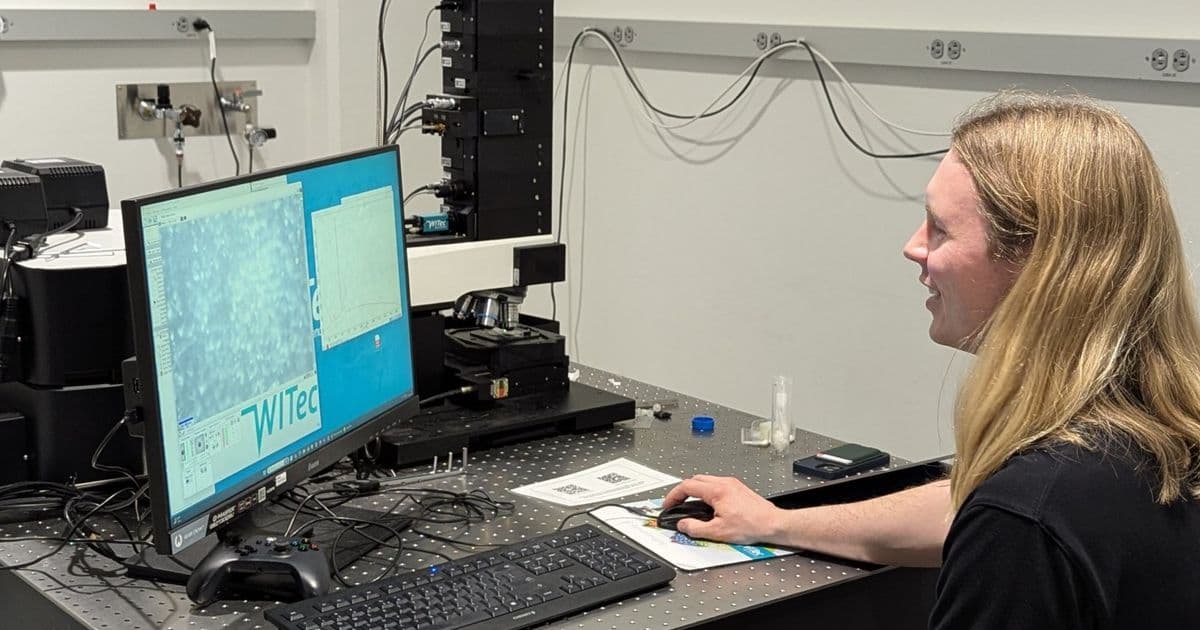
The START.nano program provides early-stage companies with discounted access to MIT.nano's state-of-the-art laboratories, including the Characterization.nano facility where startups can leverage advanced microscopy and analytical tools. David Lundberg PhD '24, co-founder and CTO of Rheyo, uses the WITec alpha300 apyron Confocal Raman microscope at Characterization.nano to image a tooth, exemplifying how these resources enable cutting-edge research and development.
Beyond physical infrastructure, participants gain entry to MIT's extensive innovation network. The program includes opportunities to present at exclusive events such as the newly launched PITCH.nano competition, where startups can showcase their technologies to potential investors and industry partners. This combination of technical resources and networking opportunities creates a powerful ecosystem for hard-tech ventures navigating the challenging transition from laboratory research to commercial products.
Diverse Portfolio of Hard-Tech Solutions
The 2025 cohort represents a remarkably diverse range of technological innovations addressing some of society's most pressing challenges. The startups are developing solutions across multiple sectors including health, climate, energy, semiconductors, novel materials, and quantum computing.
In healthcare, companies like Acorn Genetics are democratizing genetic analysis with portable sequencing technology, while Augmend Health is leveraging virtual reality and AI to improve clinical documentation and treatment decisions. Cahira Technologies is pioneering brain-computer symbiosis through autonomous neural implants, potentially revolutionizing treatment for intractable neurological conditions.
The climate and energy sector features particularly strong representation. Addis Energy is developing innovative methods to produce ammonia using the earth's natural energy resources, while Electrified Thermal Solutions is reinventing firebrick technology to enable industrial electrification. Copernic Catalysts is using computational modeling to create sustainable catalysts for chemical production, and Mantel Capture is designing carbon capture materials capable of operating at the high temperatures found in industrial processes.
Semiconductor and quantum computing innovations are also prominent, with companies like Vertical Semiconductor commercializing advanced gallium nitride technology, nOhm Devices developing cryogenic electronics for quantum systems, and Qunett building foundational hardware for deployable quantum networks. Quantum Formatics is applying proprietary AI to accelerate superconductor discovery, potentially unlocking new frontiers in materials science.
MIT Pedigree and Broader Impact
While MIT affiliation is not a requirement for participation, the program has attracted significant MIT talent. Five of the 16 new companies are led by MIT alumni, with an additional three having MIT connections. Overall, 49 percent of START.nano startups are founded by MIT graduates, highlighting the program's strong ties to the Institute's entrepreneurial ecosystem.
The program's impact extends beyond individual company success. By supporting hard-tech startups through the critical early stages, START.nano helps bridge the gap between academic research and commercial innovation. This translation of fundamental research into market-ready technologies is essential for addressing complex global challenges that require sophisticated engineering solutions.
Strategic Advantage for Early-Stage Ventures
Participants consistently report that START.nano provides more than just access to facilities—it offers a strategic advantage in their development journey. Cynthia Liao MBA '24, CEO and co-founder of Vertical Semiconductor, emphasizes that the program "isn't just a resource. It's a strategic advantage that accelerates our roadmap, allowing us to iterate quickly to meet customer needs and strengthen our competitive edge."
Jason Gibson, CEO and co-founder of Quantum Formatics, notes that for companies working "at the frontier of superconductor discovery, the combination of infrastructure and community has been irreplaceable." This sentiment reflects the program's success in creating an environment where technical innovation can flourish through both physical resources and collaborative networks.
Looking Forward
With over 32 active companies and 11 graduates who have moved beyond prototyping into commercialization, START.nano has established itself as a vital component of the hard-tech startup ecosystem. The program's growth trajectory suggests increasing recognition of the importance of specialized support for capital-intensive, technically complex ventures that often face longer development cycles than software startups.
The success of START.nano aligns with broader trends in technology commercialization, where solutions to grand challenges in health, climate, and energy require sustained investment in physical infrastructure and deep technical expertise. By providing both the tools and the community necessary for hard-tech innovation, MIT.nano is helping to accelerate the development of technologies that could transform industries and address critical societal needs.
The program's expansion also reflects the growing importance of nanotechnology and advanced materials across diverse sectors. From quantum computing to sustainable energy to advanced manufacturing, the ability to manipulate matter at the nanoscale is becoming increasingly central to technological progress. START.nano's role in supporting companies at this frontier positions it as a key driver of innovation in the coming years.
As the program continues to grow, it will likely play an increasingly important role in translating MIT's world-class research into commercial technologies that can address global challenges. The combination of cutting-edge facilities, entrepreneurial support, and a collaborative community creates a powerful platform for hard-tech innovation that extends well beyond the boundaries of the MIT campus.
Comments
Please log in or register to join the discussion