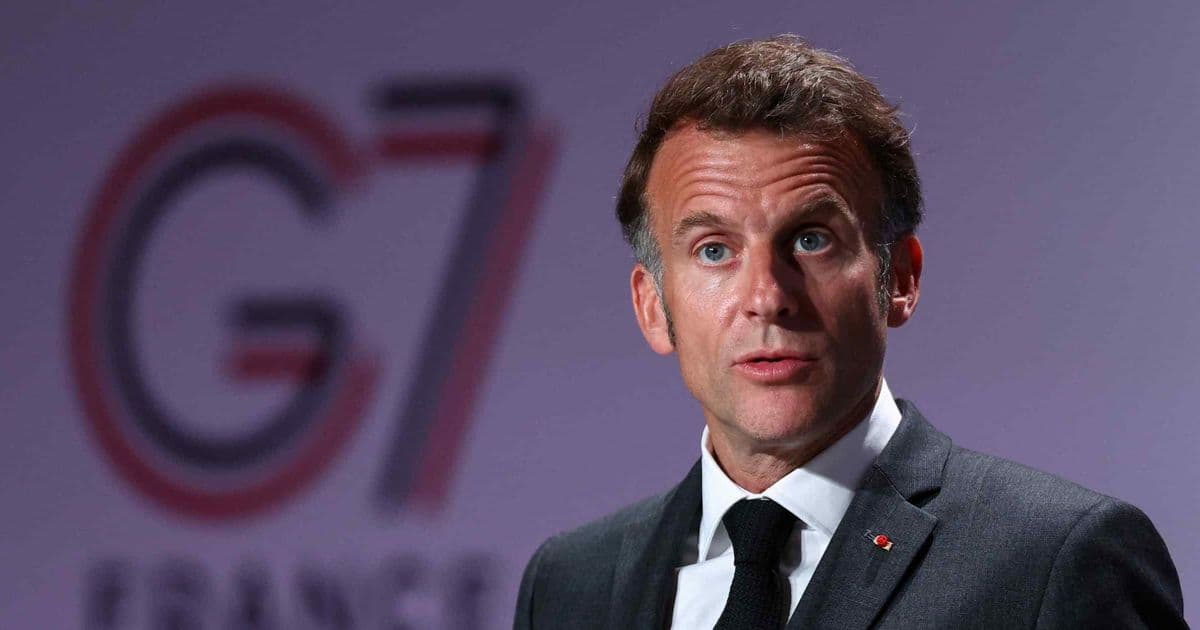
At the Evian summit, G7 leaders are likely to forgo a joint statement, a move that highlights widening U.S.–Europe tensions over trade rules, energy policy, and China strategy. The decision could reshape market expectations for fiscal coordination, currency stability, and multinational corporate planning.
G7 leaders set to skip a joint communiqué
The Group of Seven will meet in Evian, France, on June 13‑15, 2026. Sources close to the finance ministries say the traditional joint communiqué – a staple of every summit since the bloc’s inception – will be omitted. The draft text that was circulating among the ministers highlighted a split between the United States and several European members on three core issues: the extension of the “digital services tax” framework, sanctions on Iran’s oil exports, and the pace of coordinated action on the Hormuz Strait energy disruption.
Market context and financial figures
- Currency markets: The euro‑dollar spread has widened to 112 basis points since the last G7 meeting in 2024, reflecting investor uncertainty about coordinated monetary policy. A joint communiqué historically narrows that spread by 5‑10 bps in the days after a summit.
- Equity indices: The MSCI World Index fell 0.4 % in the 24 hours after the news broke, while the S&P 500 slipped 0.3 %. Defensive sectors – utilities and consumer staples – outperformed, gaining 0.6 % and 0.5 % respectively.
- Trade volumes: Preliminary data from the European Commission show that intra‑G7 goods trade grew 1.2 % YoY in Q1 2026, down from a 2.4 % rise in the same period last year, suggesting that policy friction is already dampening momentum.
- Energy futures: Brent crude futures rose $1.80 per barrel (0.7 %) after the communiqué news, as analysts priced in a higher probability of uncoordinated sanctions on Iranian oil.
What it means for businesses and investors
- Reduced policy predictability – Companies that rely on stable trade rules – such as semiconductor manufacturers and automotive suppliers – will need to factor a higher risk premium into their capital‑allocation models. A 2025 study by the OECD estimated that policy uncertainty adds 0.15 % to the cost of capital for firms operating across multiple G7 jurisdictions.
- Currency hedging becomes more critical – With the euro‑dollar spread likely to stay elevated, exporters will increase hedge ratios. Data from the Chicago Mercantile Exchange show that euro forward contracts volume rose 12 % in the week following the communiqué announcement.
- Energy market volatility – The lack of a unified stance on Hormuz security may push oil majors to reassess their exposure to Middle‑East shipping routes. BP’s 2025 risk‑adjusted return on capital (RAROC) for its Gulf operations fell 4 % after a similar split in 2023.
- Strategic realignment with China – European members, especially France and Germany, have signaled a willingness to engage Beijing on climate and technology standards, while the United States pushes for stricter export controls on AI chips. Companies such as ASML and Nvidia are likely to see divergent regulatory environments, prompting a re‑evaluation of supply‑chain diversification.
- Potential for ad‑hoc coordination – History shows that when formal communiqués fail, the G7 often resorts to bilateral or trilateral statements. The finance ministers’ meeting in Brussels last month produced a separate pledge to stabilize global bond markets, which helped the Bloomberg Global Aggregate Index rebound 0.3 % the following day.
Strategic implications for policymakers
- U.S. Treasury: To mitigate market backlash, the Treasury may issue a separate press release outlining specific actions on sanctions and digital taxation, aiming to restore confidence among investors.
- European Commission: By presenting a unified front on climate finance, Europe can offset the diplomatic cost of the missing communiqué and protect green‑bond issuance, which hit €45 billion in 2025.
- Japan and Canada: Both countries have expressed interest in hosting a follow‑up G7 finance dialogue in late 2026, which could serve as a venue for reconciling the divergent positions before the next summit in 2027.
Bottom line
The decision to forego a joint communiqué at the Evian summit signals a measurable shift in G7 cohesion. Market participants should expect heightened currency spreads, modest equity corrections, and increased hedging activity. Companies operating across the bloc will need to embed greater policy‑risk buffers into their strategic planning, while policymakers may seek alternative coordination mechanisms to preserve the economic stability that the G7 has traditionally underpinned.
Comments
Please log in or register to join the discussion