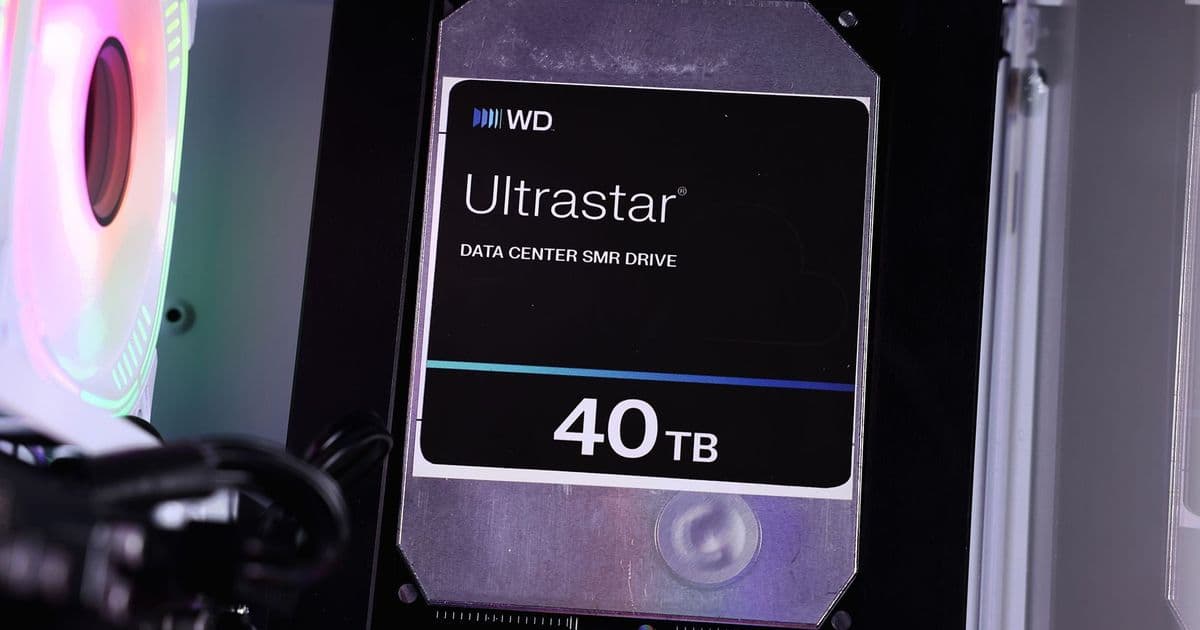
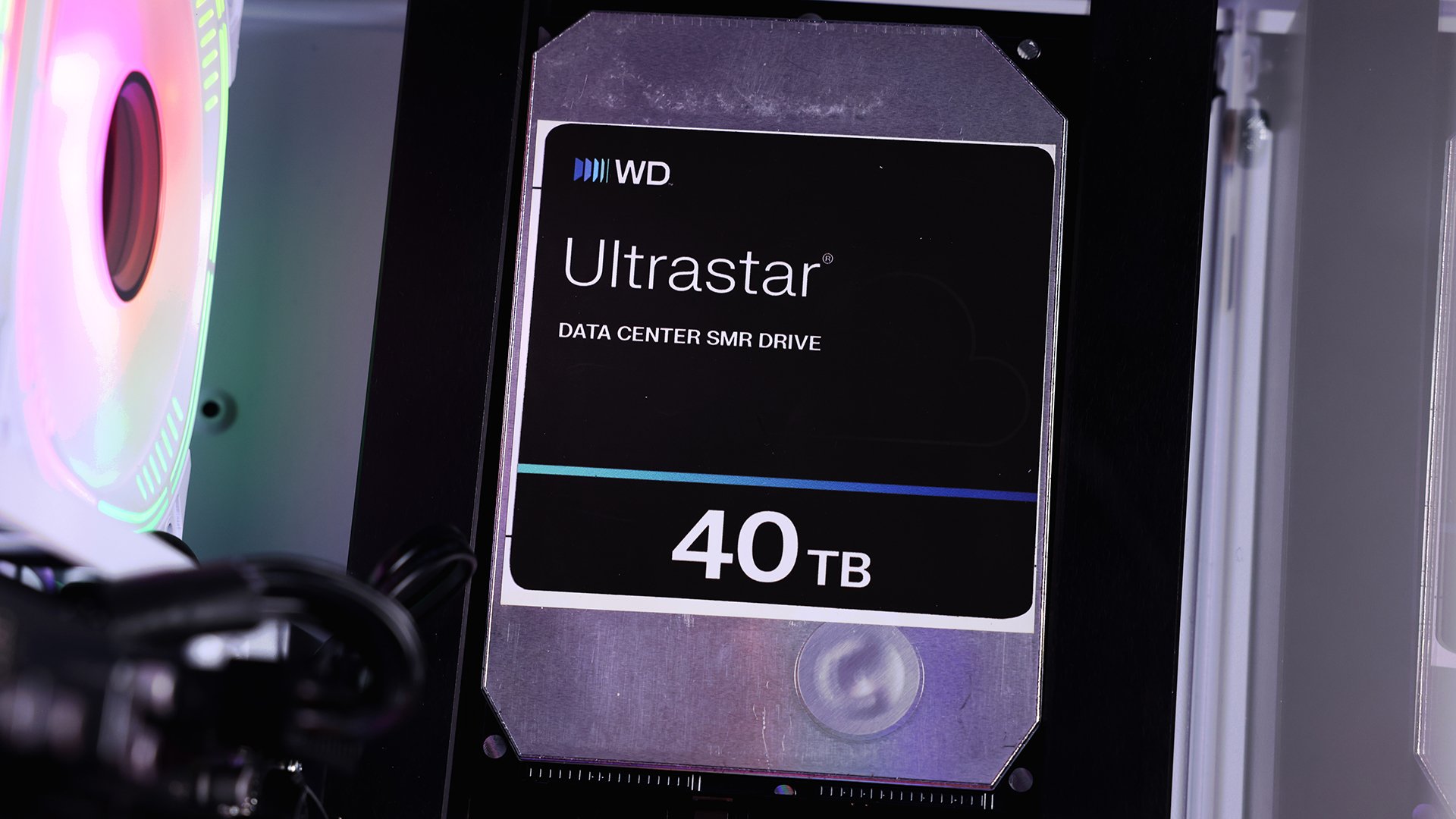
Western Digital unveils 40TB UltraSMR hard drive for 2026, plans 100TB HAMR drives by 2029, extending ePMR technology to 60TB while maintaining energy efficiency.
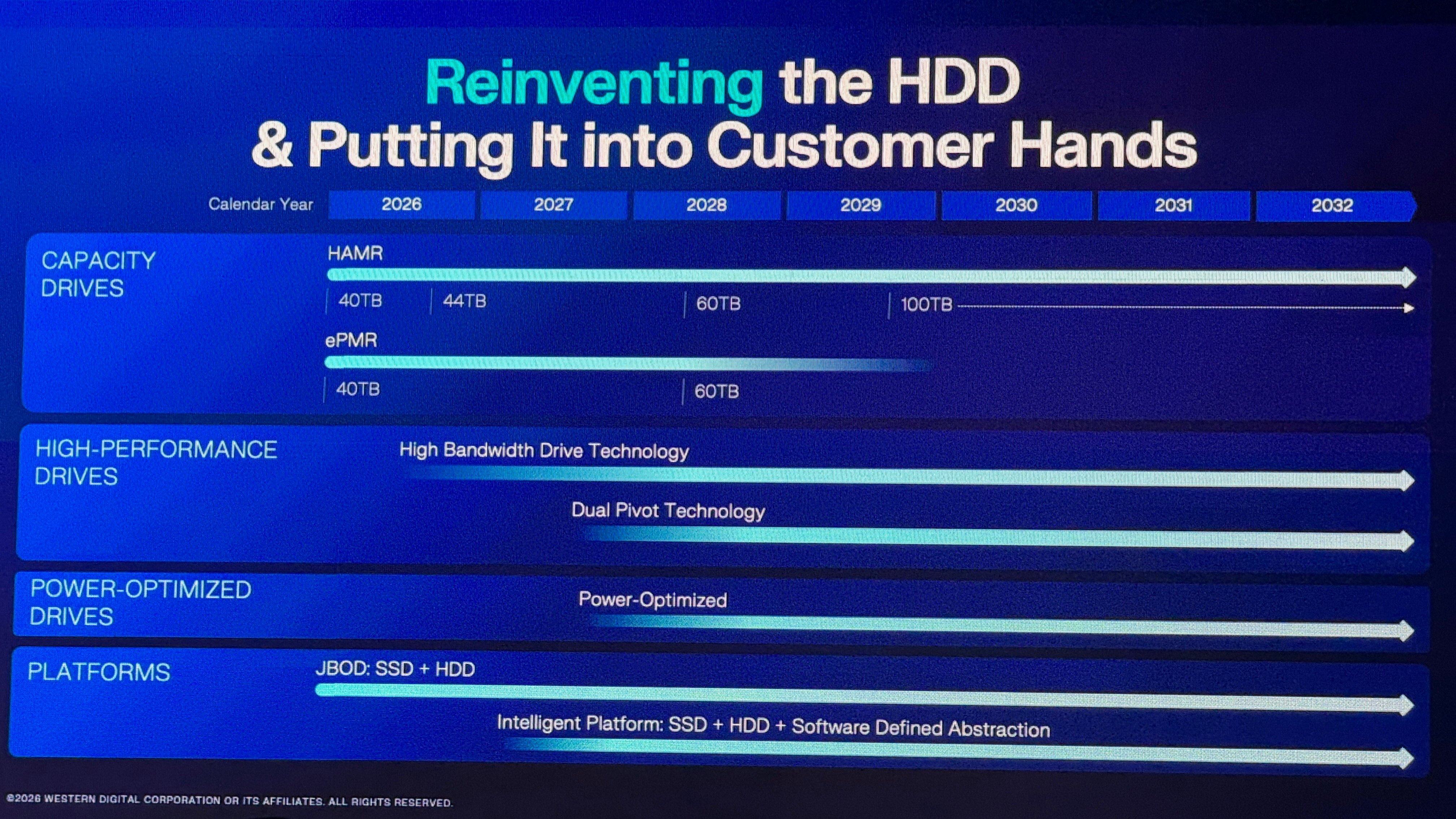
Western Digital has unveiled an ambitious roadmap for the future of hard disk drive technology, announcing plans to release a 40TB UltraSMR hard drive in the second half of 2026, followed by HAMR-based drives in 2027, with the ultimate goal of delivering 100TB HAMR hard drives by 2029.
The Evolution of HDD Technology
The company's strategy centers on extending its energy-assisted perpendicular magnetic recording (ePMR) technology to 60TB capacities, ensuring that high-capacity ePMR HDDs will coexist with HAMR drives for several years. This dual-technology approach allows hyperscalers and enterprises to adopt either technology on their own timelines without forced transitions or infrastructure disruptions.
Western Digital's current flagship product for 2026 will be the 40TB HDD based on ePMR technology with shingled magnetic recording (SMR) and UltraSMR enhancements. This drive is already being qualified by two major hyperscale customers, indicating strong industry interest in the technology.
Technical Innovations Behind the Capacity Gains
The company's roadmap reveals several key technological advancements:
ePMR Technology Extension: Western Digital plans to leverage HAMR innovations without increasing power consumption for its next-generation ePMR drives. While specific details remain undisclosed, the company likely intends to use a unified platform for both ePMR and HAMR drives featuring next-generation media that utilizes iron platinum (FePt).
Areal Density Improvements: The new media technology aims to achieve areal densities of 2.5 to 3.5 terabits per square inch, significantly higher than current capabilities. This represents a substantial leap in data storage density, enabling the dramatic capacity increases without proportional increases in physical drive size.
UltraSMR Enhancements: The 40TB drive employs advanced shingled magnetic recording with UltraSMR technology, which optimizes the overlapping track layout to maximize storage density while maintaining performance characteristics suitable for hyperscale deployments.
The HAMR Transition Timeline
HAMR technology, which uses laser heating to temporarily reduce the coercivity of the recording medium, enabling higher density recording, remains on track for mass production in 2027 after qualification by Western Digital's hyperscale customers. The company's aggressive timeline calls for:
- 2026: 40TB UltraSMR (ePMR-based)
- 2027: HAMR-based drives (capacity TBD)
- 2029: 100TB HAMR-based HDDs
This progression represents a remarkable acceleration, moving from 40TB to 100TB in less than three years. The rapid advancement suggests that Western Digital has made significant breakthroughs in HAMR technology reliability and manufacturing scalability.
Market Implications and Industry Impact
The dual-path strategy offers several advantages for enterprise customers:
Predictable Capacity Planning: Organizations can scale their storage infrastructure without worrying about technology obsolescence or forced upgrades.
Infrastructure Continuity: The architecture compatibility between ePMR and HAMR drives means existing systems can accommodate both technologies seamlessly.
Performance Optimization: Different workloads can benefit from the specific advantages of each technology - ePMR for sequential workloads and HAMR for mixed workloads requiring higher performance.
The Competitive Landscape
Western Digital's roadmap positions the company strongly against competitors in the enterprise storage market. The 40TB UltraSMR drive will likely be among the highest-capacity drives available when it launches, while the 100TB HAMR target for 2029 demonstrates the company's commitment to maintaining technology leadership.
The use of FePt media and the integration of HAMR innovations into ePMR technology suggest that Western Digital is pursuing a unified approach to future storage technologies, potentially reducing development costs and accelerating time-to-market for new capacity points.
Technical Challenges and Solutions
Achieving these capacity milestones requires overcoming several technical challenges:
Thermal Management: HAMR technology requires precise laser control to heat the recording medium without damaging surrounding areas. Western Digital's progress indicates successful solutions to these thermal management challenges.
Media Signal-to-Noise Ratio: Higher areal densities require improved signal processing and error correction to maintain data integrity. The company's roadmap suggests confidence in their ability to maintain reliability at these extreme densities.
Manufacturing Scalability: Producing drives with such high precision at scale remains challenging. The qualification process with hyperscale customers indicates that Western Digital has addressed these manufacturing challenges.
Looking Ahead: The 100TB Milestone
The 100TB HAMR drive planned for 2029 represents a significant milestone in data storage technology. To put this in perspective, a single 100TB drive could store:
- Approximately 20,000 hours of 4K video
- Over 20 million high-resolution photos
- The entire printed collection of the Library of Congress multiple times over
This capacity will be crucial for supporting the exponential growth in data generation from artificial intelligence training, high-resolution media production, and enterprise data analytics.
Conclusion
Western Digital's comprehensive roadmap demonstrates the continued relevance and evolution of hard disk drive technology in an era increasingly dominated by solid-state storage. By pursuing both ePMR and HAMR technologies in parallel, the company ensures that customers have access to the highest capacities available while maintaining the cost-effectiveness and reliability that HDDs provide.
The transition from 40TB to 100TB in less than three years, combined with the extension of ePMR technology to 60TB, represents one of the most aggressive capacity growth plans in the history of data storage. As these technologies mature and reach the market, they will enable new possibilities in data-intensive applications and help organizations manage the ever-growing volumes of digital information.
The success of this roadmap will depend on Western Digital's ability to execute on its manufacturing plans and maintain the reliability standards required by enterprise customers. However, the company's progress to date and the qualification of its 40TB drive with major hyperscale customers suggest that these ambitious goals are well within reach.
Comments
Please log in or register to join the discussion