
Apple's rumored budget MacBook with A18 Pro chip promises colorful design and iPhone-level performance, but compromises like dimmer display and slower charging raise questions about its true value compared to the MacBook Air.
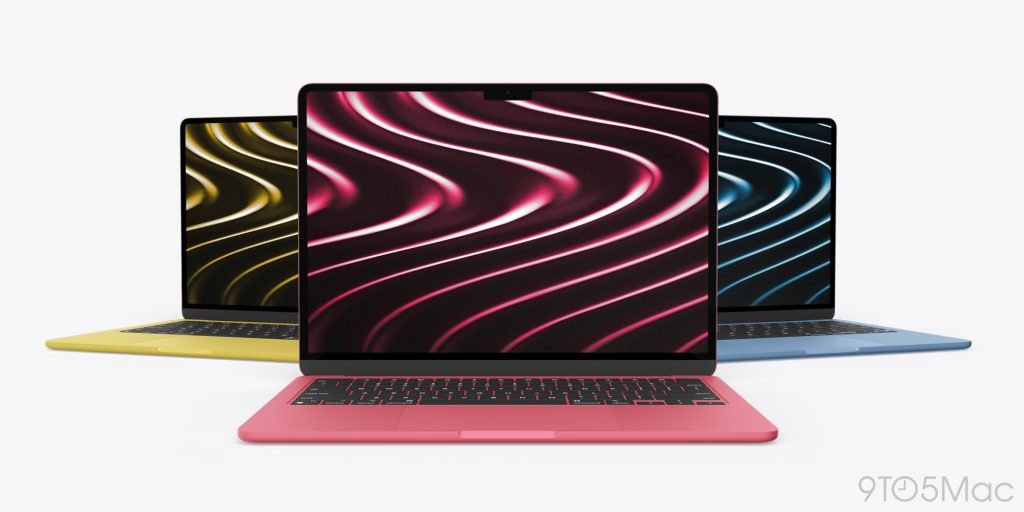
As soon as next week, Apple is set to unveil its cheapest MacBook to date. It'll be powered by an A18 Pro chip, offer a 12.9-inch display, and come in a plethora of colors. It'll also have a couple key compromises to bring it down to a lower starting price. That raises the question: will it be worth it compared to the MacBook Air?
Key compromises
For the most part, you'll be getting all of the key elements of a great MacBook experience: an aluminum chassis, a crisp Retina LCD display, an excellent trackpad, long battery life, and so on. That said, there are a few rumored areas where the budget MacBook will cut corners compared to the MacBook Air, those including:
- 400 nit display, no True Tone support, and no P3 color gamut
- Slower charging speeds
- Limited storage options + slower SSD speeds
- No keyboard backlight
- No N1 chip, relying on a cheaper Mediatek networking chip
For the most part (at least in my opinion) – these aren't major nor surprising cuts. It's all extremely precedented based on previous lower-cost Apple products. For example, the iPad Air Magic Keyboard doesn't include a backlight.
Of course, you'll have to deal with the fact that you're using an iPhone chip instead of an M series chip. Don't let that concern you, though. Despite sounding weak, the A18 Pro actually matches the M1 roughly in synthetic benchmarks. That doesn't mean it'll be good as an M1 all the time, but the fact that it's in the same league at all speaks volumes for the competence of Apple's lowest end silicon.
Will it be a good value?
Ultimately, whether or not its worth it compared to the MacBook Air depends on the price it comes in at. For $699, I think it'll be a little tough of a sell, at least at launch. M4 MacBook Air has gone on sale as low as $749 (though it's currently only on sale for $949) – so it could be a close call.
That's just launch pricing though, obviously the cheaper MacBook too will go on sale over time. So, I'd say in all likelihood, the cheaper MacBook will be a good value, even compared to the MacBook Air. There'll still be a $300 MSRP difference between the two laptops.
If the MacBook comes in at an even lower cost, say $649 or $599 – it'd truly be killer. It's also rumored to come in a couple fun colors like green, yellow, and pink. If the price is right, it might even have a decent leg up on the MacBook Air.
We'll know for sure when the computer hopefully launches next week. Apple will be kicking off a week of announcements starting on Monday, March 2nd – with an in-person media experience on Wednesday, March 4th.


The rumored budget MacBook represents an interesting experiment in Apple's product lineup. By using iPhone silicon in a laptop form factor, Apple is essentially testing whether the performance gap between its mobile and desktop chips has narrowed enough to make this a viable product category. The A18 Pro, while not matching the latest M-series chips in raw power, should handle everyday tasks with ease thanks to Apple's tight hardware-software integration.
What makes this particularly interesting is the potential ecosystem play. A lower-cost MacBook could serve as an entry point for users who want the Mac experience but have been priced out of the traditional lineup. The colorful design language also suggests Apple is targeting a younger demographic or those who value aesthetics over absolute performance.
However, the compromises are worth examining closely. The 400 nit display without True Tone or P3 color gamut means this won't be ideal for creative professionals or anyone who values display quality. The lack of a keyboard backlight might seem minor until you're working in a dim environment. The Mediatek networking chip could impact connectivity reliability compared to Apple's in-house solutions.
The storage and SSD speed limitations are particularly noteworthy in 2026, where many users work with large files or run multiple applications simultaneously. If the base model comes with limited storage and slower read/write speeds, it could become a bottleneck for productivity.
From a long-term value perspective, the question becomes whether the initial savings justify potentially needing an upgrade sooner. The M4 MacBook Air, while more expensive upfront, offers better performance headroom and build quality that could extend its useful life. This is especially relevant given how software requirements continue to evolve.
What's clear is that Apple is filling a gap in its product lineup. There's been a noticeable absence of truly affordable Mac options in recent years, with even the MacBook Air creeping up in price. A sub-$700 MacBook could reinvigorate interest in the Mac platform among budget-conscious consumers and students.
The success of this product will ultimately hinge on execution. If Apple can deliver a laptop that feels premium despite the compromises, offers reliable performance for everyday tasks, and hits an aggressive price point, it could become a popular choice. If the compromises feel too significant or the price doesn't create enough separation from the MacBook Air, it might struggle to find its audience.
The timing is also strategic. With Windows laptops becoming increasingly competitive in the budget segment and Chromebooks dominating certain markets, Apple needs to defend its position in the entry-level laptop space. This product could be their answer to that challenge.
The colorful design direction is particularly interesting. Apple has successfully used color to differentiate products and create emotional connections with users, as seen with the iPhone 14/15 colorful options and various Apple Watch bands. Applying this to a MacBook could make it more appealing to users who view their laptop as a personal accessory rather than just a tool.
As we await next week's announcement, the tech community remains divided on whether this is a smart move by Apple or a potential misstep. The answer likely depends on the final specifications and pricing, but there's no denying that a more accessible MacBook could have significant implications for Apple's laptop strategy moving forward.
Comments
Please log in or register to join the discussion