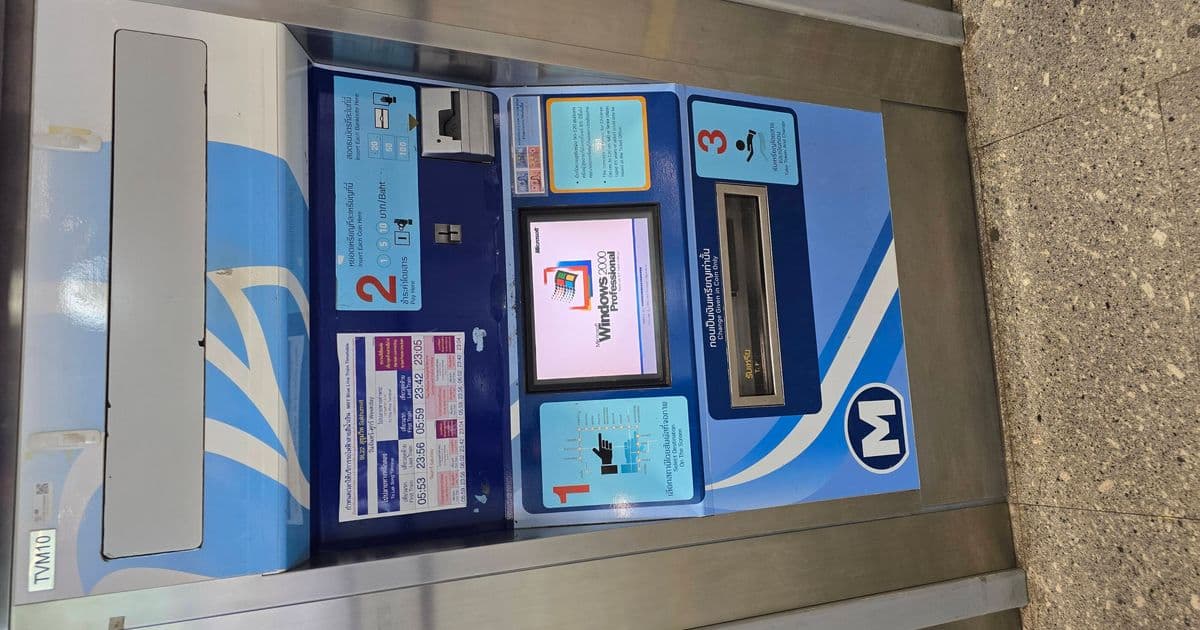
A Bangkok ticket machine running Windows 2000 Professional recently displayed its splash screen during reboot, highlighting how legacy systems persist in critical infrastructure despite decades of technological advancement.
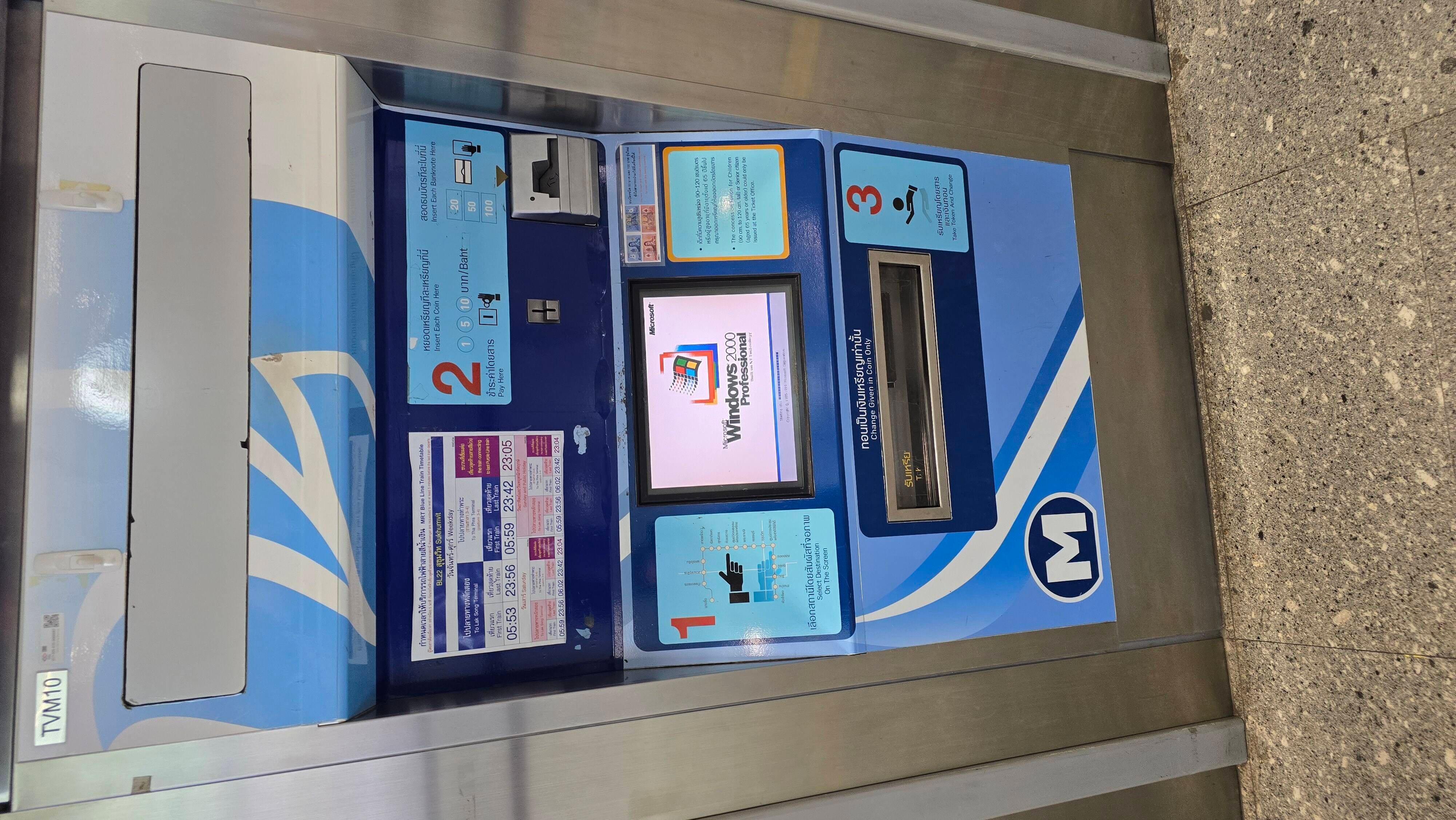
Public transit systems worldwide often rely on technology that would seem archaic in modern enterprise environments. This reality became visibly apparent when a ticket machine at Bangkok's Metropolitan Rapid Transit (MRT) unexpectedly rebooted, revealing its Windows 2000 Professional operating system loading screen. The equilibrium of this decades-old setup was momentarily disrupted, exposing the technological backbone supporting daily commutes.
The machine services a transit network launched in 2004, four years after Windows 2000's release. Its hardware remains physically pristine, suggesting meticulous maintenance despite running software older than many passengers using it. This exemplifies a broader pattern: specialized terminals often retain outdated operating systems due to proven stability, minimal resource requirements, and avoidance of unnecessary complexity. When isolated from external networks, such configurations can operate indefinitely without security updates.
Counterarguments emerge when failures occur. While the splash screen incident caused minimal disruption, it underscores single points of failure in aging systems. Modern alternatives offer better redundancy and remote management, but transit operators face legitimate barriers to upgrades: certification costs for new hardware, retraining staff, and potential service interruptions during migration. Bangkok's case differs from vulnerable internet-connected systems like Windows 7 ATMs or retail kiosks plagued by activation prompts - here, isolation mitigates critical risks.
Nostalgia aside, the incident reveals infrastructure's technological inertia. Administrators originally chose Windows 2000 over contemporaries like XP for its NT kernel reliability during the transition from Windows 98. Two decades later, its persistence reflects pragmatic 'if it functions, don't alter it' philosophy. Yet saga like Bangkok's reboot remind us that all systems eventually confront obsolescence - whether through component failure, discontinued support, or evolving security requirements that air-gapping can't eternally thwart.
Similar cases persist globally: US border control systems grappling with certificate errors, retail kiosks freezing at point-of-sale, or digital signage displaying update prompts. Each represents calculated trade-offs between innovation and operational continuity in public-facing technology.
Comments
Please log in or register to join the discussion