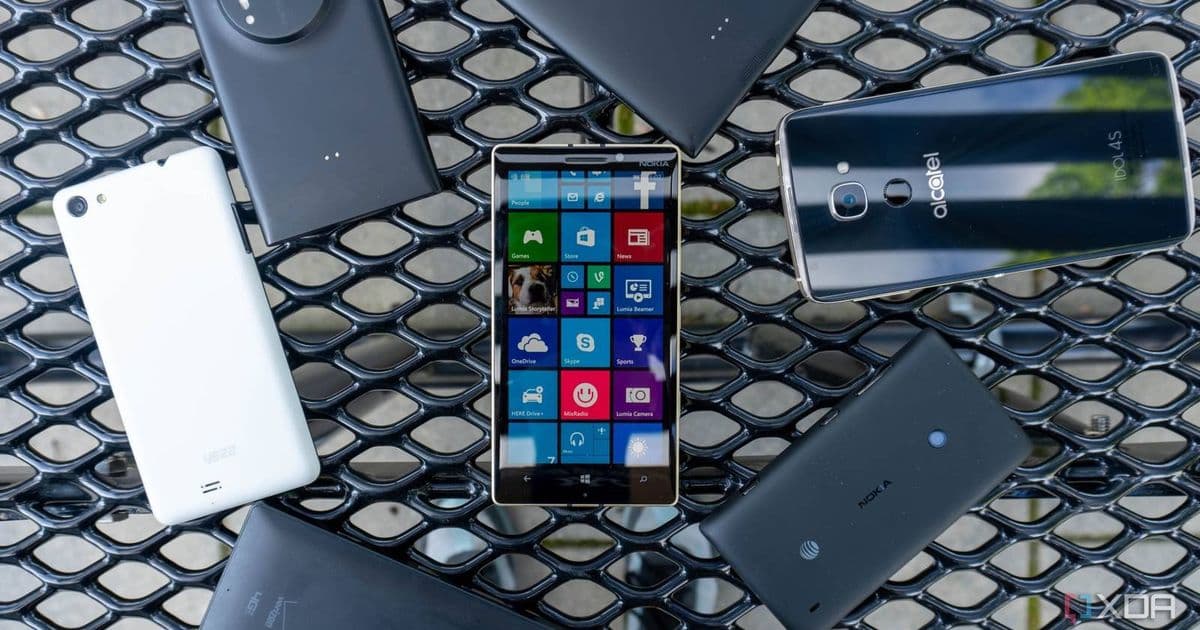
Despite being officially discontinued for years, Windows Phone continues to see development activity with the arrival of Vianigram, a native Telegram client that leverages the platform's unique capabilities to overcome modern challenges.
Windows Phone, the once-promising mobile operating system from Microsoft that was officially discontinued in 2017, continues to defy expectations as developers keep finding ways to breathe new life into the platform. The latest example comes in the form of Vianigram, a native Telegram client that brings full functionality to the supposedly dead OS.
The Resurrection of Windows Phone
Windows Phone had a troubled history from the start. Despite its innovative tile-based interface and smooth performance, it never gained significant market share against iOS and Android. Microsoft officially announced the end of support in 2017, with the final update released in 2020. Most industry observers considered the platform dead and buried.
Yet, a dedicated community of users and developers has kept the platform alive through various projects. The recent development of Vianigram demonstrates that there's still interest in extending the functionality of Windows Phone devices, even years after official support ended.
Technical Breakdown of Vianigram
Vianigram stands out as a significant technical achievement because it's not merely a wrapper or webview application. According to its creator, Legitimate_Post_2701, the client is built natively using MTProto, Telegram's proprietary protocol. This approach allows for a more responsive and feature-rich experience compared to web-based alternatives.
The app includes impressive functionality:
- Complete authentication flow supporting phone number, SMS, two-factor authentication, QR code login, and new account creation
- Real chat functionality powered directly by MTProto protocol
- A fully functional chat list with pagination and live updates
- Typing indicators, online status, and message read receipts
- Rich message support including text, photos, voice messages, documents, and polls
- Advanced text formatting options including bold, italics, spoilers, links, and mentions
- Voice message playback with waveform visualization and scrubbing capabilities
Overcoming Windows Phone Limitations
One of the most significant challenges in developing modern applications for Windows Phone is the lack of reliable push notification support. Modern mobile platforms rely heavily on background processing and push notifications to maintain user engagement, but Windows Phone's implementation has always been problematic.
Vianigram addresses this limitation through several clever workarounds:
- Background sync using system tasks rather than relying on push notifications
- A 30-minute maintenance window to check for new messages
- VoIP wake events to trigger background processing
- Local caching of chat data to reduce dependency on real-time updates
- Smart coordination between UI and background processes using a single MTProto socket
These solutions demonstrate the ingenuity required to develop modern applications on legacy platforms. While not as seamless as push notifications on iOS or Android, this approach provides a functional alternative that keeps users connected.
Current Limitations
Despite its impressive feature set, Vianigram is still a work in progress. The developer acknowledges several areas that need improvement:
- The Calls and Messages UI interfaces require further refinement
- Notifications experience delays when the app is fully closed
- Some features may not perform as smoothly as on modern platforms
These limitations highlight the challenges of maintaining applications on platforms without official support. Developers must often work around system limitations and API constraints that would be addressed in a supported environment.
The Windows Phone Community
The development of Vianigram is part of a broader pattern of community-driven development for Windows Phone. Other projects have kept the platform alive, including custom ROMs, alternative app stores, and compatibility layers for Android applications.
The NexPhone, mentioned in related content, represents another example of the platform's enduring appeal. This device dual-boots Android and Windows, demonstrating that there's still demand for Windows Phone's unique user interface and functionality.
Implications for Cross-Platform Development
The Vianigram project offers interesting insights for cross-platform development:
- Legacy platforms can still support modern applications with creative solutions
- Understanding platform-specific limitations is crucial for successful development
- Community support can extend the lifespan of discontinued technologies
- Natively implementing protocols (rather than using web wrappers) provides better performance and functionality
For developers considering supporting legacy platforms, Vianigram demonstrates that it's possible to create functional applications, but it requires additional effort and creative problem-solving.
Getting Vianigram
Interested users can find Vianigram by searching for "PivoraApps" or "VianiumApps" in the Telegram channel. The availability of the app through Telegram rather than traditional app stores highlights another aspect of Windows Phone's ecosystem - the reliance on alternative distribution methods.
The Future of Windows Phone
While Windows Phone will never regain its former position in the mobile market, projects like Vianigram suggest that the platform has a future as a niche operating system. For users who value its interface, performance, or unique features, the continued development of applications like Vianigram ensures that their devices remain functional.
The persistence of Windows Phone also serves as a reminder that technology doesn't always follow a linear path of progress. Discontinued platforms can continue to serve communities that value their unique characteristics, and dedicated developers can find ways to extend their functionality long after official support has ended.
In conclusion, Vianigram represents more than just another application - it's a testament to the enduring appeal of Windows Phone and the ingenuity of developers who refuse to let the platform die. While it may never compete with modern mobile operating systems, it ensures that Windows Phone devices remain useful for those who continue to use and love them.
Comments
Please log in or register to join the discussion