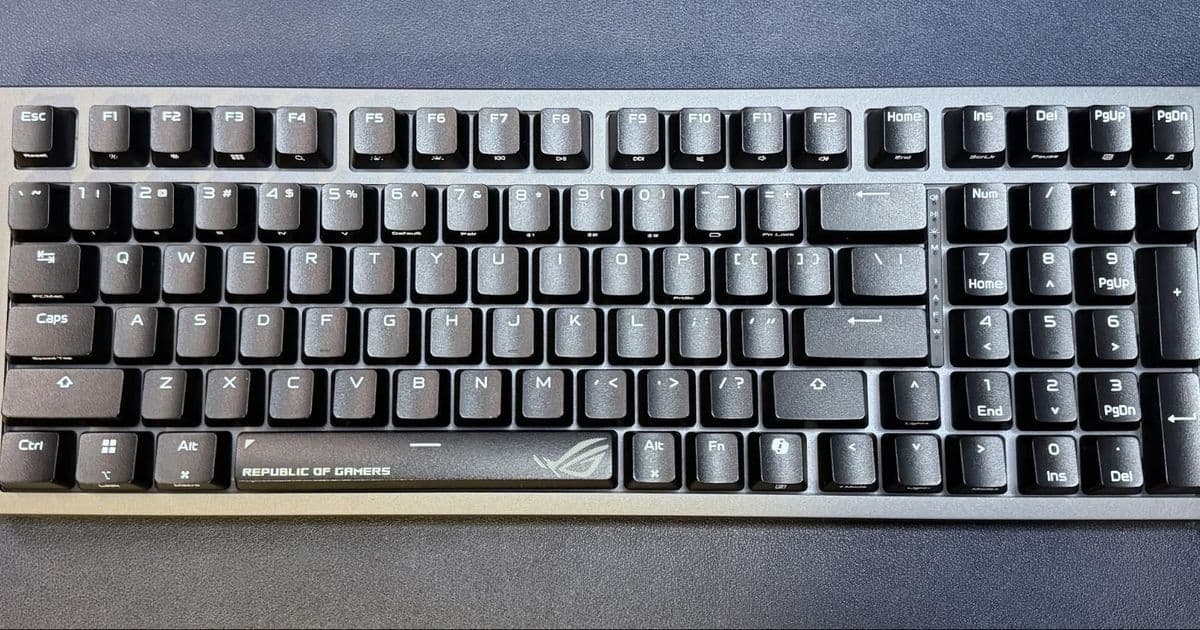
Analysis of the semiconductor systems powering modern wireless gaming keyboards, with focus on power management chips, wireless connectivity modules, and PCB design considerations in the Asus ROG Strix Morph 96.
The Asus ROG Strix Morph 96 Wireless represents an interesting case study in peripheral semiconductor architecture, balancing performance, power efficiency, and cost considerations. This keyboard, priced at $139.99, incorporates several key semiconductor technologies that enable its wireless functionality, hot-swappable design, and advanced features.
Wireless Connectivity Architecture
The keyboard's tri-mode connectivity (2.4GHz wireless, Bluetooth, and USB-C wired) relies on a multi-protocol wireless system-on-chip (SoC). This integrated circuit manages three distinct communication protocols while maintaining power efficiency across different usage scenarios.
The 2.4GHz implementation uses a dedicated RF transceiver chip with proprietary protocol optimization for gaming applications. This chip likely operates in the 2.4-2.4835GHz ISM band with frequency hopping spread spectrum (FHSS) technology to minimize interference from other wireless devices. The inclusion of a USB-A dongle suggests a dedicated receiver chip that offers lower latency than standard Bluetooth implementations, crucial for gaming responsiveness.
Bluetooth functionality is managed through a Bluetooth 5.x capable chip, supporting multiple device pairing—a feature increasingly common in premium peripherals. The keyboard's ability to connect to multiple devices simultaneously requires sophisticated switching logic in the main controller IC.
Power Management System
The Strix Morph 96's impressive battery specifications (590 hours with 2.4GHz wireless and lighting off, 750 hours with Bluetooth and lighting off) indicate a sophisticated power management architecture. This system likely incorporates:
- A low-power microcontroller unit (MCU) with multiple power states
- Dedicated power management IC (PMIC) with voltage regulation for different components
- Efficient LED driver circuitry for the per-key RGB lighting
- Smart sleep/wake mechanisms triggered by keypress or inactivity
The difference in battery performance between wireless modes suggests the Bluetooth implementation uses less power than the 2.4GHz gaming mode, likely due to lower data transmission requirements and different duty cycles.
Hot-Swappable PCB Design
The keyboard's hot-swappable PCB represents an interesting manufacturing approach that balances customization with production efficiency. This design requires:
- Socketed switch contacts with consistent electrical properties
- Robust PCB design that accommodates switch insertion/removal without damage
- Firmware support for switch detection and calibration
The ability to use both 3-pin and 5-pin switches indicates a socket design with flexible contact points, likely using gold-plated contacts to ensure reliable connections over repeated switch changes. This manufacturing approach adds complexity to the PCB assembly process but provides significant value to users who want to customize their typing experience.
Semiconductor Cost Analysis
At $139.99, the Strix Morph 96 occupies an interesting position in the market. The semiconductor components likely represent approximately 25-30% of the total manufacturing cost, with the following breakdown:
- Main controller MCU with wireless capabilities: 40-45% of semiconductor cost
- Power management system: 20-25% of semiconductor cost
- RGB LED drivers and controllers: 15-20% of semiconductor cost
- RF transceiver chips: 10-15% of semiconductor cost
This cost structure reflects the priorities of a gaming peripheral: responsive wireless connectivity, efficient power management, and customizable lighting. The inclusion of a hot-swappable PCB adds to manufacturing complexity but allows for a more competitive price point compared to fully customizable mechanical keyboards.
Market Positioning and Supply Chain Considerations
The Strix Morph 96's introduction comes at a time when semiconductor supply for consumer peripherals has stabilized following global shortages. Its positioning against the ROG Strix Scope II 96 Wireless (currently discounted to $129.99) reveals interesting market dynamics:
- The Morph 96 appears to use a less expensive aluminum top case construction compared to the Scope II, suggesting a different material sourcing strategy
- The inclusion of a web-based configuration app (Gear Link) reduces the need for PC-installed software, potentially reducing development costs
- The rotary knob implementation suggests a specialized input controller chip that may be less expensive than the more complex systems in higher-end models
These cost-saving measures allow Asus to maintain competitive pricing while still incorporating advanced semiconductor technologies. The keyboard's March 30, 2026 release date positions it in a post-shortage market where component availability is less of a constraint than during the pandemic-era supply chain disruptions.
Future Trends in Peripheral Semiconductors
The Strix Morph 96 offers insights into where peripheral semiconductor technology is heading:
- Increased integration of multiple functions into single chips to reduce size and power consumption
- Enhanced power management with more granular control states for different usage scenarios
- Web-based configuration interfaces that reduce dependency on installed software
- More sophisticated RGB control with per-key customization and effects
The keyboard's semi-customizable rotary knob represents an interesting compromise—providing useful functionality without the complexity of fully programmable inputs. This suggests a market trend toward practical customization rather than unlimited programmability, reflecting user preferences and cost considerations.
Manufacturing and Quality Considerations
The keyboard's 2.48-pound weight and 398mm × 134mm × 39mm dimensions suggest a well-constructed product with substantial internal components. The manufacturing process likely involves:
- Automated PCB assembly with pick-and-place machines for semiconductor components
- Precision machining of the aluminum top case
- Automated LED placement and testing for the RGB lighting system
- Automated switch insertion and testing for the hot-swappable system
The inclusion of dampening materials in the case indicates attention to acoustic engineering, with the semiconductor system designed to minimize electrical noise that could affect audio-sensitive applications.
The Strix Morph 96 demonstrates how semiconductor technology in peripherals has evolved to balance performance, power efficiency, and cost. As wireless gaming peripherals continue to advance, we can expect further integration of functions, improved power efficiency, and more sophisticated user interfaces—all enabled by increasingly capable semiconductor systems.
Comments
Please log in or register to join the discussion