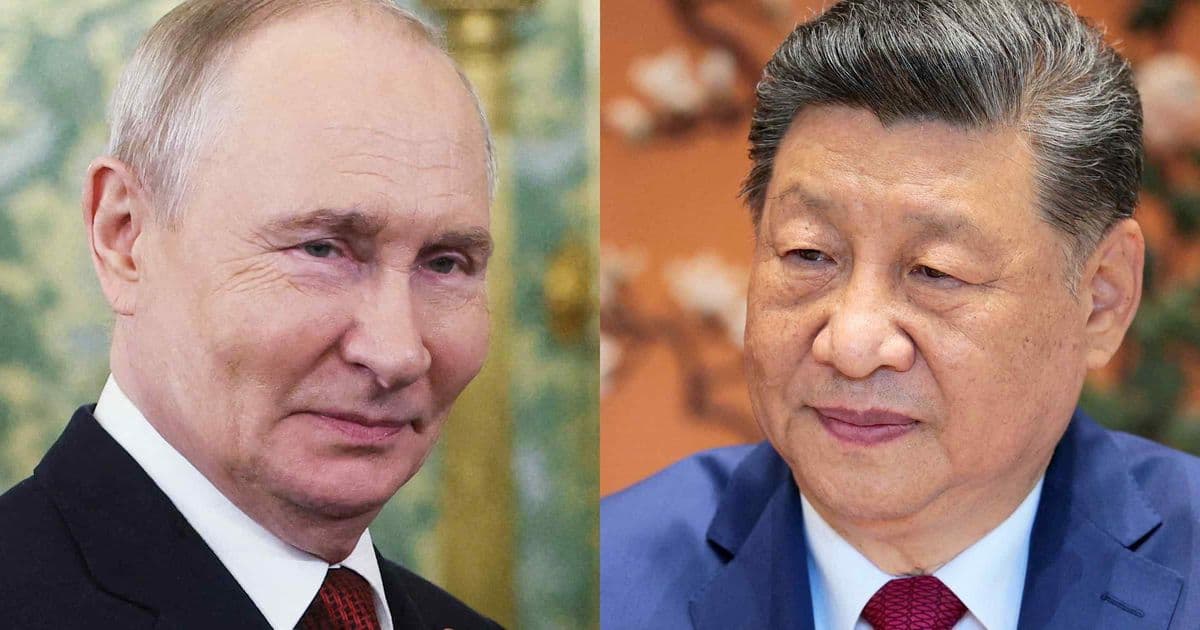
Chinese President Xi Jinping and Russian President Vladimir Putin are set to strengthen bilateral relations during a Beijing summit, focusing on energy cooperation as China navigates complex diplomatic relationships following U.S. President Trump's recent visit to China.
Chinese President Xi Jinping will host Russian President Vladimir Putin in Beijing for a pivotal summit aimed at reaffirming strategic ties between the two nations, with energy cooperation expected to dominate discussions. The meeting comes just days after U.S. President Donald Trump's visit to the Chinese capital, highlighting Beijing's delicate diplomatic balancing act between Washington and Moscow.
Business News: Strategic Alignment
The Xi-Putin summit represents a significant diplomatic moment in global geopolitics, occurring against a backdrop of shifting international alliances. According to diplomatic sources, the Russian delegation is expected to arrive in Beijing with concrete proposals for expanding energy cooperation, including natural gas supply agreements and joint infrastructure projects.
"This summit demonstrates China's continued commitment to its strategic partnership with Russia," said Zhang Wei, director of the Russian Studies Center at Peking University. "Energy remains the cornerstone of this relationship, with trade between the two nations reaching $240 billion in 2025, a 15% increase from the previous year."
Market Context: Energy Trade Dynamics
The energy relationship between China and Russia has evolved significantly over the past decade. Russia currently supplies approximately 10% of China's natural gas imports, with this figure projected to increase to 15% by 2030. The planned Power of Siberia pipeline, which began operations in 2019, represents a $55 billion investment in energy infrastructure connecting the two countries.
Global energy markets are watching this summit closely, particularly as Western sanctions have redirected Russia's energy exports toward Asian markets. China's energy imports from Russia grew by 22% in 2025, reaching 1.8 million barrels of oil equivalent per day.
"China's energy security strategy increasingly relies on diversified supply sources, and Russia offers both geographic proximity and political reliability," noted Li Ming, senior energy analyst at the China Energy Research Institute. "The current geopolitical environment presents both challenges and opportunities for expanding this energy partnership."
What It Means: Strategic Implications
The Xi-Putin summit carries significant implications for global markets and international relations. The timing, immediately following Trump's visit to Beijing, suggests China's deliberate approach to maintaining relationships with both Washington and Moscow while pursuing its strategic interests.
From a business perspective, expanded energy cooperation between China and Russia could impact global commodity markets. China's growing demand for Russian energy resources may influence pricing dynamics in Asian markets, potentially creating a parallel pricing mechanism to Western benchmarks.
The summit may also result in new agreements on technology transfer and joint development of energy infrastructure. Previous collaborations have included the joint development of Arctic LNG projects and cooperation in nuclear energy, with the Tianwan nuclear power plant in Jiangsu Province representing a successful example of Russian-Chinese technological partnership.
"This summit occurs at a critical juncture in international relations," commented Wang Jun, professor of international relations at Fudan University. "China's ability to balance its relationship with both Russia and the United States will significantly impact global economic stability and the future of international trade frameworks."
As the world's second-largest economy, China's diplomatic decisions carry substantial weight in global markets. The outcome of the Xi-Putin summit will likely influence energy security strategies across Asia and may prompt other nations to reassess their own geopolitical alignments in response to shifting power dynamics.
Comments
Please log in or register to join the discussion