
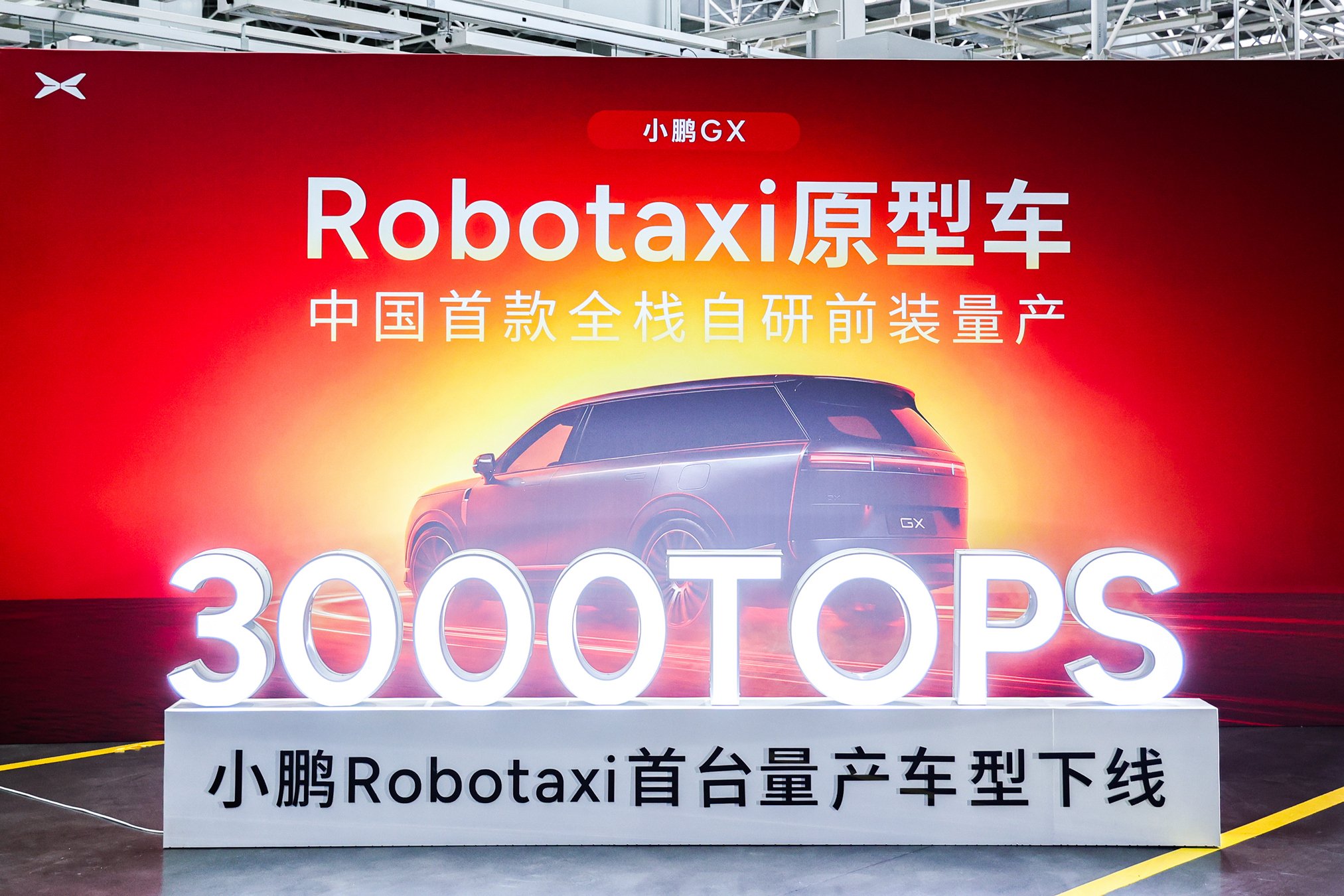
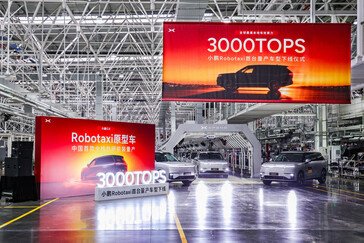
Xpeng has begun series production of its GX Level‑4 robotaxi in Guangzhou. The SUV packs four in‑house Turing AI chips delivering up to 3,000 TOPS, runs on a pure‑camera vision stack and aims for public pilots in late‑2026, with fully driverless service by early‑2027.
What’s new
Xpeng announced the start of mass production for the GX L4 robotaxi at its Guangzhou plant. The vehicle is a purpose‑built version of the brand’s flagship GX SUV, fitted with four custom‑designed Turing AI chips that together provide up to 3,000 TOPS of on‑board compute. Unlike most competitors, the system discards LiDAR and high‑definition maps, relying solely on a pure‑vision architecture called VLA 2.0 (Vision‑Language‑Action). The claimed end‑to‑end latency is under 80 ms, and the chassis offers a luxury‑grade cabin with zero‑gravity rear seats, tinted glass and voice‑controlled infotainment.
How it compares
| Feature | Xpeng GX L4 | Tesla Optimus (Full‑Self‑Driving) | Waymo Driver | Typical retro‑fit L4 projects |
|---|---|---|---|---|
| Compute | 4 × Turing AI chips, 3,000 TOPS | Custom HW3, ~1,000 TOPS (est.) | 2 × Google‑TPU, ~2,500 TOPS | External GPUs or edge servers, 500‑1,200 TOPS |
| Sensors | 8× high‑resolution cameras, no LiDAR | 8× cameras + 1× LiDAR (optional) | 5× LiDAR, 6× cameras | Mixed LiDAR + cameras, often heavy |
| Mapping | No HD maps, on‑device perception only | Uses HD maps + real‑time updates | Relies heavily on pre‑mapped routes | Requires frequent map uploads |
| Latency | < 80 ms (end‑to‑end) | ~120 ms (perception + planning) | ~150 ms (cloud‑assisted) | > 200 ms (cloud dependent) |
| Production status | Series production, pilot start H2 2026 | Limited beta, no mass‑prod robotaxi | Limited fleet, pilot only | Prototype or small‑scale pilot |
| Price (estimated) | ¥1.2 M (≈ US$170k) for fleet unit | Not disclosed, Tesla‑based | Not disclosed, service‑only model | Varies, often > US$200k per unit |
The GX’s compute density is roughly four times that of Tesla’s current hardware generation, while the pure‑camera stack eliminates the cost and weight of LiDAR units that still dominate Waymo’s fleet. By keeping the entire perception‑planning pipeline on the vehicle, Xpeng avoids the latency spikes associated with cloud‑offloaded processing, a common bottleneck in many Western prototypes.
Who it’s for
- Urban fleet operators looking for a ready‑to‑deploy robotaxi that can run without a safety driver by early 2027. The GX’s spacious interior and passenger‑focused amenities make it suitable for premium ride‑hailing services in megacities such as Guangzhou, Shanghai and Shenzhen.
- Developers and third‑party services that want to build on a stable API. Xpeng is releasing a software development kit (SDK) alongside the robotaxi, and has already partnered with Amap (Alibaba) to provide booking and navigation services. This opens the door for local mobility platforms to integrate directly with the vehicle’s fleet management.
- Tech enthusiasts and early adopters who want to experience Level‑4 autonomy without the experimental feel of a prototype. The GX’s production‑grade chassis, combined with a luxury cabin, positions it as a consumer‑friendly alternative to the more utilitarian designs seen in current Waymo or Cruise pilots.
Technical deep‑dive
On‑board AI chips
Each Turing chip is built on a 5 nm process and integrates 256 tensor cores, a dedicated vision accelerator and a low‑power safety core. The four‑chip layout runs in a parallel‑pipeline mode: two chips handle raw image ingestion, while the other two perform high‑level decision making. This split reduces contention and keeps the critical path under 80 ms from sensor capture to actuation.
Vision‑Language‑Action (VLA 2.0)
VLA 2.0 merges three traditionally separate stages:
- Vision – a CNN‑Transformer hybrid extracts object detections and semantic segmentation directly from the camera feed.
- Language – a lightweight LLM interprets traffic rules encoded as textual policies (e.g., “yield to pedestrians at crosswalks”).
- Action – a reinforcement‑learning policy network translates the combined perception‑policy output into steering, throttle and braking commands.
By collapsing these stages, the system removes the buffering delays typical of modular pipelines. It also means the vehicle can adapt to new traffic scenarios simply by updating the policy text, without retraining the entire perception stack.
Power and thermal budget
The four chips together draw ≈ 450 W under peak load. Xpeng’s thermal design uses a liquid‑cooled cold‑plate integrated into the vehicle’s under‑floor battery pack, keeping chip temperatures below 70 °C even in hot summer conditions. This approach mirrors the cooling solutions seen in high‑performance laptops, but scaled for automotive reliability.
Market impact
The GX L4 robotaxi marks the first time a Chinese OEM has moved from pilot‑only testing to full‑scale production of a Level‑4 vehicle. While Tesla continues to iterate on its Full‑Self‑Driving (FSD) software, it still ships cars with a safety driver in most markets. Waymo’s fleet remains limited to a handful of cities and relies on a dense map infrastructure. Xpeng’s decision to forgo LiDAR and HD maps could force competitors to reassess the cost‑benefit balance of those components, especially as chip performance continues to climb.
If the pilot launches on schedule and the safety‑driver‑free rollout proceeds by early 2027, the GX could become the benchmark for commercial robotaxi deployments in Asia, and a reference point for any future global expansion.
Sources: Xpeng press release (May 2026), official product page, Amap partnership announcement.
Comments
Please log in or register to join the discussion