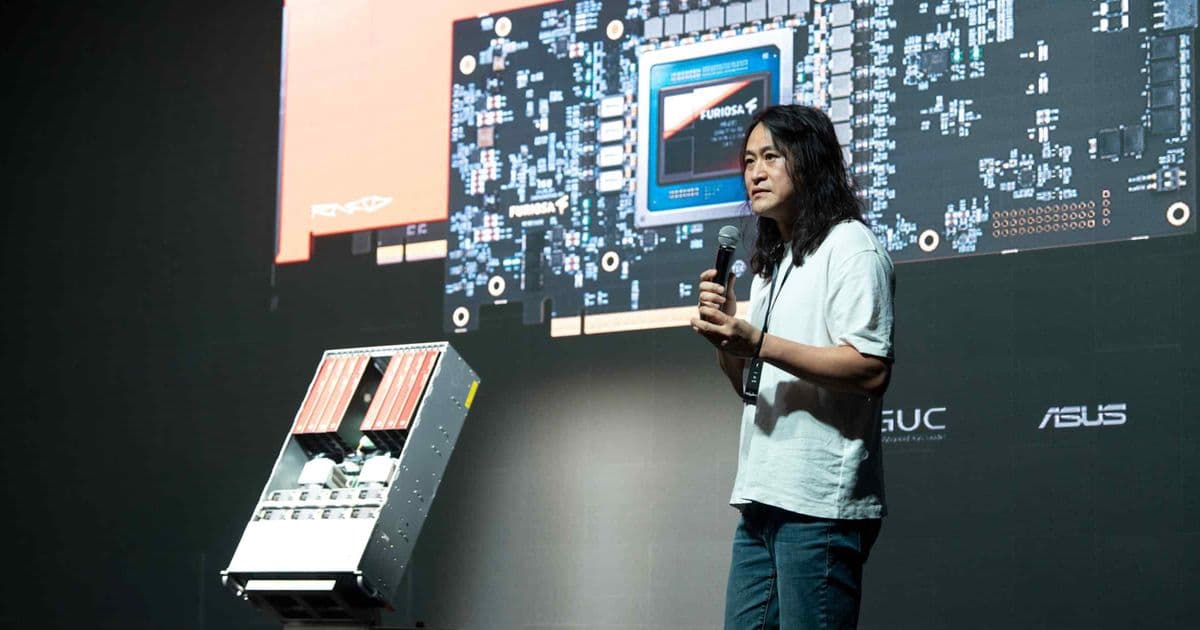
South Korean startup FuriosaAI has begun shipping its Renegade AI inference chip, promising Nvidia‑class throughput at a fraction of the operating cost. Backed by Samsung and LG, the move could reshape the domestic AI‑hardware market and give South Korea a new export engine as global demand for affordable inference accelerators intensifies.
Business news
Seoul‑based FuriosaAI announced the commercial rollout of its Renegade AI inference chip, a silicon solution it claims delivers performance on par with Nvidia’s leading data‑center GPUs while consuming up to 30 % less power. The company says the first shipments are already in the hands of Samsung Electronics and LG Group, which plan to integrate the silicon into their upcoming AI‑optimized servers and edge devices.
The Renegade chip is priced at $1,200 per unit, roughly $400 cheaper than comparable Nvidia A100 cards, and the company estimates an operational cost saving of $0.02 per inference due to lower energy draw. FuriosaAI’s founder and CEO, June Paik, highlighted a “performance‑per‑dollar” metric that the firm believes will appeal to enterprises looking to scale generative‑AI workloads without the premium pricing of established GPU vendors.
Market context
South Korea’s semiconductor sector generated $68 billion in export revenue in Q1 2026, driven largely by memory chips. However, the country’s AI‑hardware footprint remains thin compared with the United States, China, and Taiwan, where firms such as Nvidia, AMD, and MediaTek dominate the inference market. The global AI inference accelerator market is projected to reach $45 billion by 2028, growing at a CAGR of 22 % according to a recent IDC forecast.
FuriosaAI’s entry coincides with two broader trends:
- Cost pressure on AI workloads – Enterprises are grappling with soaring electricity bills and cooling costs as they expand large‑scale transformer models. A 10 % reduction in power consumption can translate into tens of millions of dollars in annual savings for hyperscale operators.
- Supply‑chain diversification – Recent disruptions in GPU supply have prompted cloud providers and OEMs to seek alternative silicon sources. Samsung’s and LG’s early adoption of Renegade signals a willingness to build a domestic supply chain for AI accelerators, reducing reliance on imported GPUs.
The company’s backing from Samsung and LG also provides strategic advantages. Both conglomerates own advanced 7‑nm and 5‑nm fabs, enabling FuriosaAI to tap into leading‑edge process nodes without the massive capital outlay required for a standalone fab.
What it means
If the Renegade chip lives up to its performance claims, FuriosaAI could carve out a mid‑range niche that sits between high‑end Nvidia GPUs and lower‑cost ASICs from Chinese firms. The immediate implications are:
- Revenue upside for FuriosaAI – With an estimated $150 million addressable market in South Korean data centers alone, the startup could reach $500 million in annual sales by 2028 if it captures 10 % of the domestic inference market.
- Competitive pressure on Nvidia – While Nvidia retains a lead in training‑grade GPUs, a credible low‑cost alternative for inference could force the U.S. giant to revisit pricing or accelerate its own efficiency roadmap.
- Export potential – South Korea’s trade surplus in semiconductors positions FuriosaAI to target emerging markets—particularly Southeast Asia and Latin America—where cost‑sensitive operators are eager for affordable AI compute.
- Talent and ecosystem development – The partnership with Samsung and LG is likely to attract AI‑hardware engineers, fostering a home‑grown talent pool that could spill over into other high‑performance computing domains.
Overall, FuriosaAI’s Renegade chip represents a strategic bet that performance‑driven cost efficiency can unlock a new segment of AI infrastructure spending. The company’s ability to scale production, maintain yield, and secure further OEM contracts will determine whether it becomes a lasting competitor or a niche player in a market still dominated by a few global incumbents.
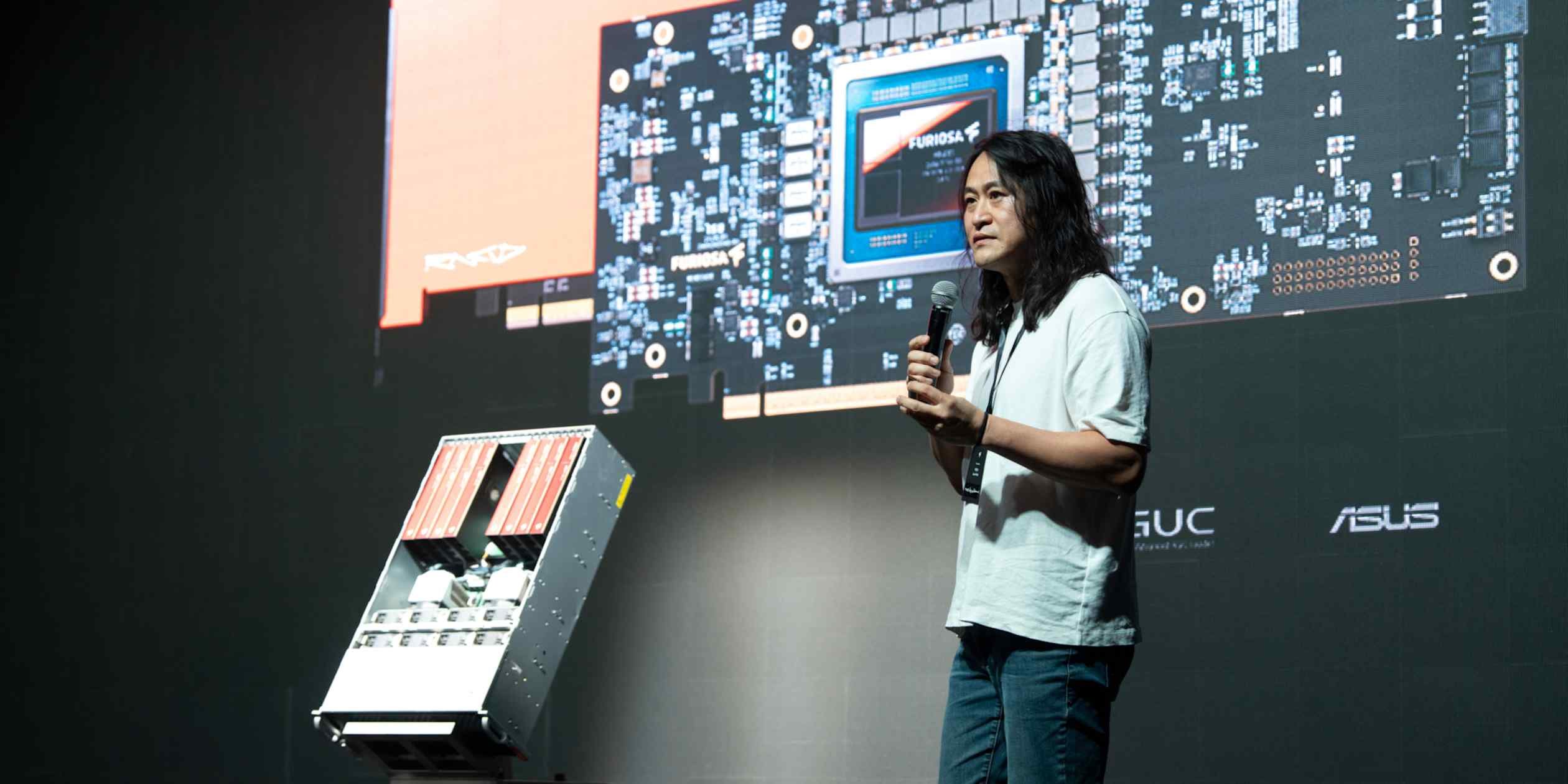
The Renegade chip pictured during FuriosaAI’s launch event in Seoul.
Comments
Please log in or register to join the discussion