Xteink is limiting third-party firmware installation on Chinese-market models while preparing to release its first Android-based eReader with expanded app compatibility.
Xteink's pocket-sized eReaders have gained significant popularity in recent months, not for their stock software, but for their ability to run CrossPoint Reader, an open source firmware replacement that transforms these tiny devices into genuinely useful reading companions. The Xteink X3 and X4 models, featuring 3.7 and 4.3 inch E Ink screens respectively, have become particularly popular due to their portability—small enough to fit in a pocket or attach to the back of a phone.
However, a recent development has concerned the enthusiast community: Xteink is now blocking installation of third-party firmware on units purchased through Chinese retailers like Taobao. According to customer communications, the company is taking this action because "some users who tried using third-party firmware encountered problems such as poor optimization, frequent crashes, and even screen damage." Rather than simply declining to offer official repair services for modified devices, Xteink has opted to prevent the installation of custom firmware altogether on these specific units.
This move presents an interesting dilemma for Xteink, as the company appears well aware that part of its devices' popularity stems from their ability to run unofficial firmware. In a statement, Xteink clarified that "for all X3 and X4 Overseas Versions purchased through our official website... we are not restricting the use of third-party firmware." This distinction suggests that the company is targeting specifically the Chinese market with these restrictions, while continuing to support the enthusiast community that buys through official channels.
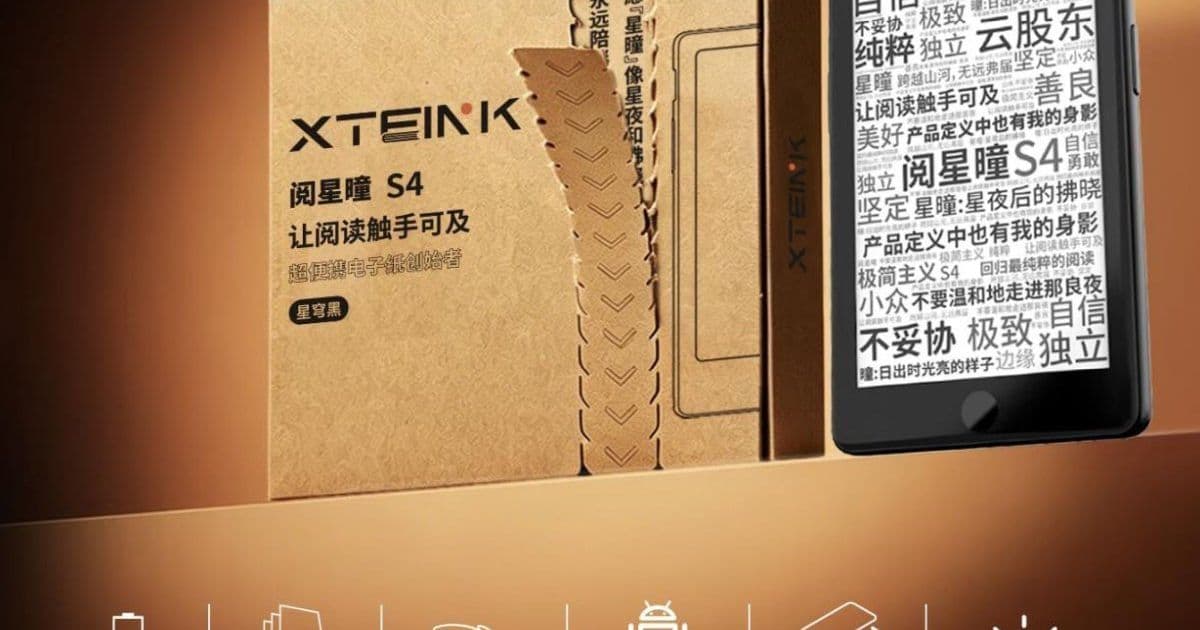
Meanwhile, Xteink is taking a different approach with its upcoming model. The Xteink S4, which went up for pre-order in China recently for approximately $50, represents a significant shift in the company's product strategy. It will be the first Xteink device to ship with an Android-based operating system, specifically Android 11. This change fundamentally alters the user experience, as it should allow users to download third-party eBook apps from an app store or sideload them directly.
The potential app compatibility is substantial—users could install Kindle, Kobo, NOOK, or Libby apps, along with other popular reading applications like Moon+ Reader or FBReader. This approach eliminates the need for custom firmware modifications while providing access to established, well-optimized reading applications.
Beyond its Android foundation, the Xteink S4 introduces several notable features that distinguish it from previous models:
- Front light with color temperature adjustments
- 2GB of RAM
- 32GB of onboard storage
- 1,400 mAh battery
- Magnetic attachment for phone pairing
- Ultra-slim design at approximately 7mm (0.28") thick
- Lightweight construction at just 95 grams (3.35 ounces)
The S4's compact dimensions make it significantly smaller and about 60% as heavy as Amazon's most basic Kindle model, maintaining Xteink's focus on portability while adding substantial functionality.
For developers, the S4 represents an interesting opportunity. The Android-based platform opens the door for traditional app development processes, potentially reducing the need for specialized firmware modifications. However, the device's small screen size and specialized form factor may present unique challenges for app optimization and user interface design.
The magnetic attachment feature, while present in previous models, appears to remain somewhat hit-or-miss in terms of reliability. This suggests that while Xteink continues to innovate in terms of software and features, some hardware aspects may still need refinement.
As the eReader market continues to evolve, Xteink's strategy of maintaining a dual approach—restricting modifications on some models while embracing a more open platform on others—could prove insightful. The company's willingness to adapt to different market segments while addressing user concerns about device stability suggests a pragmatic approach to product development.
The Xteink S4's eventual international availability and pricing will determine its competitiveness in the global eReader market. If the company can maintain its aggressive pricing while delivering a functional Android-based reading experience, it could establish a significant foothold in the budget eReader segment.
For users, the choice between purchasing through official channels for custom firmware support or waiting for the Android-based S4 presents an interesting dilemma. The enthusiast community will likely continue to support the X3 and X4 models through official channels, while mainstream users may prefer the convenience of the S4's app ecosystem.
As Xteink navigates these changes, the company's ability to balance user desires for customization with concerns about device stability will likely determine its long-term success in the competitive eReader market.
Comments
Please log in or register to join the discussion