Despite two decades of DevOps, the core goal of creating a direct feedback loop between developers and production systems failed due to inadequate tooling – but AI now enables this loop while simultaneously overwhelming existing processes with 'code slop'.
Let’s start with a question. What is DevOps all about? Empathy! Breaking down silos! Forcing operations engineers to write more software! I’ll tell you my answer. In retrospect, I think the entire DevOps movement was a mighty, twenty year battle to achieve one thing: a single feedback loop connecting devs with prod.
On those grounds, it failed. Not because software engineers weren’t good at their jobs, or didn’t care enough. It failed because the technology wasn’t good enough. The tools we gave them weren’t designed for this, so using them could easily double, triple, or quadruple the time it took to do their job: writing business logic.
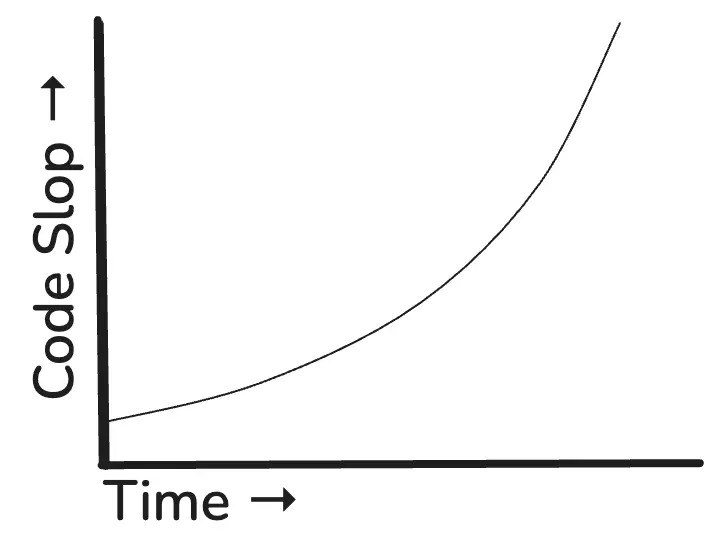
The good news is that AI has changed this. The technology we have now is good enough to create a feedback loop between developers and production systems for the median engineering team, for the first time ever. The bad news is also that AI has changed this. Our existing feedback loops are unprepared to deal with the current amount of code slop. And I think we all know what the volume of code slop is about to do:
Value-Generating Feedback Loops
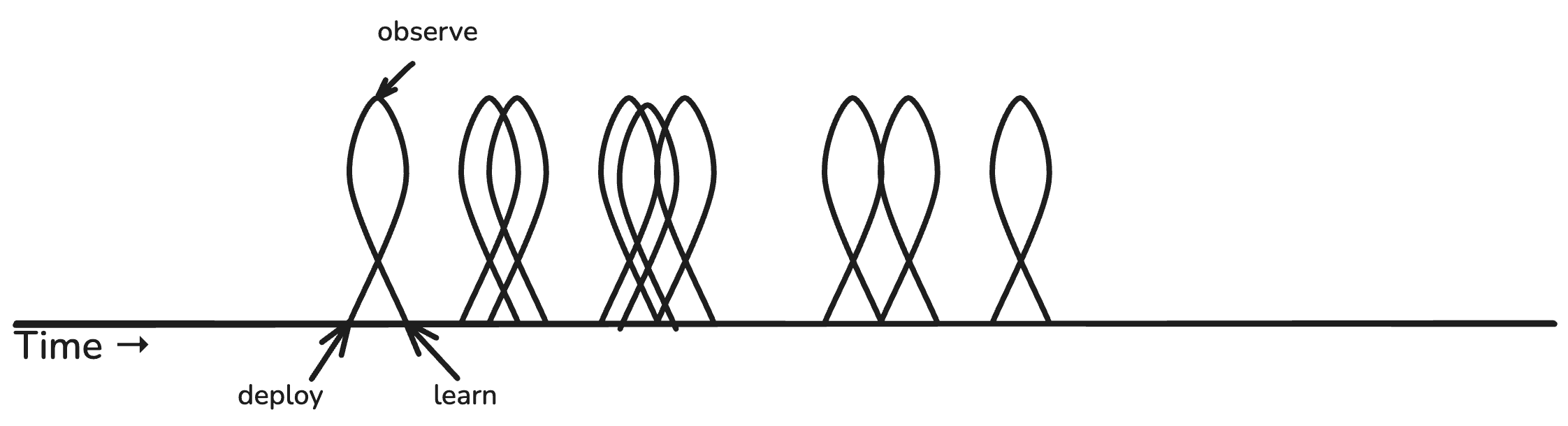
If your business makes money by building products with software, this is what progress looks like: you build something new, ship it to users, and see what happens. This is the theoretical feedback loop of generating business value with software. As our friends at Intercom like to say, 'shipping is your company’s heartbeat.'
The value-generating loop gets kicked off every time you deploy a new diff. In visual terms:
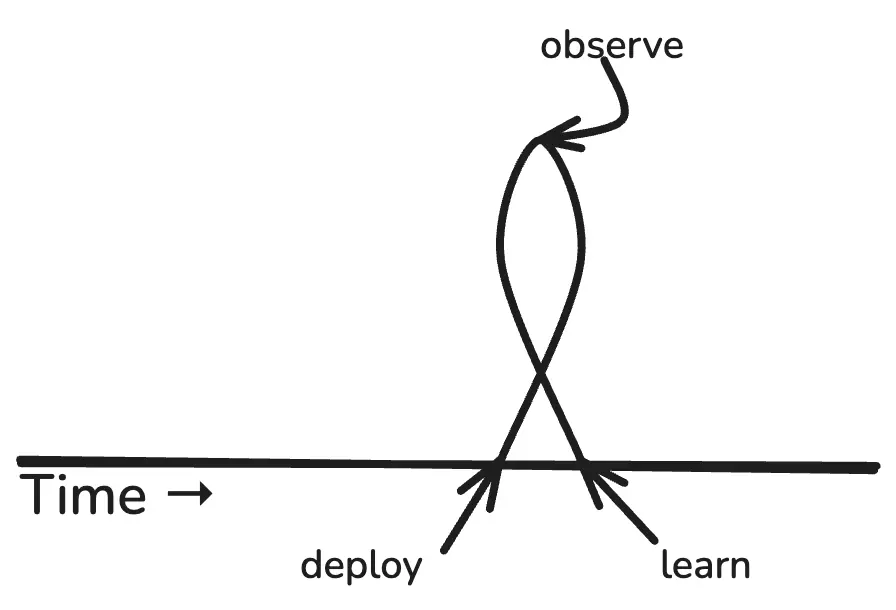
Value does not get captured until the code has been deployed. That’s one of the reasons why software experts are always haranguing us to ship frequently:
The Great Divide: Dev vs Ops Perspectives
- Ops perspective: Provides infrastructure for code execution. Collects telemetry from system components (disks, pods, databases). Focuses on stability and risk mitigation.
- Dev perspective: Cares about customer experience across devices and contexts. Needs to correlate telemetry with build IDs, feature flags, and user attributes.
How AI Changes Everything
- Instrumentation: LLMs trained on OpenTelemetry docs can add instrumentation with near-zero effort
- Analysis: AI agents can investigate production issues directly in dev environments
- Validation: Shifts focus from writing code to spec validation and experiment iteration
The Coming Challenge
When nobody wrote the deployed code and nobody understands it, operational feedback loops will shatter. AI-generated 'code slop' will overwhelm existing monitoring systems, forcing a fundamental rethinking of how we connect development and production.
DevOps isn’t dead – it paved the way. But now we have the tools to finally achieve what twenty years of DevOps couldn’t: a true developer-to-production feedback loop.
Comments
Please log in or register to join the discussion