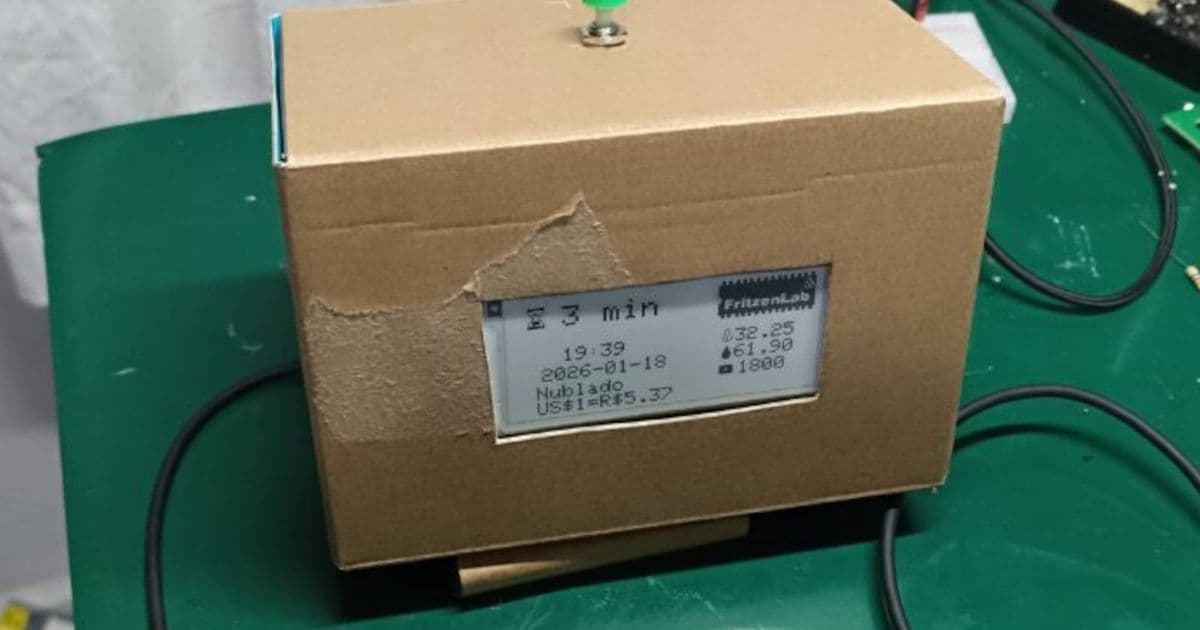
An open-source ESP32-based Pomodoro timer with e-paper display offers customizable intervals and doubles as an internet-connected information panel showing weather, time, and stats.
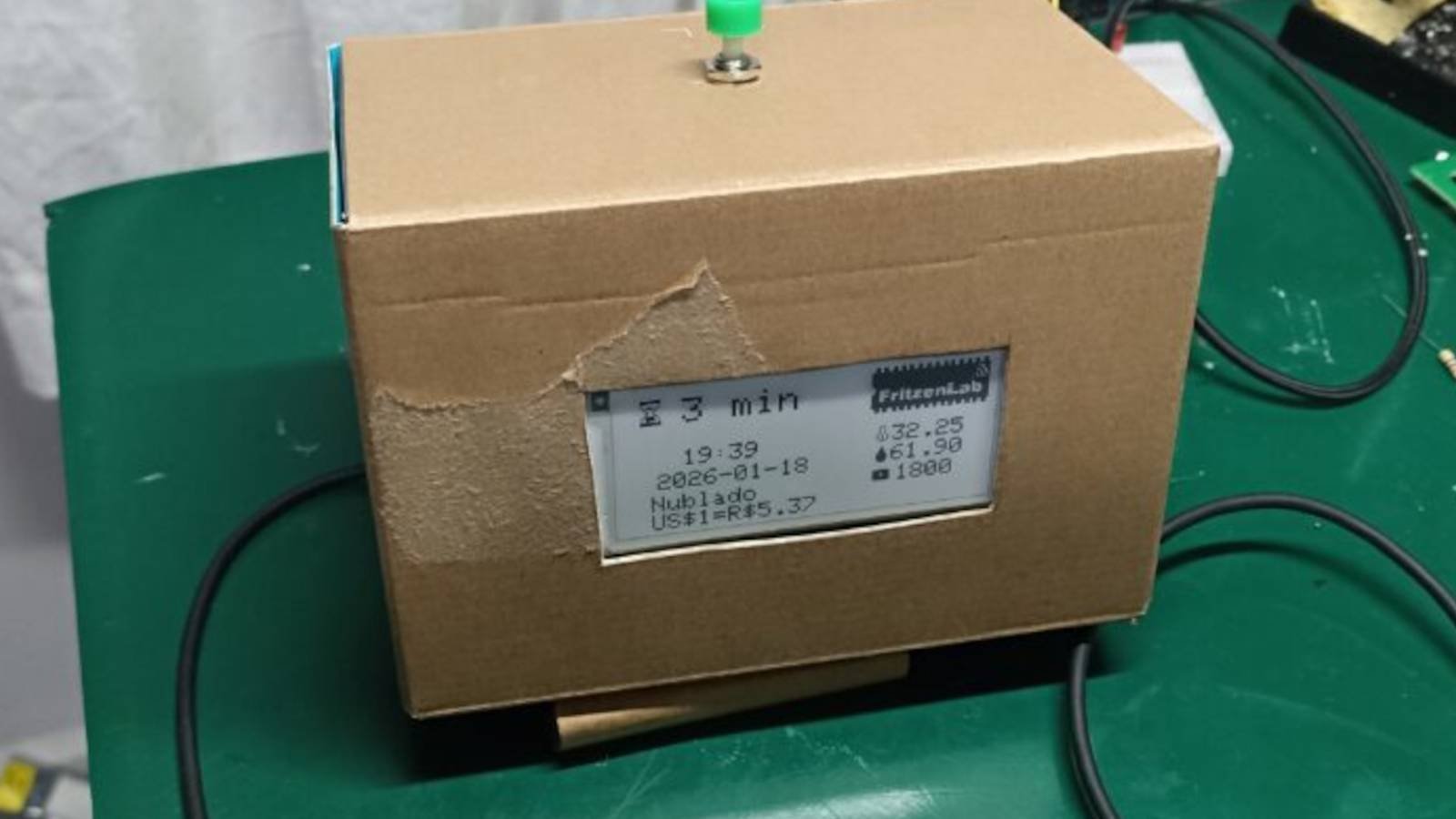
Clovis Fritzen's innovative ESP32 Pomodoro timer project combines productivity tools with practical electronics. Built around an ESP32 microcontroller, this device offers four preset timer intervals (15, 30, 45, or 60 minutes) activated by pressing a physical button one to four times. When the countdown completes, an audible alert signals the session's end.
The device's standout feature is its low-power e-paper display, which serves dual purposes. During work sessions, it shows the active timer countdown. Between sessions, it transforms into an information dashboard pulling data from online sources: current time and date, local weather conditions, currency exchange rates, YouTube subscriber counts, and temperature/humidity readings from connected sensors.
Unlike Raspberry Pi-based alternatives, this ESP32 implementation prioritizes energy efficiency. The microcontroller's deep sleep capabilities paired with e-paper's near-zero power draw when static make the device suitable for continuous desktop use. All hardware components are accessible: an ESP32 development board, e-paper display module, physical buttons, and optional sensors for environmental tracking.
The complete build documentation and Arduino-based source code are available on Fritzen's project blog. Though originally published in Portuguese, modern browser translation tools like Google Translate handle the conversion to English effectively. The prototype uses a cardboard enclosure, but creators can easily design custom 3D-printed cases for durability.
This project demonstrates practical IoT implementation using affordable hardware. By combining Pomodoro functionality with configurable data displays, it exemplifies how ESP32 microcontrollers enable versatile, low-power devices that extend beyond basic timer applications. Interested makers can access all resources through Fritzen's blog to build their own customized version.
Comments
Please log in or register to join the discussion