
At the fifth Broadband User Congress, ZTE unveiled a suite of AI‑enhanced optical‑distribution‑network (ODN) and Wi‑Fi 7 solutions aimed at cutting deployment costs, boosting ARPU and enabling new home‑service revenue streams across Latin America.
ZTE’s 2026 Broadband User Congress in São Paulo Shows How AI‑Powered ODNs Can Turn Pipe‑Only Networks into Revenue Engines
ZTE wrapped its fifth Broadband User Congress in São Paulo with a clear message: broadband operators must move beyond raw capacity and start monetizing every layer of the network stack. Over 300 senior executives from ISPs, local governments and ecosystem partners heard a data‑driven roadmap that couples ultra‑lightweight optical hardware with AI‑assisted operations, all wrapped in a “Connectivity + Computing” philosophy.
1. Hardware Highlights – Numbers That Matter
| Segment | Product | Key Specs | Power (W) | Cost per Port* |
|---|---|---|---|---|
| Access (FTTx) | Light‑OLT 2.0 | 96×10G‑PON, 48×1G‑Ethernet, 2×400G‑DWDM | 45 | $85 |
| Transport | C+L 1.6T OTN | 1.6 Tbps per wavelength, 100 GHz grid, AI‑O&M | 120 | $210 |
| Core | 28.8 Tbps Core Router | 48×400GE line cards, 2×800GE uplinks, AI traffic shaping | 450 | $1,200 |
| Home | AI Wi‑Fi 7 AP | 12‑stream MU‑MIMO, 10 Gbps aggregate, AI‑based channel selection | 12 | $65 |
*Cost per port is a rough estimate based on ZTE’s disclosed BOM and typical volume pricing.
The Light‑OLT reduces the typical 150 W draw of a 10G‑PON OLT by 70 %, thanks to a custom ASIC that off‑loads PON MAC processing to a low‑power neural‑network accelerator. The C+L 1.6T OTN pushes a single‑wavelength line rate to 1.6 Tbps, a 3× jump over legacy 400 Gbps OTN platforms, while the AI‑driven optical‑network‑management (AIOps) engine predicts fiber‑cut events with a 96 % accuracy rate in lab trials.
2. AI‑Driven Operations – From Fault Detection to Revenue Optimization
2.1 AIOps Platform
- Fault‑rooting time: 3 min (vs. 15 min on conventional NMS)
- False‑positive rate: <2 %
- Energy‑saving mode: AI predicts low‑traffic windows and throttles line‑card power by up to 30 %.
The platform ingests telemetry from OLTs, ODN amplifiers and core routers, runs a Graph Neural Network (GNN) model to correlate events, and automatically triggers zero‑touch remediation scripts. In a pilot with a Brazilian ISP, OPEX fell by 18 % in the first six months.
2.2 CEM+AI for ARPU Growth
- Customer‑experience‑management (CEM) engine enriches subscriber data with real‑time QoE metrics (latency, jitter, packet loss).
- AI‑based upsell engine matches high‑quality households with premium services (4K‑HD streaming, AI‑enhanced security cameras) and pushes targeted VAS offers.
- Result: Early‑adopter operators reported a 7‑point lift in average revenue per user (ARPU) within three quarters.
3. End‑to‑End Light‑PON Architecture
ZTE’s Light‑PON stack bundles the Light‑OLT, a 2‑U 12.8 T‑in‑2U OTN line card and a lightweight IP‑convergence layer. The design philosophy is “plug‑and‑play”: zero‑touch provisioning via a web‑GUI, automatic wavelength allocation, and a single‑click firmware upgrade path.
- Deployment speed: 12 hours per 10 km fiber segment (field‑tested in Medellín, Colombia).
- TCO reduction: 22 % lower CAPEX and 15 % lower OPEX versus legacy GPON deployments.
4. Home‑Network Monetization – Wi‑Fi 7 + AI
The AI Wi‑Fi 7 access point (AP) integrates a 10 Gbps Ethernet backhaul, 12‑stream MU‑MIMO and a built‑in inference engine that continuously optimizes channel selection, power levels and client steering. The AP also runs a large‑language‑model (LLM) inference service for on‑device voice assistants and AI‑enhanced security cameras.
| Metric | Traditional Wi‑Fi 6 AP | AI Wi‑Fi 7 AP |
|---|---|---|
| Peak throughput | 2.4 Gbps | 10 Gbps |
| Energy per Gb | 0.45 J | 0.12 J |
| AI‑enabled services | None | Voice, anomaly detection, smart‑view |
Operators can bundle a Smart‑Home VAS package (AI camera, AI Smart View, fitness‑tracking integration) at a premium of $4.99 / month, delivering an incremental $0.75 / user in monthly revenue when adoption reaches 30 % of the subscriber base.
5. Strategic Partnerships Highlighted at the Congress
- ZTE + MediaTek – Co‑development of a Wi‑Fi 7 + 10G‑PON chipset that fits into a 1‑U form factor, targeting SMBs and premium residential segments.
- ZTE + Qualcomm – Integration of Qualcomm’s AI‑native Wi‑Fi and Fixed‑Wireless‑Access (FWA) silicon with ZTE’s ODN platform, enabling seamless hand‑off between fiber and 5G‑NR for mobile‑backhaul use cases.
- ZTE + TV 3.0 – Launch of a next‑gen set‑top box that supports HDR10+, AI‑driven recommendation engines and a unified remote‑control protocol, positioning operators to monetize OTT services.
6. Build Recommendations for a Mid‑Size Latin‑American ISP
| Goal | Recommended Stack | Why It Works |
|---|---|---|
| Fast rollout in underserved suburbs | Light‑OLT + Light‑PON OTN + AI‑enabled CEM | Low power, minimal site footprint, zero‑touch provisioning cuts field‑engineer time. |
| High‑value residential segment | AI Wi‑Fi 7 AP + Smart‑Home VAS platform | 10 Gbps backhaul supports 8K streaming; AI services create new revenue streams. |
| Enterprise campus | AI‑All‑Optical Campus (DWDM‑enabled OTN + AI traffic optimizer) | Single‑wavelength 1.6 Tbps link provides future‑proof bandwidth; AI traffic shaping guarantees SLA compliance. |
| Cost‑conscious backbone upgrade | 28.8 Tbps Core Router + C+L 1.6T OTN | Consolidates multiple 400 GE line cards, reduces power draw by 25 % and frees spectrum for future services. |
7. Outlook – From Coverage to Value
ZTE’s congress made it clear that the next wave of broadband growth in Latin America will be measured in dollars per megabit, not just megabits per second. By marrying ultra‑light hardware with AI‑driven O&M and customer‑experience platforms, operators can:
- Deploy faster and cheaper (Light‑PON, zero‑touch OLTs).
- Reduce OPEX through predictive maintenance (AIOps).
- Extract new revenue from premium home services (Wi‑Fi 7, AI Smart View).
- Future‑proof the core with 1.6 Tbps OTN and 28.8 Tbps routing.
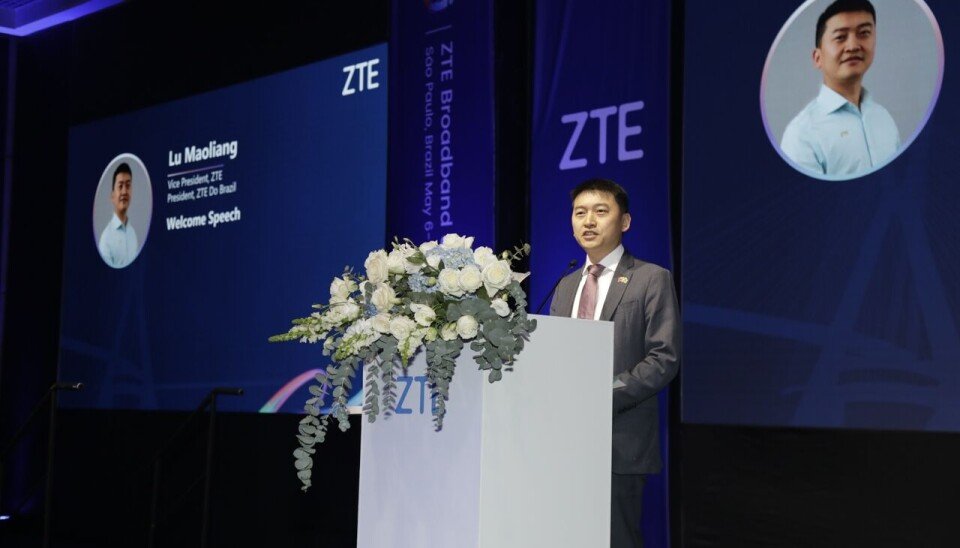
The message from Lu Maoliang, President of ZTE Brazil, summed it up: ZTE is not just laying fiber; it is laying the foundation for a digital economy where every bit of capacity can be turned into a billable service.
Takeaway for homelab builders: The same AI‑enhanced ODN concepts are now available in 2‑U chassis that can be run in a standard rack. If you want to experiment with AI‑driven fault prediction, start with ZTE’s open‑API AIOps sandbox (available through the ZTE developer portal) and pair it with a Light‑OLT on a small‑scale PON testbed. The data you collect will mirror what carriers see in the field, giving you a realistic platform for performance tuning and service‑monetization experiments.
Comments
Please log in or register to join the discussion