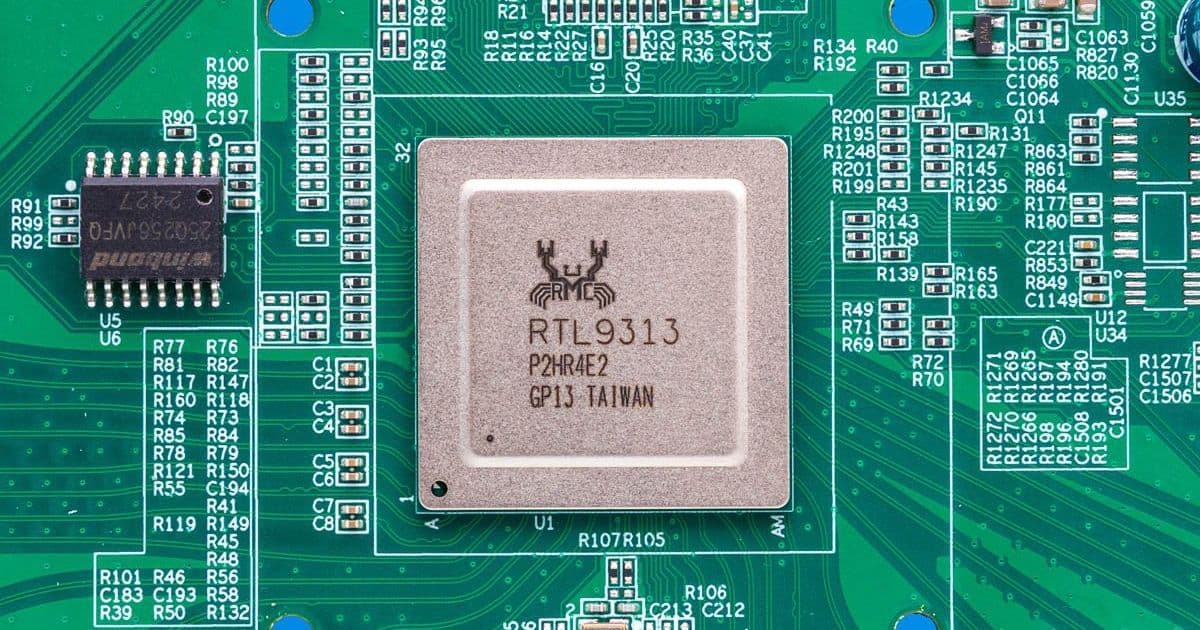
The cost of 10GbE networking has plummeted to sub-$50 adapter prices, driven by new, low-cost controller silicon from Realtek and Marvell. This marks a fundamental shift where 10GbE is no longer a premium upgrade but a standard feature for homelabs, workstations, and even budget NAS devices.
For years, 10GbE networking has been the aspirational upgrade for homelab builders and performance enthusiasts. We've watched it transition from a costly, power-hungry server feature to a more accessible option, but always with a price barrier that kept it from being a true mass-market standard. That barrier is now collapsing. Over the past few weeks, we've seen a flood of new products and announcements that signal a definitive tipping point for 10GbE in 2026. The driving force isn't a single breakthrough, but a convergence of new, low-cost controller silicon, efficient PCIe integration, and a market finally ready to saturate the 10GbE lane.
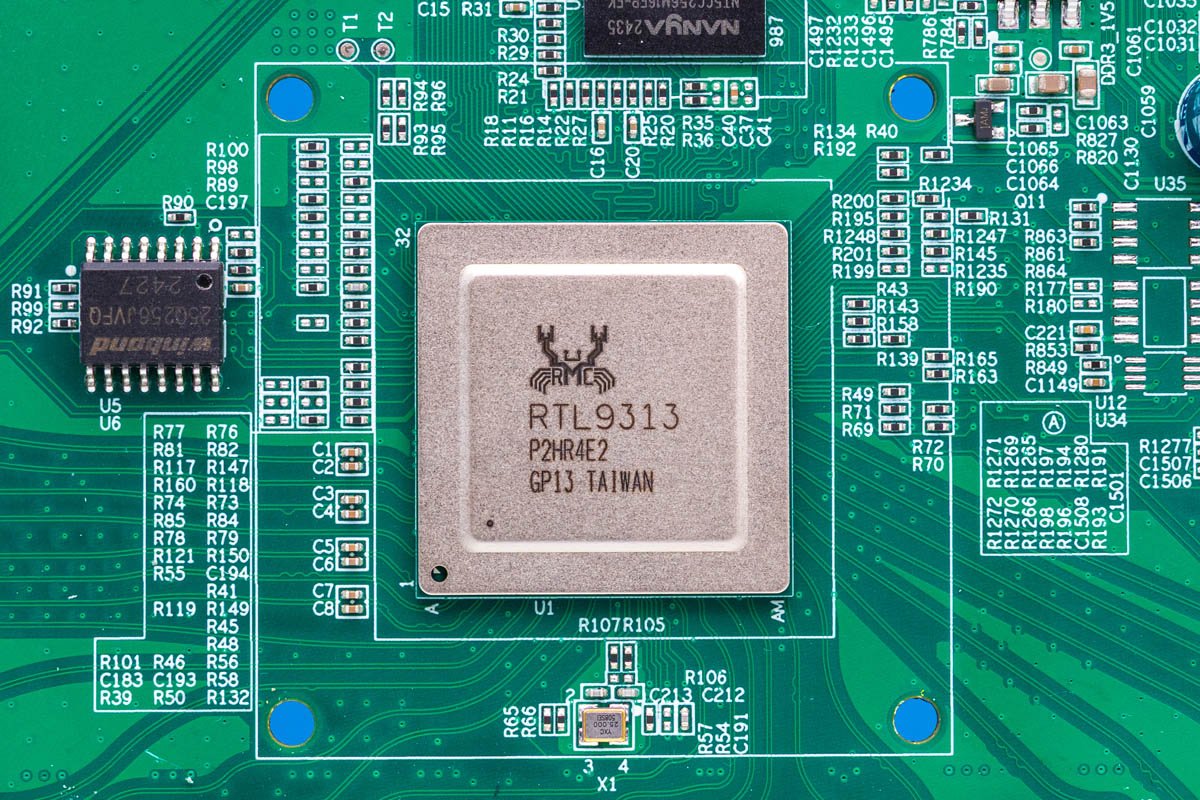
The Controller Revolution: From $100 to $10
The core of this shift lies in the Network Interface Controller (NIC) chips themselves. For a decade, the 10Gbase-T market was dominated by a few players with high barriers to entry. 10Gbase-T is inherently more challenging than its fiber counterpart; the copper links are electrically noisy, requiring sophisticated signal processing to maintain integrity at 10Gbps. This complexity historically translated into expensive PHYs and NICs.
Two new contenders are rewriting this equation.
Realtek RTL8127: The Sub-$50 Adapter Era
First, we have the Realtek RTL8127. This isn't Realtek's first foray into 10GbE, but it represents a strategic pivot. Where the RTL8125 (2.5GbE) and RTL8126 (5GbE) targeted the sub-$1 market, the RTL8127 is a more capable chip priced at "just north of $10 per controller," according to our sources. This is a monumental shift.
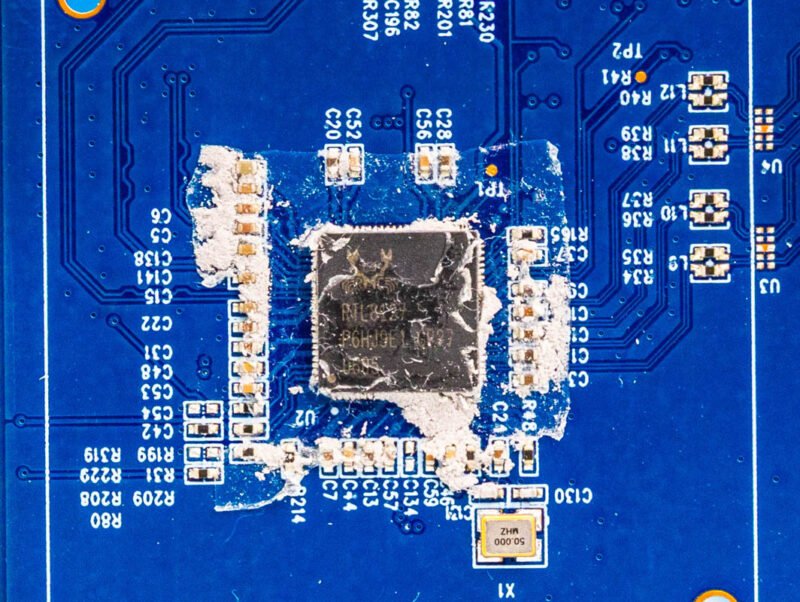
The RTL8127's secret weapon is its efficiency. It can utilize a single PCIe Gen4 lane (x1) to connect to the CPU or chipset. This is the same lane width used for 2.5GbE and 5GbE controllers. The implication is profound: for a few dollars more in BOM cost, a motherboard manufacturer or adapter vendor can step up from 5GbE to full 10GbE without redesigning the PCB or consuming more precious PCIe lanes.
We're already seeing this in action. The Minisforum MS-R1, a compact mini PC, integrates the RTL8127 directly. This enables a new class of devices where 10GbE is a standard feature, not an add-on card. For the DIY builder, this translates to sub-$50 10Gbase-T adapters that fit into any PCIe Gen4 x1 slot—a slot that was previously only useful for slower networking or storage controllers.
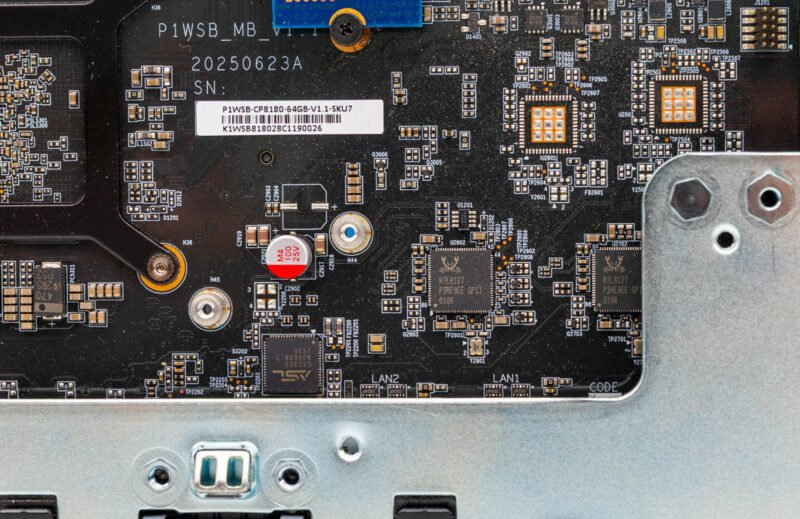
The supply chain is already responding. Prices in regions like China, where card distribution costs are lower, are already trending well below the $50 mark. This isn't just a price drop; it's a structural change in what's possible for a low-power, single-lane slot.
Marvell AQC113/AQC113C: The Established Workhorse
Marvell's Aquantia lineage has been the silent workhorse of 10GbE adoption. After acquiring Aquantia, Marvell continued to produce the AQC113 and AQC113C chips, which have been the go-to solution for companies like Lenovo and Apple to add 10GbE to their devices for years.
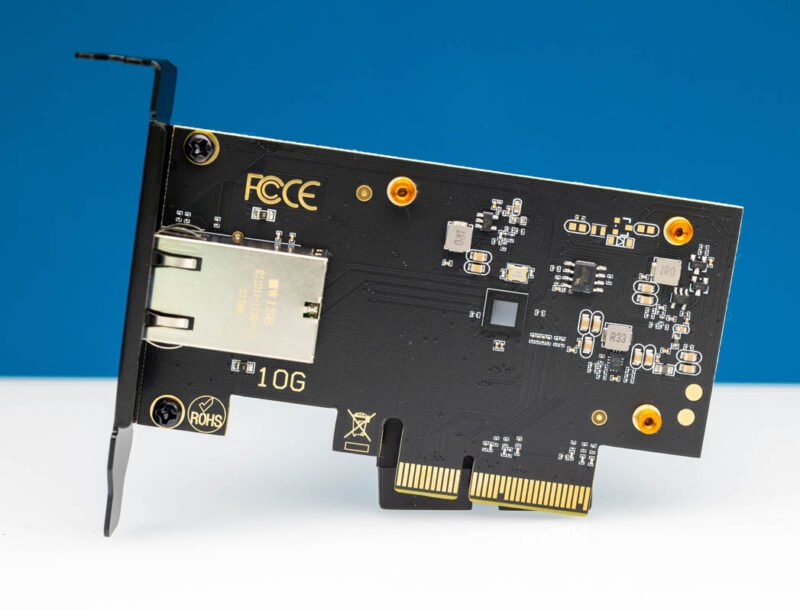
These chips are proven, reliable, and now, thanks to the new competitive pressure from Realtek, are seeing their own price erosion. The AQC113C is a dual-purpose chip, supporting 2.5GbE and 5GbE in addition to 10GbE, making it a versatile choice for NAS devices and workstations. We've seen it in low-cost NAS enclosures like the TerraMaster F8-SSD Plus, where it provides a cost-effective path to 10GbE connectivity without the premium of enterprise-grade NICs.
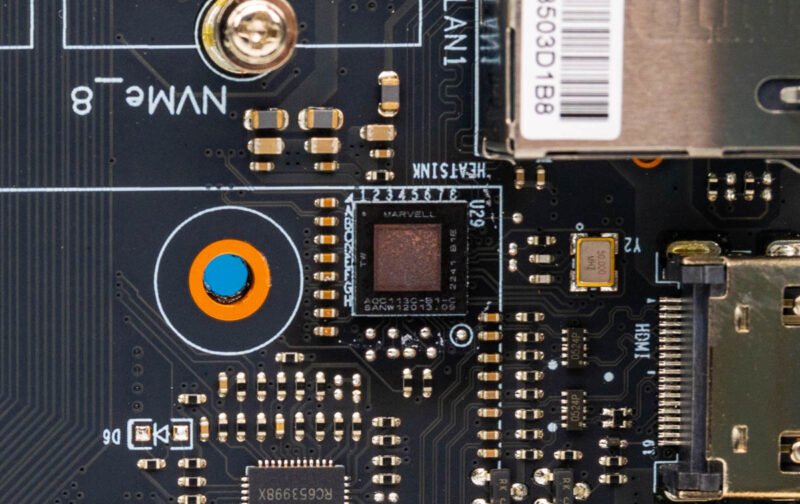
While the RTL8127 may be the new price leader, the AQC113C remains a strong contender, especially for systems that need proven stability and multi-gig support across a wider range of link speeds.
The Intel Counterpoint: E610 and the Server Legacy
Intel's entry into this new low-cost 10GbE market is the E610, launched in 2025. This is a server-focused NIC designed for efficiency and low power consumption, making it ideal for dense server deployments and thermally constrained environments.
However, the E610's journey into the consumer and homelab space has been bumpy. Feedback from vendors, such as with the Beelink GTR9 Pro, indicates early challenges with cost and bugs. One mini-PC vendor at CES 2026 told us they had to switch from an E610 design to a Realtek solution due to these issues. The E610's per-port cost is reportedly more than double that of the Realtek and Marvell solutions, positioning it as a premium server adapter rather than a budget homelab card.
For the server market, the E610's low power draw and ease of cooling will make it a go-to choice over time. For the enthusiast building a single-node homelab, however, the RTL8127 and AQC113C offer far better value.
The Overlooked Veteran: Intel X710-T4L
Amidst the new silicon, it's worth revisiting a card that many have forgotten: the Intel X710-T4L (4-port) and X710-T2L (2-port). While the X700 series is known for 40GbE/10GbE fiber, the X710-T4L is a copper-focused adapter that supports Nbase-T speeds (2.5GbE and 5GbE) in addition to 10GbE.
This is a critical feature. Many older 10GbE cards, like the standard X710-T4, only support 10GbE and 1GbE. If you connect them to a 2.5GbE switch, they'll fall back to 1GbE, wasting the switch's capability. The X710-T4L, like the newer consumer controllers, is multi-gig aware.
While the E610 is Intel's future for server adapters, the X710 L-series remains a solid, "no/low hassle" option for those who need multi-gig support and the reliability of Intel's driver stack, especially in mixed-speed environments.
What This Means for Your Build
The tipping point isn't just about cheaper adapters; it's about rethinking your entire network topology.
- The Homelab Upgrade: For years, adding 10GbE to a desktop or server meant a $150+ card and a matching switch. Now, you can get a PCIe Gen4 x1 adapter for under $50. This makes 10GbE a viable upgrade for any system with a spare Gen4 lane, which includes most modern motherboards.
- NAS and Storage: Low-cost NAS devices are now integrating 10GbE controllers directly. This means you no longer need a separate, expensive 10GbE NAS or a costly add-on card. The performance bottleneck shifts from the network to the storage media (NVMe vs. HDD).
- Switch Considerations: The adapter cost drop puts pressure on the switch market. While 10GbE switches are still more expensive than 1GbE, the gap is narrowing. We're seeing more 5- and 8-port 10GbE switches, and the used market for enterprise 10GbE switches is more accessible than ever.
The Bottom Line
The combination of the Realtek RTL8127's aggressive pricing and PCIe Gen4 x1 efficiency, the proven Marvell AQC113C, and the multi-gig support of cards like the Intel X710-T4L has created a perfect storm. 10GbE is no longer a luxury. It's becoming the new baseline for anyone who moves large files, runs multiple VMs, or simply wants to future-proof their network.
The industry has reached a tipping point. The question for builders in 2026 is no longer "Should I upgrade to 10GbE?" but "Which sub-$50 adapter should I buy?"
Comments
Please log in or register to join the discussion