How consolidation and risk aversion killed literary culture in New York publishing, and why independent voices are our last hope.
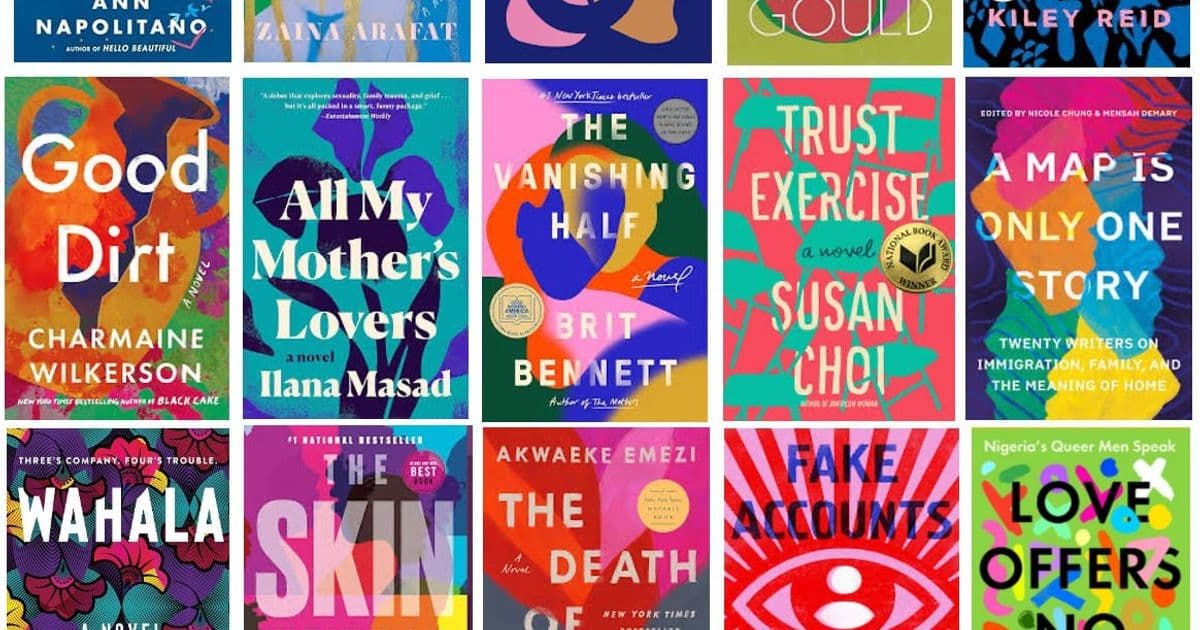
The publishing world is in crisis. Walk into any bookstore and you'll see the same circus-clown covers - big fonts, random shapes, garish colors repeated endlessly. Every book looks like it was designed by a bot with a makeup kit. My wife's book club might as well read the same book every month; the covers all blur together.
Even the "hot new books" feel lukewarm. Writers win Pulitzer Prizes and sell just a few hundred copies. Publishers rely on 50 or 100 proven authors while everything else is window dressing. The industry has become a graveyard of stale formulas, flogging the same approaches long after they stopped working.
How did we get here? The answer lies in a lunch meeting from fall 1995, when Steve Wasserman, one of publishing's smartest editors, met with his boss at Random House. Wasserman had a solid track record, but that wasn't enough anymore. His boss explained the new math: first printings of ten thousand copies were killing them. They needed books that could command forty, fifty, even sixty thousand copies just to feed the corporate behemoth.
Wasserman pointed out the obvious flaw in this logic. Some of Random House's biggest successes - Paul Kennedy's "The Rise and Fall of Great Powers," John Berendt's "Midnight in the Garden of Good and Evil," Joe Klein's "Primary Colors" - all started with ten-thousand copy first printings. None were expected to be bestsellers. But it was a hopeless cause. The industry had learned a new kind of math, and midlist writers were about to disappear.
I lived through this transition. My first editor was part of the old system. He knew my debut book would sell only a few thousand copies, but he was okay with that. Before it was even published, he asked me to write a second book. That also sold modestly. But he signed me for my third book - which became a big success. He had patiently nurtured my talent because he had confidence it would develop, and the system allowed him to do this.
That wouldn't happen today. Now editors make a commitment to a single book, and it must sell in large quantities. Authors who don't deliver are dropped faster than a bad Tinder hookup. It's more like playing the lottery than building a writer's career.
The death of the midlist wasn't accidental. It came from tremendous consolidation. Bennett Cerf and Donald Klopfer founded Random House in 1927, bought Alfred A. Knopf in 1960, and Pantheon in 1961. They sold to RCA in 1965, which sold to Si Newhouse's Advance Publications in 1980 for $65-70 million. Newhouse ruled for eighteen years, then sold to Bertelsmann in 1998 for $1 billion, making it a publishing Goliath.
When Random House was a tiny independent company, it could make a tidy profit publishing books that sold just ten thousand copies. But when you're part of a billion-dollar corporation, those books don't move the needle. You need something bigger and splashier. So you put large fonts on the covers, along with fancy shapes and garish colors. And the story inside has to be tried and true.
The problem starts at the top. While we don't know exactly what the Bertelsmann CEO makes, his previous compensation was $1.7 million. You can't pay enormous salaries like this by publishing smart and bold midlist books. You're not allowed to take risks. So editors reach for surefire books - celebrity memoirs filled with juicy gossip, formula novels with Netflix potential, self-help books from Instagram influencers, and other dumbed-down mass market fare.
If it works, the CEO gets that huge payday. But literary culture goes down the tank - which is where we're sitting right now.
We don't need to accept this. We can have a healthier, more robust book culture - but it won't happen inside the intensely consolidated world of the Big Five publishers. We need fresh air.
The Big Five control over 80% of the trade publishing market. Indie publishers exist, but they need more support than they're getting. We need newspapers that review indie books, but newspapers have disappeared because of the same consolidation forces. We need indie bookstores that support books outside the Big Five, but many have shut down. We need schools and colleges that educate the next generation of readers, but many professors have stopped assigning entire books in a misguided attempt to adapt to digital swipe-and-scroll culture.
So we are at our last line of defense. We still have individual readers who will seek out more challenging or provocative literature. We still have book clubs that operate outside the influence of dominant hierarchies. We still have public libraries that aim to serve their communities. We still have indie critics (many on Substack), as well as platforms where they can reach an audience. And we still have a few renegades working inside the system who bravely resist the dumbing down.
I make a point of supporting these independent voices. I encourage you to do the same. Don't think for one second that we don't need independent writers. The forces of conformity and centralization of power are stronger now than ever. Books have always been our safeguard in such troubled times. But when books are controlled and constrained by the entrenched system, they fail to provide us with meaningful alternatives.
Our safety and freedom only come from indie culture, alt culture, counterculture. I don't think we can fix the legacy players who created this mess. But we have a decent chance of building something outside their control. And if we make headway with books, we might just do the same for movies and music and all the rest.
Comments
Please log in or register to join the discussion