
With the conflict escalating after Israel's airstrikes on Iranian nuclear facilities and Tehran's retaliatory missile strikes, experts outline five potential pathways for de-escalation or further conflict.
The conflict between Israel and Iran has reached a critical juncture following Israel's airstrikes on Iranian nuclear facilities and Tehran's retaliatory missile strikes. As tensions escalate, experts are mapping out five potential scenarios for how this war could ultimately end.
Scenario 1: Diplomatic Resolution The most optimistic outcome would involve international mediation leading to a ceasefire agreement. The United States, European Union, and regional powers could broker negotiations between Israel and Iran, potentially reviving elements of the 2015 nuclear deal. This scenario would require both sides to make significant concessions, with Iran agreeing to limit its nuclear program and Israel accepting constraints on its military operations.
Scenario 2: Limited Military Engagement In this scenario, both nations would agree to de-escalate after a series of proportional military exchanges. Iran might halt its proxy attacks through Hezbollah and other groups, while Israel would cease its direct strikes on Iranian territory. This could lead to a fragile peace maintained by mutual deterrence, similar to the current dynamic between India and Pakistan.
Scenario 3: Proxy War Continuation The conflict could transition into a prolonged proxy war, with both nations supporting opposing factions across the Middle East. Israel would continue backing anti-Iranian groups in Syria and Iraq, while Iran would maintain support for Hezbollah in Lebanon and various militias in Yemen. This scenario would likely result in years of regional instability without direct military confrontation between the two nations.
Scenario 4: Regional War A more dangerous scenario involves the conflict expanding to include other regional powers. Saudi Arabia, the UAE, and other Gulf states might enter the conflict on Israel's side, while Iran could draw support from Russia and potentially China. This could transform the bilateral conflict into a broader Middle Eastern war with devastating consequences for global oil markets and international security.
Scenario 5: Nuclear Escalation The most catastrophic scenario involves the potential use of nuclear weapons. While Iran currently lacks nuclear weapons, its pursuit of nuclear capabilities has accelerated. Israel, as a confirmed nuclear power, might feel compelled to use tactical nuclear weapons if faced with an existential threat. This scenario would have unimaginable global consequences and could trigger World War III.
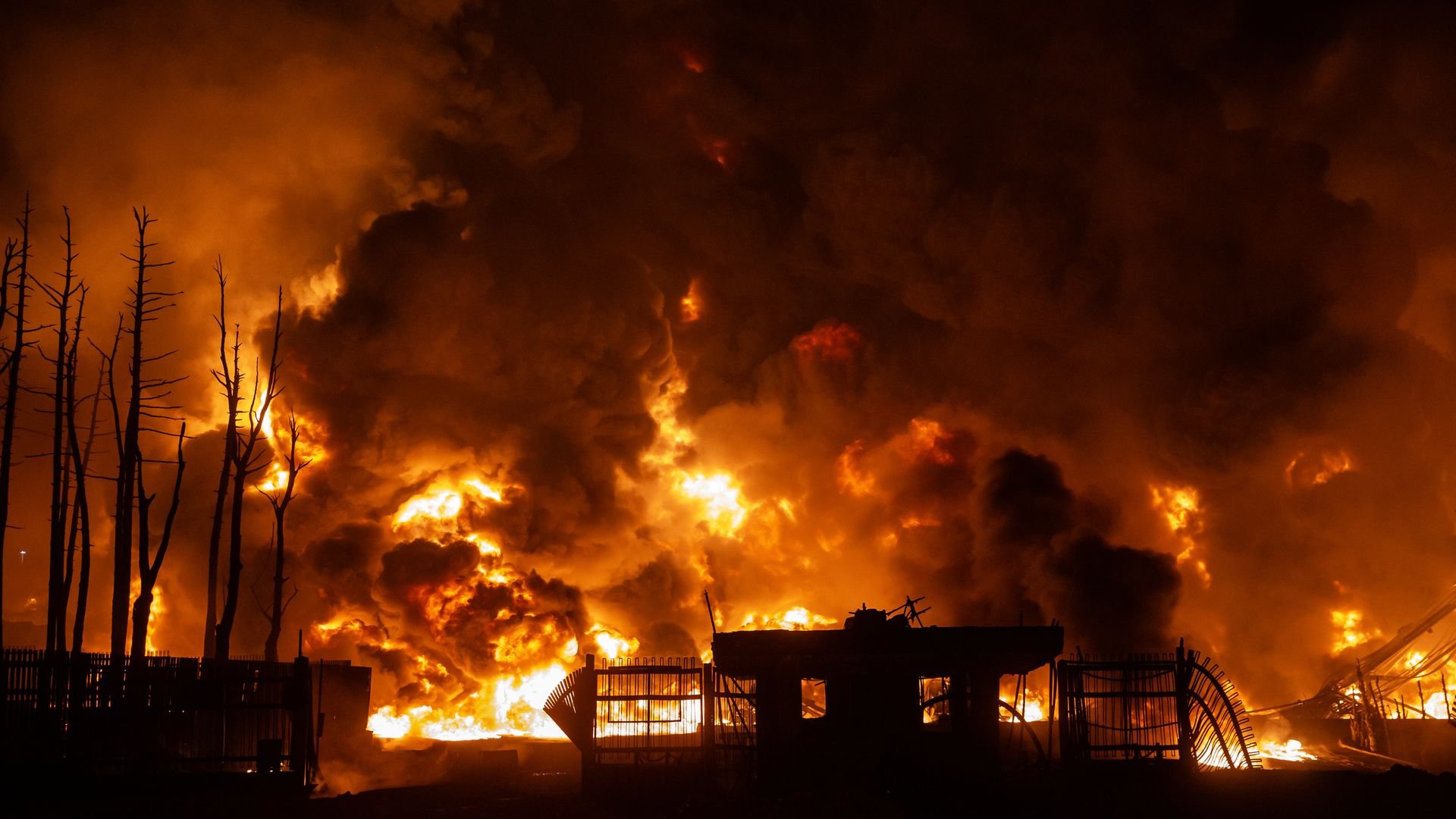
Current Situation The recent strikes on the Shahran oil depot in Tehran demonstrate the conflict's escalation. Israel's precision strikes on Iranian nuclear facilities have been met with increasingly sophisticated Iranian missile attacks, creating a dangerous cycle of retaliation.
The international community remains deeply concerned about the potential for further escalation. The United Nations has called for immediate de-escalation, while major powers are working behind the scenes to prevent the conflict from spiraling out of control.
Economic Impact The war has already begun affecting global markets. Oil prices have surged by 15% since the conflict began, and stock markets worldwide have experienced significant volatility. The Strait of Hormuz, through which 20% of global oil passes, remains a potential flashpoint that could disrupt energy supplies worldwide.
Humanitarian Concerns The conflict has created a severe humanitarian crisis, with thousands displaced in both countries. Medical facilities are overwhelmed, and essential supplies are running low in affected areas. International aid organizations are struggling to provide assistance due to security concerns and access restrictions.
Military Analysis Military experts note that both nations have significant capabilities that could prolong the conflict. Israel's advanced missile defense systems, including the Iron Dome and David's Sling, have proven effective but are being tested by the volume of Iranian attacks. Iran's ballistic missile program and asymmetric warfare capabilities present ongoing challenges for Israeli defense forces.
International Response The United States has reaffirmed its commitment to Israel's security while calling for restraint. European nations have urged both sides to return to negotiations, and Russia has offered to mediate between the conflicting parties. China has called for a peaceful resolution while maintaining its strategic partnership with Iran.
Path Forward The coming weeks will be crucial in determining which scenario becomes reality. Diplomatic efforts are intensifying, but both nations appear committed to their current courses of action. The international community's ability to broker a peaceful resolution will depend on its willingness to apply meaningful pressure on both parties and offer credible security guarantees.
The conflict's resolution will likely require a combination of diplomatic, economic, and security measures. Any lasting peace agreement must address the underlying issues that led to the conflict, including Iran's nuclear program, Israel's security concerns, and the broader regional power dynamics.
As the situation continues to evolve, the world watches with growing concern, hoping for a peaceful resolution while preparing for the possibility of further escalation. The choices made in the coming days could determine the future of the Middle East and have far-reaching consequences for global security and stability.
Comments
Please log in or register to join the discussion