A user's successful experiment using a Raspberry Pi 3 to run a RADIUS server with FreeBSD and daloRADIUS demonstrates the viability of low-cost, open-source solutions for managing Ubiquity access points, highlighting the practical application of legacy hardware and robust software stacks.
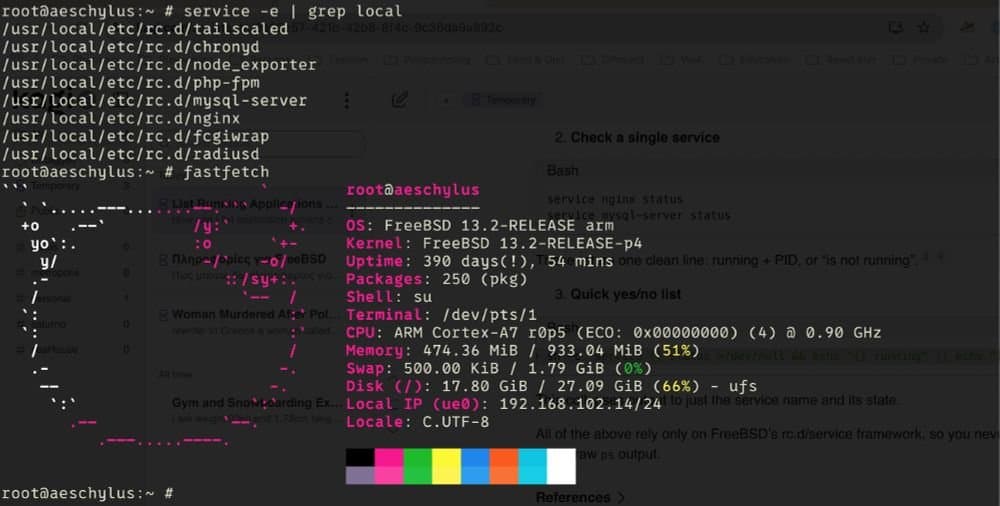
The concept of using a Raspberry Pi as a server is well-trodden ground, but its application in specific, critical network roles often reveals the true potential of these small devices. A recent post by user @atmosx.bsky.social details a successful experiment where a Raspberry Pi 3, running FreeBSD 12, was configured as a RADIUS server. This server was integrated with the daloRADIUS LAMP stack to manage authentication for a set of Ubiquity access points. The result was a test that passed "with flying colors," proving the setup's reliability in a real-world scenario.
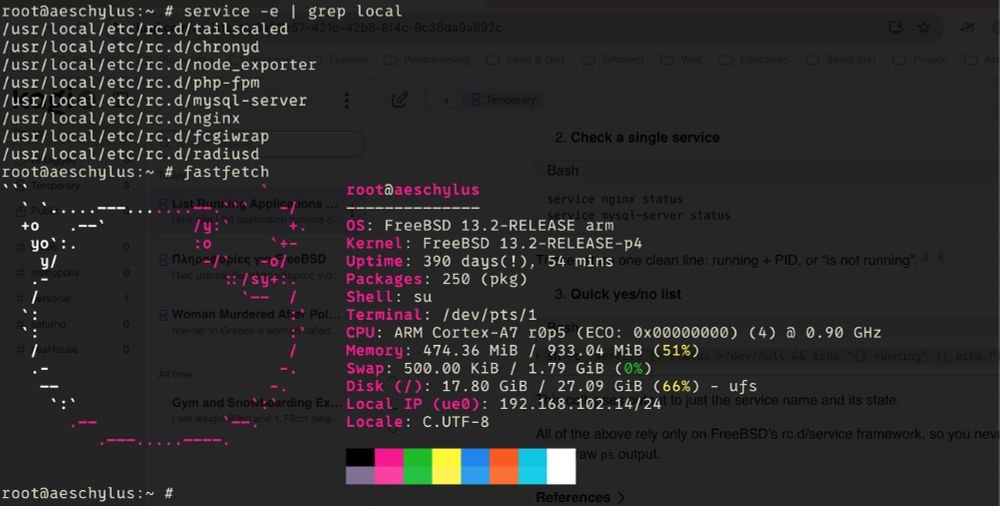
At its core, a RADIUS (Remote Authentication Dial-In User Service) server is a centralized authentication, authorization, and accounting (AAA) system. It's the gatekeeper for network access, deciding who can connect, what they can do, and tracking their usage. Traditionally, this role is filled by dedicated hardware or enterprise-grade servers. However, the combination of a Raspberry Pi 3—a device with modest specifications by today's standards—and FreeBSD, a Unix-like operating system renowned for its stability and security, challenges that assumption. FreeBSD's robust networking stack and support for the ARM architecture make it a compelling choice for such a project, offering a level of performance and reliability that is often underestimated on single-board computers.
The software stack is equally important. The post mentions daloRADIUS, a web-based management interface for RADIUS servers. It acts as the front-end to FreeRADIUS, the industry-standard RADIUS server software. Together, they form a complete LAMP (Linux, Apache, MySQL, PHP) stack, which, in this case, is running on FreeBSD. This setup allows for intuitive management of user accounts, policies, and network access through a web browser. The choice of daloRADIUS is particularly practical for small to medium-sized deployments, as it simplifies the often-complex configuration of FreeRADIUS. For those interested in the specifics, the daloRADIUS project page provides extensive documentation and community support.
The implications of this experiment are significant for network administrators and hobbyists alike. It demonstrates that for many small-scale or lab environments, expensive, proprietary hardware is not a necessity. A Raspberry Pi 3, which can be acquired for a fraction of the cost of a traditional server, can handle the RADIUS workload effectively. This opens the door to more affordable and flexible network management solutions. Furthermore, using FreeBSD adds a layer of security and stability that is often desired in authentication systems. The operating system's reputation for being secure and its long-term support for specific versions (like FreeBSD 12) make it a reliable foundation for a server that needs to run continuously.
The user's follow-up comment, showing a crontab entry for automated backups and certificate renewals, underscores a critical aspect of any server deployment: maintenance. The use of restic for backups and certbot for TLS certificate management indicates a professional approach to operational hygiene. These automated tasks ensure data integrity and security, which are paramount for a system handling authentication credentials. The specific cron schedules (every 2 days for backups, every 3 days for certificate renewal) reflect a balanced approach to resource conservation and reliability.
While this setup is impressive, it's important to consider its limitations. A Raspberry Pi 3 has a 1.2 GHz quad-core ARM Cortex-A53 CPU and 1GB of RAM. For a large number of concurrent users or a very high rate of authentication requests, this hardware might become a bottleneck. However, for a small office, a home lab, or a set of a few Ubiquity access points, it is more than sufficient. The trade-off is clear: you gain affordability and flexibility but may need to scale up hardware for larger deployments. The success of this experiment proves that for many use cases, the trade-off is entirely acceptable.
In essence, this project is a testament to the power of open-source software and the enduring utility of older hardware. It connects several mature technologies—FreeBSD, FreeRADIUS, daloRADIUS, and the Raspberry Pi—into a cohesive, functional system. It shows that with careful selection of components and attention to operational details like automated maintenance, one can build a reliable network service without a significant financial investment. For anyone looking to implement a RADIUS server for their network, this example provides a practical, proven blueprint.
Comments
Please log in or register to join the discussion