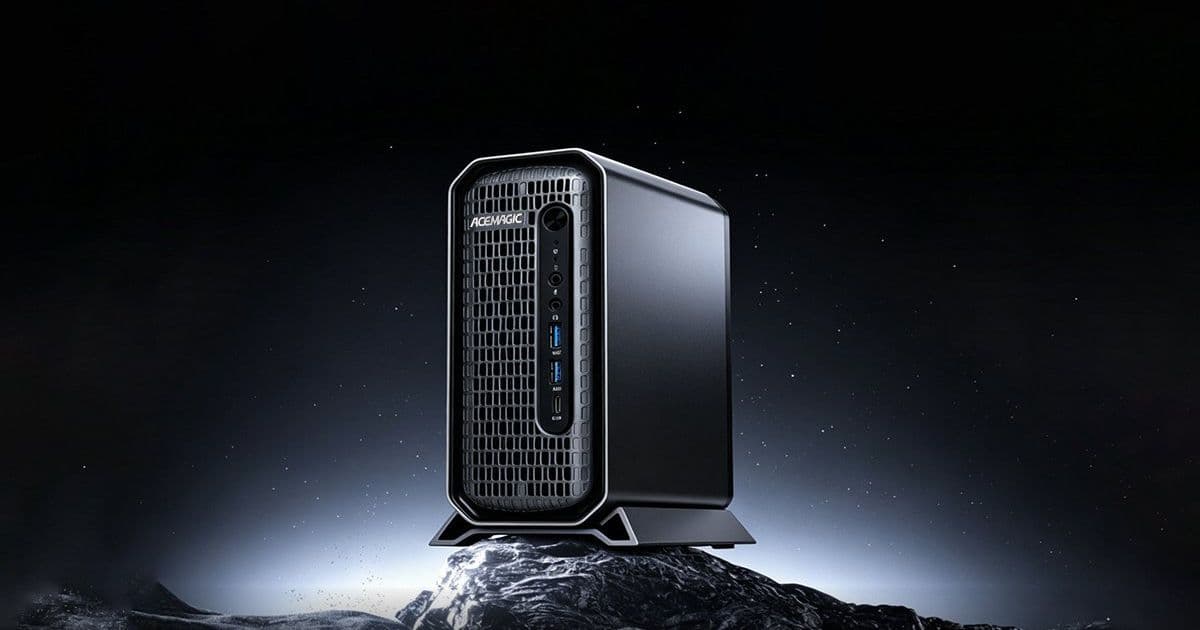
Acemagic’s upcoming G3A packs a desktop‑grade LGA 1700 socket, DDR5 SO‑DIMM, dual‑slot graphics and a 3.46 L chassis, targeting workstation and prosumer users who need desktop performance in a small form factor.
Acemagic has lifted the veil on its next‑generation compact PC, the G3A, a mini‑tower that marries a desktop‑class LGA 1700 socket with a surprisingly small footprint. The device is slated for a China launch on May 30, 2026, and promises to accommodate Intel’s 13th‑ and 14th‑generation Core i‑series while still fitting a full‑height, dual‑slot graphics card.
What’s new?
- Desktop CPU support – The G3A uses a standard LGA 1700 motherboard, meaning it can run any 13th‑gen (Raptor Lake) or 14th‑gen (Meteor Lake) Core i‑processor, up to 150 W TDP. This is a step up from most mini‑PCs that rely on low‑power mobile CPUs.
- Dual‑slot GPU bay – Unlike the usual half‑height, single‑slot graphics solutions found in SFF boxes, the G3A offers a full‑height, dual‑slot slot. Acemagic lists professional cards such as the RTX Pro 4000 Blackwell SFF and the RTX 2000 Ada, while confirming that consumer low‑profile GPUs like the RTX 5060 will also fit.
- DDR5 SO‑DIMM – The board swaps traditional DIMM slots for two DDR5 SO‑DIMM sockets. This keeps the board thin while still delivering up to 64 GB of high‑speed memory.
- Storage flexibility – Two PCIe Gen 4 x4 M.2 slots sit alongside a 2.5‑inch SATA III bay, giving users the option to pair ultra‑fast NVMe drives with larger, cheaper SATA SSDs or HDDs.
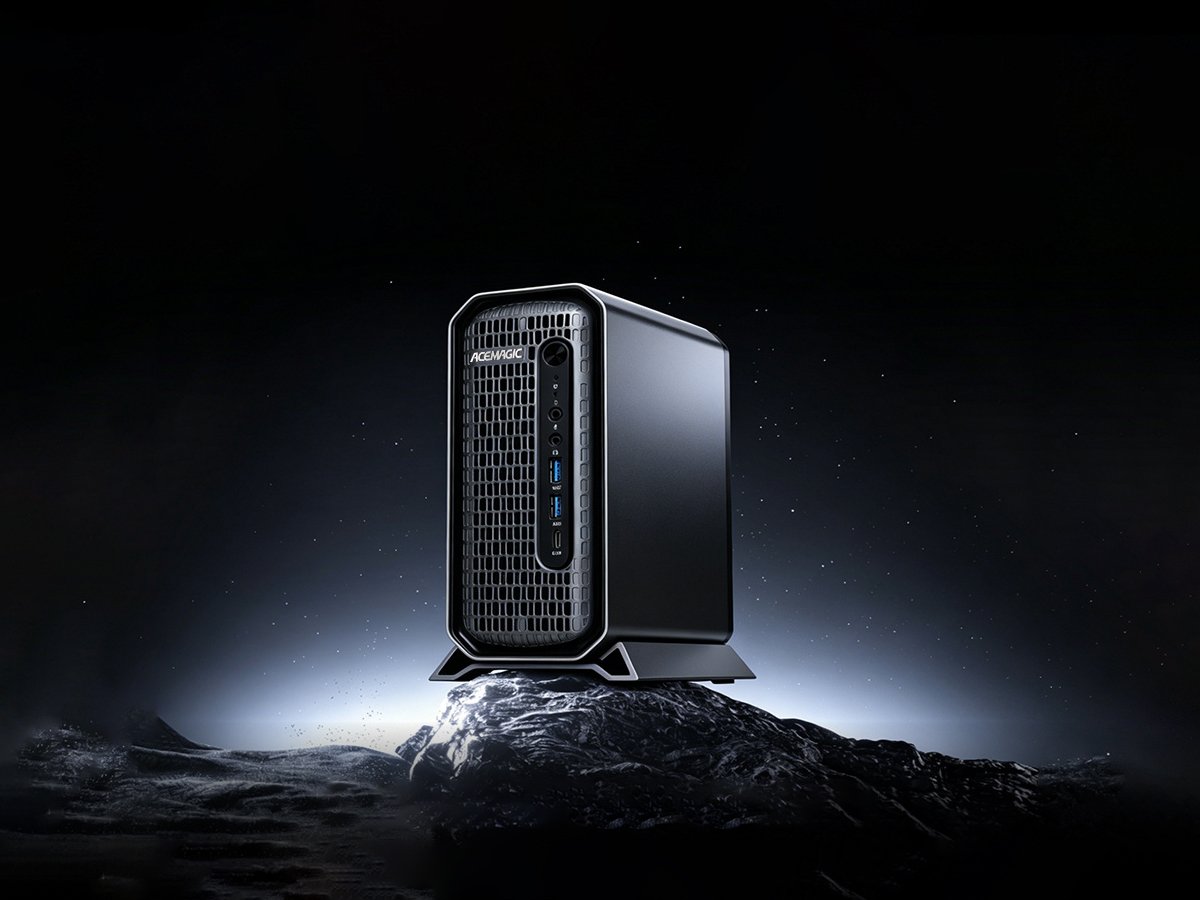
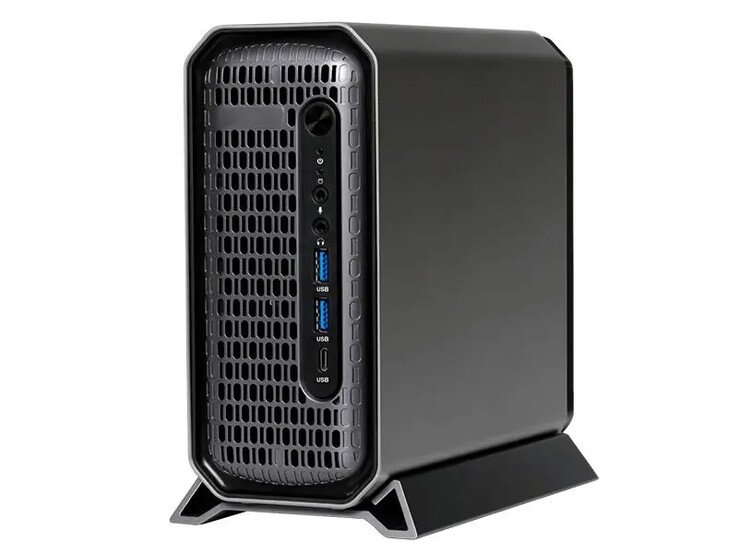
- Connectivity – A surprisingly generous I/O panel includes:
- 2 × USB 2.0 Type‑A
- 2 × USB 3.2 Gen 1 (5 Gbps) Type‑A
- 2 × USB 3.2 Gen 2 (10 Gbps) Type‑A
- 1 × USB 3.2 Gen 2x2 (10 Gbps) Type‑C
- 2 × COM ports for legacy serial devices
- 1 × 3.5 mm audio jack
- Wi‑Fi 6E and Gigabit Ethernet (details not disclosed yet)
- Thermal design – Acemagic claims the cooling solution can sustain up to 135 W of GPU power, enough for most professional and mid‑range consumer cards without throttling.
- Size – The chassis measures roughly 3.46 L (about 210 mm × 180 mm × 90 mm), putting it in the same class as Intel NUCs but with far more expandability.
How does it compare?
| Feature | Acemagic G3A | Intel NUC 13 Extreme | ASUS PN‑Series Mini PC |
|---|---|---|---|
| CPU socket | LGA 1700 (desktop) | LGA 1700 (desktop) | LGA 1700 (desktop) |
| Max CPU TDP | 150 W | 125 W | 125 W |
| GPU slot | Dual‑slot, full‑height | Dual‑slot, full‑height (optional) | Single‑slot, low‑profile only |
| RAM type | 2 × DDR5 SO‑DIMM (up to 64 GB) | 2 × DDR5 DIMM (up to 64 GB) | 2 × DDR5 SO‑DIMM (up to 64 GB) |
| Storage | 2 × PCIe 4 x4 M.2 + 1 × 2.5" SATA | 2 × PCIe 4 x4 M.2 + 1 × 2.5" SATA | 2 × PCIe 4 x4 M.2 + 1 × 2.5" SATA |
| Power draw (GPU) | Up to 135 W sustained | Up to 150 W (depends on card) | Up to 75 W (low‑profile only) |
| Volume | 3.46 L | ~5 L | ~4 L |
| Price (expected) | TBD | $1,300‑$1,800 (barebones) | $800‑$1,200 |
The G3A narrows the gap between the NUC Extreme line and larger mini‑towers. Its dual‑slot GPU support puts it ahead of most SFF offerings that are limited to low‑profile cards, while its smaller volume gives it an edge over the bulkier NUC chassis. The use of SO‑DIMM instead of regular DIMM slots is a compromise; it saves space but may limit memory upgrade paths for users who already own standard DDR5 sticks.
Who should consider the G3A?
- Workstation users who need a desktop CPU and a professional GPU for CAD, 3D rendering, or AI inference, but lack the desk space for a full tower.
- Prosumer creators who want the flexibility of a desktop‑grade GPU for video editing or content creation, yet prefer a quiet, compact box.
- IT departments that rely on COM ports for legacy equipment (industrial controllers, POS systems) and need a modern, serviceable platform.
- Enthusiasts who enjoy building a high‑performance mini‑PC and are comfortable sourcing their own CPU, RAM, and storage.
The G3A is less appealing for pure gaming rigs that demand the highest GPU power, as the 135 W thermal ceiling may limit top‑end RTX 4090‑class cards. However, for mid‑range gaming or e‑sports titles, a RTX 5060 or RTX 3060 low‑profile card will fit comfortably.
What’s missing?
Acemagic has kept pricing and exact power supply specifications under wraps. The lack of an official PSU rating makes it harder to gauge efficiency, especially for users planning to run a 150 W CPU alongside a 135 W GPU. Additionally, the absence of a built‑in M.2 NVMe RAID controller could be a drawback for data‑intensive workflows.
Bottom line
The Acemagic G3A pushes the envelope for compact PCs by delivering desktop‑class CPU and GPU capabilities in a 3.5‑liter shell. Its dual‑slot GPU bay, DDR5 SO‑DIMM support, and generous I/O set it apart from typical mini‑PCs, positioning it as a strong contender for workstation‑oriented users who value space efficiency without sacrificing expandability. Until pricing and power‑budget details emerge, the G3A remains a promising option to watch as it approaches its May 30 launch.
Comments
Please log in or register to join the discussion