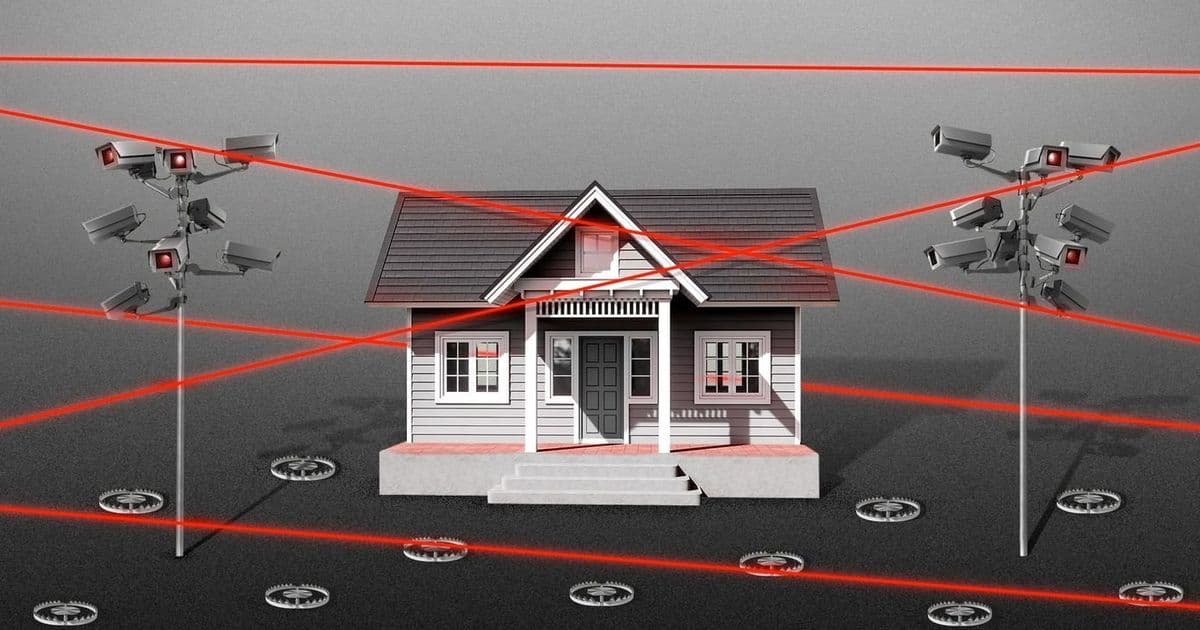
Community‑based watch groups are shrinking as municipalities and private firms deploy AI camera networks and analytics platforms, a shift that opens new revenue streams for security vendors while raising questions about privacy, public‑sector budgeting, and the future of grassroots safety initiatives.
AI‑Powered Surveillance Is Replacing Traditional Neighborhood Watch Programs
Business news
Across the United States, the number of active neighborhood watch groups fell by 23 % between 2022 and 2024, according to a study by the National Association of Community Safety Officers. In the same period, municipal contracts for AI‑enabled video analytics grew from $112 million to $398 million, a compound annual growth rate (CAGR) of 71 %. The trend is driven by city budgets that are reallocating funds from volunteer‑run patrols to contracts with firms such as BriefCam, AnyVision, and Motorola Solutions.
Market context
Funding and vendor dynamics
- Public‑sector spending: The U.S. Department of Housing and Urban Development (HUD) allocated an additional $250 million in its 2024 Community Safety Grants program for AI‑based surveillance pilots. Combined with state‑level appropriations, total public spending on AI video analytics now exceeds $1 billion annually.
- Private‑sector growth: Venture capital invested $420 million in security‑AI startups in 2023, up from $180 million in 2021. Notable rounds include a $150 million Series C for Airobotics, which markets a cloud‑native analytics suite that can flag loitering, gun‑shot detection, and facial‑match alerts in real time.
- Consolidation: M&A activity accelerated, with Motorola Solutions acquiring OpenEye for $1.1 billion in early 2024, expanding its portfolio of edge‑AI cameras and analytics dashboards.
Technology adoption curve
AI surveillance platforms rely on a stack of edge devices (IP cameras with on‑board neural processors), cloud‑based video storage, and a machine‑learning inference layer that classifies objects, detects anomalies, and generates alerts. The cost per camera has dropped from $350 in 2020 to $189 in 2024, while subscription fees for analytics services average $12 per camera per month. This price trajectory makes AI solutions competitive with the modest budgets of many volunteer watch groups, which typically spend $2,000–$5,000 per year on signage, newsletters, and occasional patrol stipends.
What it means
- Revenue shift for security vendors – The migration creates a recurring‑revenue stream. If the current 150,000 U.S. municipalities each install an average of 30 AI‑enabled cameras, the market could generate $162 million in annual subscription fees alone.
- Budget reallocation – City councils are reallocating portions of police department budgets to technology contracts. For example, the City of Austin redirected $3.2 million from its 2023 neighborhood watch grant program to a three‑year AI‑surveillance contract with BriefCam, citing a projected 15 % reduction in property‑crime response times.
- Privacy and regulatory risk – The rapid rollout is prompting legislative scrutiny. California’s SB 1234 (effective July 2025) will require municipalities to obtain resident consent before deploying facial‑recognition‑enabled cameras, potentially adding compliance costs of $0.8 million per city on average.
- Erosion of community cohesion – While AI can flag incidents faster, the data shows a 9 % decline in resident participation in local safety meetings since 2022. Analysts warn that the loss of volunteer engagement may weaken informal deterrence mechanisms that AI cannot replicate, such as neighbor‑to‑neighbor communication and shared situational awareness.
- Opportunities for hybrid models – Some jurisdictions are experimenting with “smart watch” programs that combine AI alerts with volunteer response teams. The town of Brookfield, Illinois, piloted a system where AI‑detected anomalies trigger a text to a pool of 45 registered volunteers, achieving a 22 % faster response than police dispatch alone.
Overall, the data suggests that AI surveillance is not merely a technological upgrade but a structural shift in how public safety is financed and delivered. Companies that can bundle analytics, compliance tools, and community‑engagement platforms may capture the next wave of municipal contracts, while policymakers will need to balance efficiency gains against the social costs of diminishing grassroots participation.
*For a deeper look at the vendors shaping this market, see the latest Gartner Magic Quadrant for Video Surveillance and the NIJ’s 2024 AI Surveillance Report.*
Comments
Please log in or register to join the discussion