The acting U.S. Navy secretary told Congress that ongoing sales of weapons to Taiwan are on hold because of the war in Iran, prompting analysts to assess the impact on Taiwan’s defense budget, regional security dynamics, and the timing of the next U.S. security assistance package.
Business news
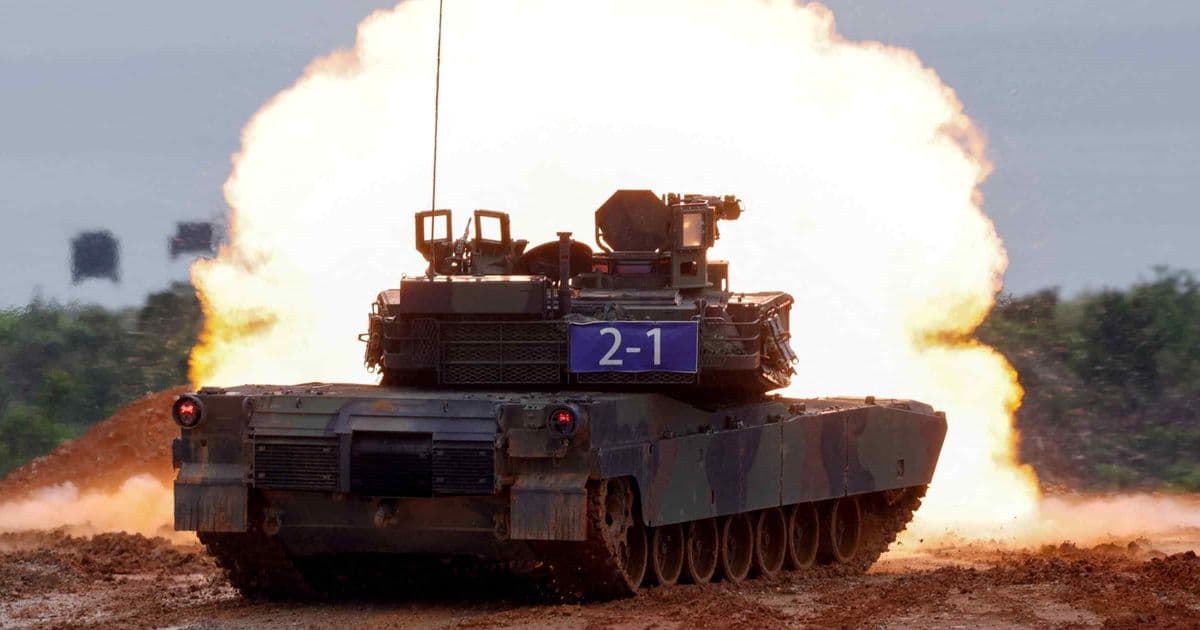
The acting secretary of the U.S. Navy confirmed to a House Armed Services Committee hearing on May 22 that all pending arms sales to Taiwan are temporarily suspended because the United States is reallocating resources to support operations in the Iran‑Israel conflict. The pause applies to the $2.3 billion package announced in February, which includes F‑16 spare parts, Patriot missile batteries, and a batch of M1A2T Abrams tanks slated for delivery in 2027.
Market context
Taiwan’s defense procurement plan relies heavily on U.S. foreign military sales (FMS). In fiscal year 2025 the island government earmarked NT$420 billion (about US$13 billion) for new weapons, with roughly 45 % expected from the United States. The current suspension removes an estimated US$800 million of that budget, forcing the Ministry of National Defense to consider alternative suppliers or to defer acquisitions.
The pause also affects U.S. defense contractors. Lockheed Martin, which expected to ship 48 F‑16 spare kits to Taiwan this year, reported a 3.2 % dip in its quarterly revenue guidance, citing “temporary export constraints.” Raytheon, the prime for the Patriot system, warned that a delay could push the first battery’s operational date from 2028 to 2030, extending Taiwan’s reliance on aging Hsiung Feng missiles.
Regionally, China’s People’s Liberation Army (PLA) has increased its “joint sword” exercises near the Taiwan Strait, logging 1,200 hours of flight time in the past month—up 18 % from the same period last year. The PLA’s naval drills have also expanded, with six additional destroyers joining the “East Wind” maneuvers, signaling Beijing’s readiness to exploit any perceived weakness in Taiwan’s procurement pipeline.
What it means
- Strategic timing: The United States is unlikely to lift the pause until the Iran conflict stabilizes. Analysts estimate a 6‑12 month window before the State Department can re‑authorize the Taiwan package, assuming no escalation in the Middle East.
- Budget re‑allocation: Taiwan may accelerate its domestic shipbuilding program, which includes the Tuo Chiang‑II fast‑attack craft, to compensate for the delayed U.S. deliveries. The Ministry has already allocated an extra NT$30 billion to the program, a move that could boost local shipyards’ order books by 15 %.
- Supply‑chain ripple effects: U.S. firms that depend on Taiwan contracts—such as Boeing for logistics support and General Dynamics for communications gear—could see a short‑term revenue dip of 1‑2 %. However, the overall impact on the U.S. defense sector is muted because the Iran war has already driven up demand for munitions and surveillance platforms elsewhere.
- Political signaling: The pause underscores Washington’s need to balance two high‑stakes commitments: deterring Iranian aggression and maintaining credibility with Taipei. Congressional leaders from both parties have urged the administration to “fast‑track” the next tranche of FMS once the Middle‑East crisis eases, warning that prolonged delays could erode Taiwan’s confidence in U.S. security guarantees.
- Long‑term implications: If the suspension extends beyond a year, Taiwan may diversify its procurement sources, looking more closely at European firms such as Saab (for Gripen fighters) and Thales (for radar systems). This shift could gradually reduce the proportion of U.S. hardware in Taiwan’s armed forces from the current 45 % to under 30 % over the next decade.
Overall, the temporary halt in U.S. arms sales reflects a broader resource‑allocation challenge for Washington. While the Iran conflict demands immediate attention, the strategic calculus in the Taiwan Strait remains a core component of U.S. Indo‑Pacific policy. Stakeholders will be watching the next congressional hearing for clues on when the pause might be lifted and how Taiwan will adjust its defense roadmap in the interim.
Comments
Please log in or register to join the discussion