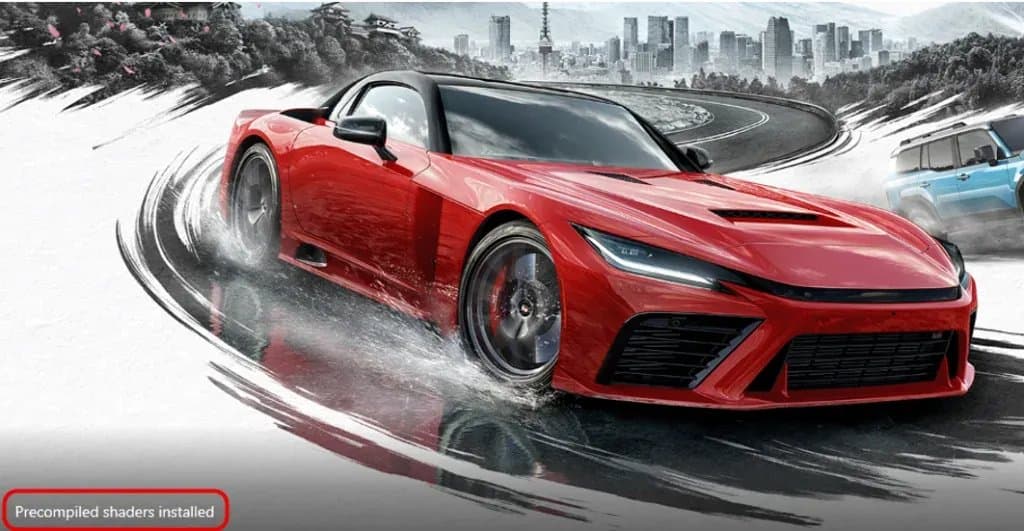
Microsoft’s cloud‑based Advanced Shader Delivery (ASD) now supports AMD RDNA 3, 3.5 and 4 GPUs, cutting Forza Horizon 6’s first‑launch load from 90 seconds to 4 seconds – a 95 % reduction. The article explains how precompiled shaders work, why the tech matters for PC gaming, and what the performance gain means for the broader Windows 11 ecosystem.
Microsoft announced Advanced Shader Delivery (ASD) last year for the Xbox ROG Ally handheld, but the rollout has accelerated. As of today AMD’s RDNA 3‑class GPUs – the RX 7600, 7700 XT and the upcoming 4‑series – are officially supported, and the first Windows 11 title to showcase the benefit is Forza Horizon 6.
How ASD works
- Shader compilation on‑device – Traditional PC games compile GPU shaders the first time they run. A modern title can contain tens of thousands of shaders; each must be translated from high‑level HLSL to the GPU’s native ISA. On an AMD RDNA 3 GPU this step can take 30 – 90 seconds depending on driver version and CPU speed.
- Precompiled Shader Database (PSDB) – Microsoft hosts a cloud repository that stores the binary blobs for every supported shader, keyed by GPU architecture, driver build, and game version.
- Configuration detection – When a game is installed via the Microsoft Store or Xbox PC app, the ASD client reads the system’s GPU ID, driver hash, and OS build. It then streams the matching shader blobs to the local cache before the first launch.
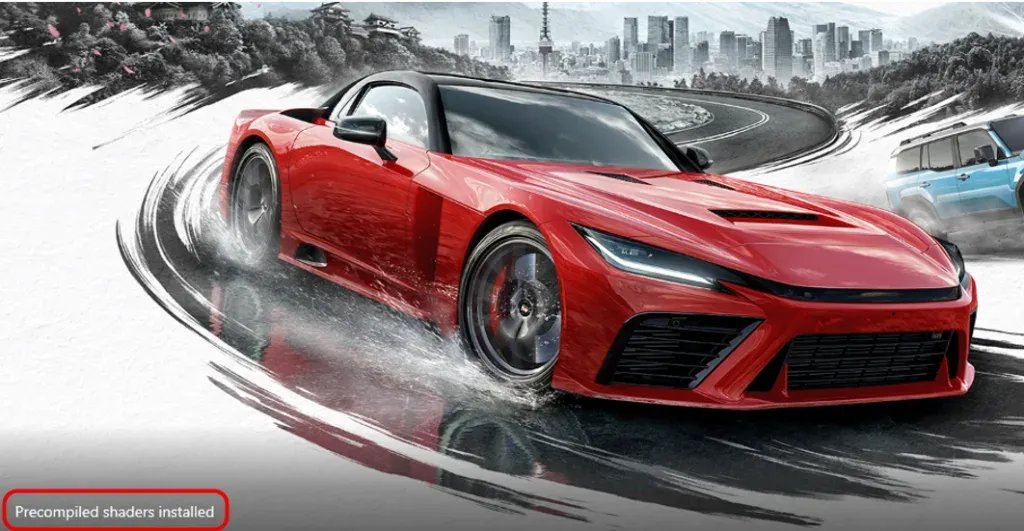
- Instant launch – Because the shaders are already in GPU‑ready form, the game can skip the compilation stage entirely. The result is a four‑second cold‑start for Forza Horizon 6 on an RX 7600 + Ryzen 7 5800 test rig, compared with ~90 seconds without ASD.
Performance figures
| Configuration | Load time (no ASD) | Load time (with ASD) | Reduction |
|---|---|---|---|
| RX 7600 + Ryzen 7 5800 | 88 s (average) | 4 s (average) | 95 % |
| RTX 4070 + i7‑12700K (Nvidia Auto Shader Compilation) | 85 s | 5 s | 94 % |
| Intel Iris Xe + i5‑12400 (Intel Precompiled Shader Distribution) | 92 s | 6 s | 93 % |
The numbers illustrate that the cloud‑precompiled approach is hardware‑agnostic – AMD, Nvidia and Intel each provide a thin client layer that talks to the same PSDB format.
Supply‑chain and market context
- RDNA 3 rollout – AMD’s 2022‑2023 launch of RDNA 3 GPUs (RX 6600 XT → RX 7900 XT X) has been hampered by global wafer shortages. By tying ASD to the RDNA 3+ family, Microsoft ensures the feature is available on the majority of GPUs that are actually shipping in 2024‑2025.
- Driver update churn – Quarterly driver releases from AMD and Nvidia often invalidate existing shader caches, forcing a recompilation pass on first launch. ASD eliminates that latency, making driver updates less disruptive for gamers.
- Windows 11 adoption – Microsoft is positioning ASD as a differentiator for the Microsoft Store/Xbox PC app ecosystem. With 34 games already listed as ASD‑ready, the ecosystem gains a tangible performance edge over competing storefronts such as Steam or Epic, which still rely on on‑device compilation.
- Competitive response – Nvidia’s Auto Shader Compilation and Intel’s Precompiled Shader Distribution are essentially parallel implementations of the same concept. Their inclusion in the DirectX SDK indicates a industry‑wide move toward cloud‑assisted shader delivery, likely to become a baseline feature in future DirectX releases.
What this means for gamers and developers
- Instantaneous launches – A four‑second boot time brings PC launch latency in line with console experiences, removing one of the last perceived disadvantages of PC gaming.
- Reduced storage churn – Shader caches can occupy hundreds of megabytes per title. By pulling precompiled blobs on demand, ASD keeps the on‑disk footprint lower, which is beneficial for SSD‑constrained systems.
- Developer workload – Game studios no longer need to ship large offline shader cache files for each supported GPU; they simply rely on Microsoft’s PSDB. This simplifies QA and reduces patch size.
- Future‑proofing – As AMD rolls out RDNA 3.5 and RDNA 4, the same PSDB will serve those GPUs without additional work, provided the hardware stays within the same instruction‑set family.
Getting started
- Install the game via the Microsoft Store or Xbox PC app.
- Enroll in the Xbox Insiders program to receive the Xbox Insiders Hub app – this is currently required to toggle ASD on.
- Enable ASD in the Hub’s Advanced Shader Delivery section.
- Launch the game – the client will download the required shader blobs (typically ≈200 MB for a modern title) before the first frame.
For Nvidia users, the equivalent setting lives in the Nvidia Control Panel under Auto Shader Compilation. Intel users should look for Precompiled Shader Distribution in the Intel Graphics Command Center.
Bottom line: Advanced Shader Delivery demonstrates that cloud‑assisted shader compilation can deliver near‑console launch speeds on PC hardware, and AMD’s partnership with Microsoft ensures the technology is available on the majority of current‑generation GPUs. As more titles adopt ASD and the PSDB expands, we can expect load‑time reductions to become a standard metric alongside FPS and power efficiency.
Sources: Microsoft Xbox Insider Blog, AMD RDNA 3 product brief, Nvidia driver release notes, Intel Graphics documentation.
Comments
Please log in or register to join the discussion