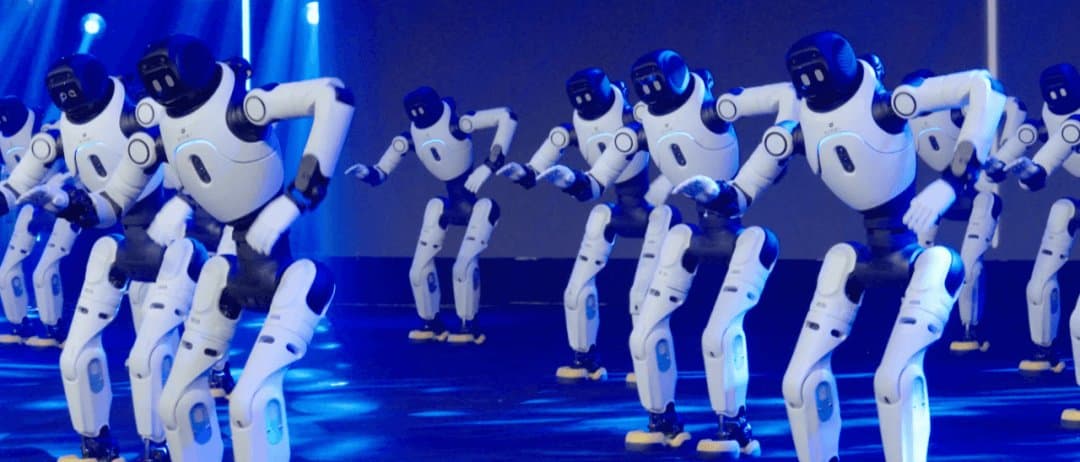
Maniformer, the embodied AI data platform under AgiBot, has secured hundreds of millions in seed and angel funding led by Sequoia China to address the critical 5 million+ hour data gap in robotics training, positioning itself as the industry's data infrastructure backbone.
Maniformer, the embodied AI data platform under AgiBot (formerly Zhiyuan Robotics), has completed a substantial seed and angel funding round totaling hundreds of millions of yuan. The financing was led by Sequoia Capital China, with participation from VGC, BV Baidu Ventures, Yunfeng Capital, and industrial investors including JPSU Intelligent and Lingchu AI. This investment comes as the company positions itself to address what industry experts identify as a critical bottleneck in robotics development: the scarcity of high-quality training data.
The Data Challenge in Embodied AI
The robotics industry faces a fundamental challenge that has limited progress despite advances in AI models and hardware. While large language models have thrived on massive text datasets, embodied AI systems require something far more complex: millions of hours of real-world interaction data from physical robots. This data is exponentially harder to collect, curate, and standardize than text or image data.
Maniformer's approach targets this specific gap. The company claims to be the only industry player capable of delivering high-quality data at scale, covering full-spectrum data paradigms from physical robots to non-embodied and simulated environments. This comprehensive coverage is crucial because modern robotics systems need diverse training data that spans different environments, tasks, and interaction types.
Building the Data Alliance
One of Maniformer's most ambitious initiatives is the creation of a data alliance aimed at breaking down data silos that have historically fragmented the robotics industry. The alliance seeks to promote unified system design and standard setting for embodied AI data, addressing a problem that has plagued the field: incompatible data formats and inconsistent labeling standards that make it difficult to share and leverage datasets across organizations.
This approach mirrors successful strategies in other AI domains where standardization has accelerated progress. Just as ImageNet provided a common benchmark for computer vision, and standardized text corpora enabled large language model development, Maniformer aims to create the foundational infrastructure for embodied AI data sharing and trading.
Strategic Positioning and Market Context
Maniformer's timing appears strategic. The company was registered in early February 2026 with 5 million yuan in registered capital and is 75% owned by AgiBot Innovation (Shanghai) Technology Co., Ltd. Its business scope covers AI application software development, robotics R&D, and foundational AI software, positioning it at the intersection of multiple high-growth technology sectors.
The investment comes amid a broader surge in robotics and embodied AI funding. Notably, on February 10, another AgiBot entity — AGILINK — announced its third round of funding within one month of incorporation, also at the hundred-million-yuan level. This pattern suggests AgiBot is executing an aggressive expansion strategy, creating specialized subsidiaries to tackle different aspects of the robotics value chain.
Technical Approach and Long-term Vision
Maniformer's technical strategy focuses on two phases: short-term real-scene data collection and service, and long-term development of cross-embodiment, multi-modal data services that include tactile and force data. This progression reflects an understanding that current robotics systems are limited by their inability to process rich sensory information beyond visual data.
The company's vision of establishing a "data alliance + trading platform" as core infrastructure represents a significant departure from traditional robotics company models. Rather than competing solely on hardware or software capabilities, Maniformer is betting that the ability to aggregate, standardize, and distribute high-quality training data will become the primary competitive advantage in the embodied AI ecosystem.
Industry Implications
This funding round signals growing investor confidence in the embodied AI sector's potential, despite the technical challenges that have historically limited robotics commercialization. The participation of major venture capital firms like Sequoia China, along with strategic industrial investors, suggests that the market sees data infrastructure as a critical enabler for the next wave of robotics innovation.
The success of this model could have far-reaching implications for how robotics companies operate. If Maniformer can successfully create a standardized data marketplace, it could dramatically reduce the barriers to entry for new robotics companies, enable faster iteration cycles, and potentially accelerate the timeline for commercial deployment of advanced robotic systems.
However, the company faces significant challenges. Building a data alliance requires convincing competitors to share proprietary datasets, a non-trivial task in an industry where data is often viewed as a competitive moat. Additionally, ensuring data quality, addressing privacy concerns, and creating fair compensation mechanisms for data contributors will be critical to the platform's success.
As the embodied AI field continues to evolve, Maniformer's approach to data infrastructure could prove as transformative as the algorithms and hardware that have dominated recent robotics headlines. The hundreds of millions in funding provide the resources to pursue this ambitious vision, but execution will determine whether the company can truly become the backbone of the embodied AI industry.
Comments
Please log in or register to join the discussion