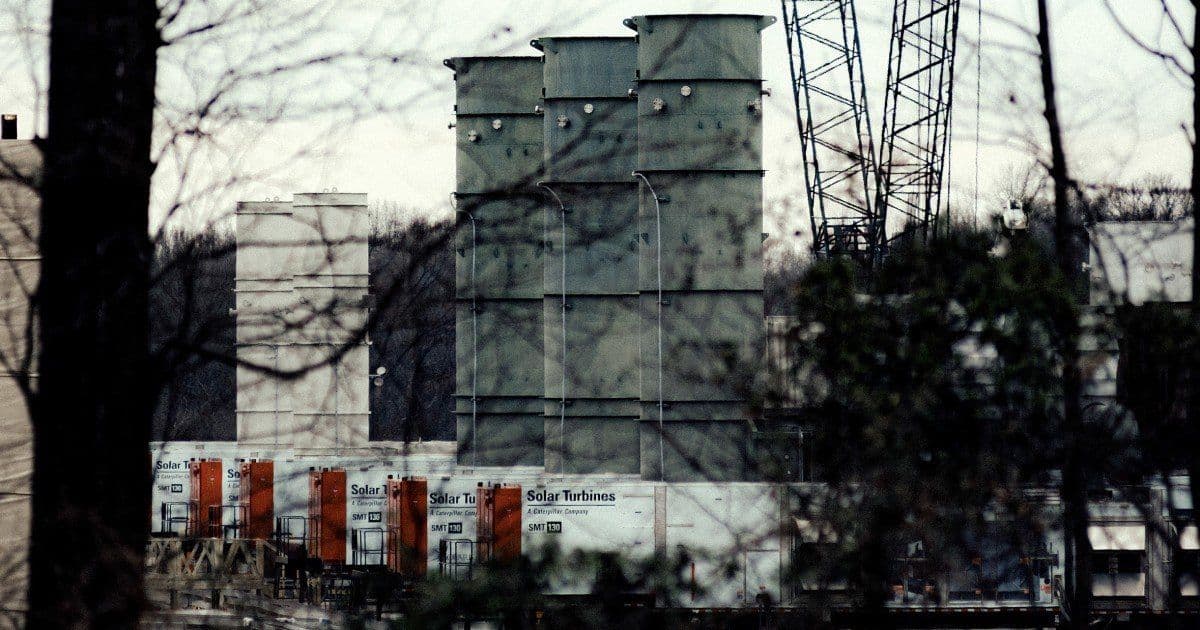
The AI buildout is running into a constraint the developer community often abstracts away: permits, substations, water, noise, and neighbors now look like part of the stack.
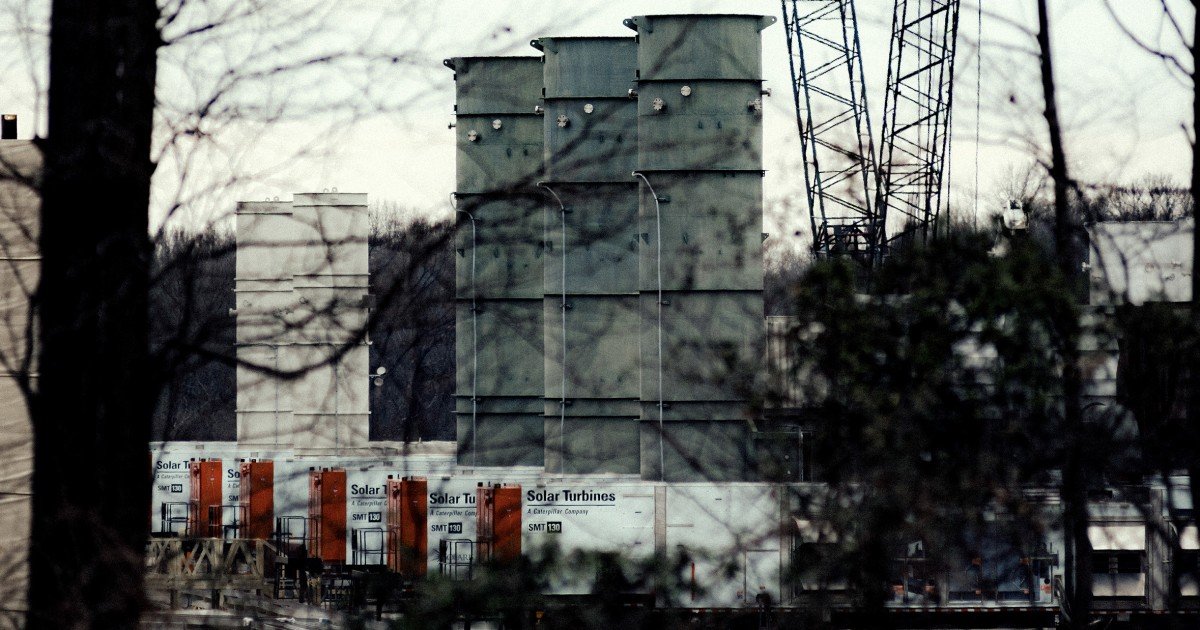
Trend observation
The story around AI infrastructure is starting to change. For much of the developer and tech community, the AI boom has been discussed through models, chips, benchmarks, inference costs, memory bandwidth, and cloud capacity. The physical layer was treated as background. Compute appeared in a region, behind an API, billed by the token or GPU-hour. A new study from Data Center Watch suggests that abstraction is cracking.
According to the study, shared with NBC News, opponents blocked or delayed at least 75 U.S. data center projects worth about $130 billion in the first quarter of 2026. That is the highest three-month total the group has tracked since 2023. Just as striking, the number of active opposition groups reportedly more than doubled from 396 at the end of 2025 to 833 by March 2026, spanning 49 states.
The trend is not simply that more people dislike data centers. The more interesting pattern is that local opposition has become organized, repeatable, and politically legible. Communities are learning which arguments get traction at zoning meetings, which environmental concerns require study, which utility questions expose hidden costs, and which elected officials can be pressured before a project receives formal approval. In some places, the mere rumor of a data center is now enough to trigger organizing.
That matters because AI infrastructure does not behave like ordinary software adoption. A developer can adopt a model in an afternoon. A startup can move workloads between providers in a planning cycle. A hyperscale facility, by contrast, needs land, transmission capacity, cooling, permits, backup power, and public tolerance. The tech sector can move fast in code, but data centers move through county boards, utility queues, environmental reviews, and increasingly skeptical residents.
Evidence
The Data Center Watch findings point to a shift from incentive politics to oversight politics. For years, states and cities competed to attract data centers with tax breaks, streamlined approvals, and promises of technical prestige. The new numbers suggest that the political bargain is being renegotiated. The study found that moratorium proposals appeared in 14 states during the first quarter of 2026, while more than 300 data center-related bills were introduced in statehouses in the first six weeks of the year.
At the federal level, Sen. Bernie Sanders and Rep. Alexandria Ocasio-Cortez introduced the AI Data Center Moratorium Act in March 2026. The proposal has not become law, but its existence is an adoption signal of a different kind. Data centers have moved from local planning issue to national AI governance issue.
The local concerns are familiar but harder to dismiss as the projects grow. Residents raise questions about electricity demand, ratepayer exposure, water use, noise, diesel or gas backup generation, land conversion, and whether promised jobs match the scale of public subsidy. The report named Maryland, Ohio, and Texas as states with especially high numbers of opposition groups. Those are not fringe markets. Texas in particular has become central to the AI buildout because of available land, energy market flexibility, and business-friendly policy.
The xAI plant in Southaven, Mississippi, has become an emblem of this tension. xAI, whose official site is x.ai, represents the new AI infrastructure race in its most visible form: huge compute clusters, fast timelines, and a public that increasingly asks who absorbs the external costs. The point is not that every claim against every project is equally strong. The point is that communities now have a shared vocabulary for resistance, and that vocabulary travels.
The energy context strengthens the opposition case. The International Energy Agency's Energy and AI report frames AI as inseparable from electricity demand, with data centers at the center of the question. That framing is significant for developers because it treats compute not only as a cloud service, but as a load on power systems. A model architecture choice, an inference pattern, or a product feature that increases token volume can become, at scale, a grid planning issue.
Recent technical research is beginning to describe the same constraint from the other side. A 2026 paper on concentrated AI data center siting and power-system stress argues that where compute clusters are built can matter as much as how much aggregate power they consume. Another paper on AI inference as relocatable electricity demand explores a related idea: some inference workloads might be shifted geographically if latency, data locality, and regulatory constraints allow it. That is a developer-relevant idea. Not all compute has to sit near every user, but not all compute can move freely either.
This is where the tech community's internal debate gets more practical. Training clusters want cheap power, dense interconnects, available land, and fast construction. Low-latency inference wants proximity to users. Enterprise AI wants compliance boundaries. Consumer AI wants uptime and low perceived delay. Energy systems want predictable demand and fair cost allocation. Local residents want transparency and limits. Those requirements do not collapse into one clean optimization problem.
The study's blocked and delayed projects also function as a market signal. If $130 billion in projects can be slowed in a single quarter, then opposition is no longer a public-relations nuisance. It becomes a factor in AI capacity planning, cloud pricing, and model deployment strategy. The software side may experience this later as constrained availability, higher inference costs, stricter regional capacity controls, or pressure to build smaller, more efficient models.
Counter-perspectives
The strongest counter-argument is that data centers are not optional infrastructure if society wants more AI, cloud services, scientific computing, financial systems, medical research, streaming, and enterprise software. The demand is not coming only from speculative chatbot usage. Developers are building AI features into customer support, code generation, security analysis, design tools, logistics, drug discovery, and data processing. If that demand is real, compute has to live somewhere.
Proponents also argue that many local critiques flatten important distinctions. A small enterprise data center, a 20-megawatt facility, and a gigawatt-scale AI training campus are not the same thing. Cooling designs vary. Some facilities recycle water or use air cooling. Some bring their own power agreements. Some can provide large tax revenue without adding many school-age residents or heavy traffic. A blanket moratorium may stop poorly planned projects, but it may also block facilities that are better designed than the ones that triggered public anger.
There is also a competitiveness argument. If the United States slows AI infrastructure while other countries keep building, the result could be weaker domestic cloud capacity, higher costs for startups, and more dependence on foreign compute. That concern resonates with parts of the developer community because compute scarcity is already a practical bottleneck. Teams working on frontier models, open-source alternatives, or GPU-heavy research know that access is not evenly distributed. More local veto points could strengthen incumbents that already have capacity.
Still, the pro-build argument often underestimates why opposition is rising. Communities are not reacting only to physical buildings. They are reacting to a pattern of asymmetry. The benefits of a data center can be diffuse: better AI products, cloud availability, national competitiveness, corporate revenue. The burdens are local: noise, transmission lines, water withdrawals, backup generators, land use changes, and possible electricity cost increases. When benefits are abstract and costs are visible, residents tend to demand a different deal.
The more credible path is not simply faster approval or blanket resistance. It is a more explicit bargain. Developers and cloud providers may need to show, before approval, how power will be supplied, who pays for grid upgrades, how water will be managed, what backup generation will emit, what noise levels nearby residents will experience, and what happens if demand projections change. Public agencies may need better technical capacity too, because many local boards are being asked to evaluate projects whose electrical and computational scale exceeds their normal planning experience.
For software builders, the lesson is uncomfortable but useful. AI adoption is no longer only a question of model quality, developer experience, or API pricing. It is also a question of infrastructure legitimacy. Efficiency work, smaller models, better batching, workload shifting, carbon-aware scheduling, and clearer capacity planning are not side quests. They are becoming part of whether the next layer of AI services can be built without turning every new region into a political fight.
The consensus in tech has been that demand for AI compute will keep rising. That may be true. The assumption now being tested is whether communities will accept the physical footprint required to meet that demand. The first quarter of 2026 suggests the answer is becoming conditional.
Comments
Please log in or register to join the discussion