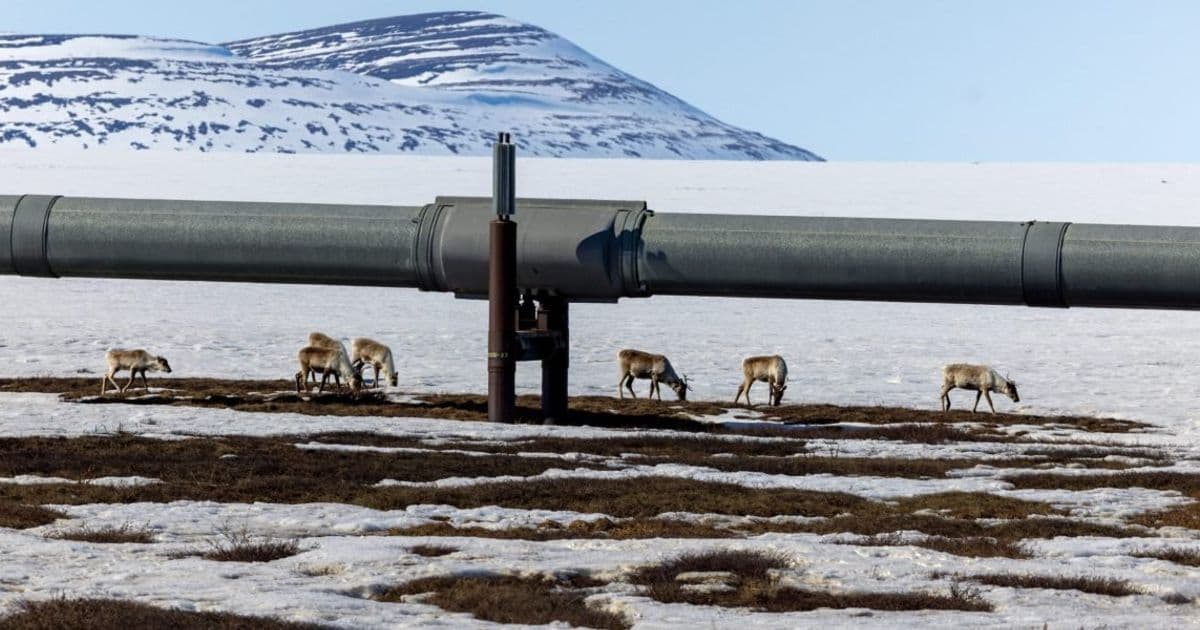
Alaska’s renewed oil production is reshaping investment, community sentiment, and policy debates, while raising fresh concerns about climate impact and indigenous rights.
 )
)
Alaska’s oil sector is experiencing a modest but noticeable resurgence after years of stagnation. New drilling permits, the reopening of the Trans‑Alaska Pipeline, and a series of state‑level tax incentives have attracted a wave of capital from both traditional majors and a growing cohort of smaller, agile operators. The uptick is not just a local story; it is feeding a broader pattern of renewed interest in Arctic hydrocarbons as global markets grapple with energy security and the pace of the green transition.
What’s driving the revival?
Policy incentives – The Alaska Department of Natural Resources announced a revised royalty structure in early 2024, lowering the baseline rate for projects that demonstrate advanced emissions‑reduction technologies. The move mirrors similar schemes in Norway and Canada, aiming to make high‑cost Arctic extraction financially viable.
Infrastructure upgrades – After a decade of under‑use, the state completed a $1.2 billion refurbishment of the Trans‑Alaska Pipeline, improving flow efficiency and reducing leak‑risk. The upgrade also includes a new monitoring system that streams real‑time pressure and temperature data to a cloud‑based analytics platform, allowing operators to spot anomalies before they become incidents.
Market dynamics – With European gas supplies tightening after the Ukraine conflict and Asian demand for liquid fuels rebounding, oil prices have hovered above $85 per barrel for most of 2024. That price floor makes even marginal fields in the North Slope attractive again.
Technological advances – Companies are deploying autonomous drilling rigs and AI‑driven reservoir models that cut the time from discovery to first oil. For example, the startup ArcticAI released an open‑source workflow that integrates seismic inversion with reinforcement‑learning‑based well‑path optimization, promising up to 15 % cost savings.
Community sentiment and adoption signals
Positive signals
- Local employment – The Alaska Economic Development Council reported a 12 % rise in oil‑related jobs in the Fairbanks‑Anchorage corridor between Q2 2023 and Q1 2024. Many of these positions are in high‑skill trades, which the state hopes will stem out‑migration of young professionals.
- Investor interest – Venture capital funds focused on energy transition have begun allocating a portion of their capital to “clean‑oil” projects. The Clean Energy Ventures announced a $150 million fund dedicated to low‑carbon extraction technologies, with two of its first investments earmarked for Alaskan operators.
- Indigenous partnerships – Several Native corporations, such as NANA Regional Corporation, have entered joint‑venture agreements that include profit‑sharing and commitments to environmental stewardship, signaling a nuanced stance that balances economic benefit with cultural preservation.
Counter‑perspectives
- Environmental concerns – Climate NGOs argue that any new fossil‑fuel development locks in emissions for decades. A recent report from 350.org estimates that the projected 200 million barrels from new Alaskan fields would generate roughly 1 gigaton of CO₂ over their lifespan, a figure that would make meeting the Paris Agreement’s 1.5 °C target more difficult.
- Regulatory risk – The U.S. Environmental Protection Agency is reviewing the 2022 methane‑emissions rule, and a stricter standard could raise compliance costs for Arctic operators. Some analysts warn that policy volatility could erode the profitability of projects that rely on thin margins.
- Indigenous opposition – While some Native corporations are collaborating, others, such as the Inupiat Community of the Arctic Slope, have filed lawsuits alleging that recent permits violate the 1971 Alaska Native Claims Settlement Act. The legal battles could delay drilling schedules and increase financing costs.
How the debate fits into larger energy trends
The Alaskan oil revival illustrates a broader tension in the global energy system: the need for reliable, affordable energy in the near term versus the long‑term imperative to decarbonize. Similar patterns are emerging in the Canadian Arctic, where the Oil Sands Innovation Initiative is pushing for carbon‑capture‑and‑storage (CCS) pilots, and in Norway’s offshore sector, where digital twins are being used to optimize production while minimizing flaring.
From a technical standpoint, the push for “clean‑oil” is prompting a convergence of traditional petroleum engineering with data‑intensive methods. Real‑time sensor networks, edge‑computing devices, and machine‑learning models are becoming standard on rigs that once relied on manual logging. This hybrid approach could serve as a transitional bridge, allowing the industry to reduce its carbon intensity while the renewable sector scales up.
What’s next?
- Policy watch – Expect the Alaska legislature to debate a carbon‑pricing bill in the coming session. If passed, it could create a market incentive for operators to adopt CCS or methane‑capture technologies.
- Technology trials – The state has earmarked $30 million for a pilot program testing hydrogen‑blended fuel for offshore support vessels, a move that could lower the sector’s overall emissions profile.
- Community engagement – Ongoing negotiations between oil companies and indigenous groups will likely shape the social license to operate. Transparent benefit‑sharing agreements and robust environmental monitoring will be critical to maintaining community support.
In short, Alaska’s oil resurgence is more than a regional boom; it is a microcosm of the complex trade‑offs the global energy system faces. The next few years will reveal whether the region can balance economic revitalization with the mounting pressure to keep the planet within safe climate limits.
Comments
Please log in or register to join the discussion