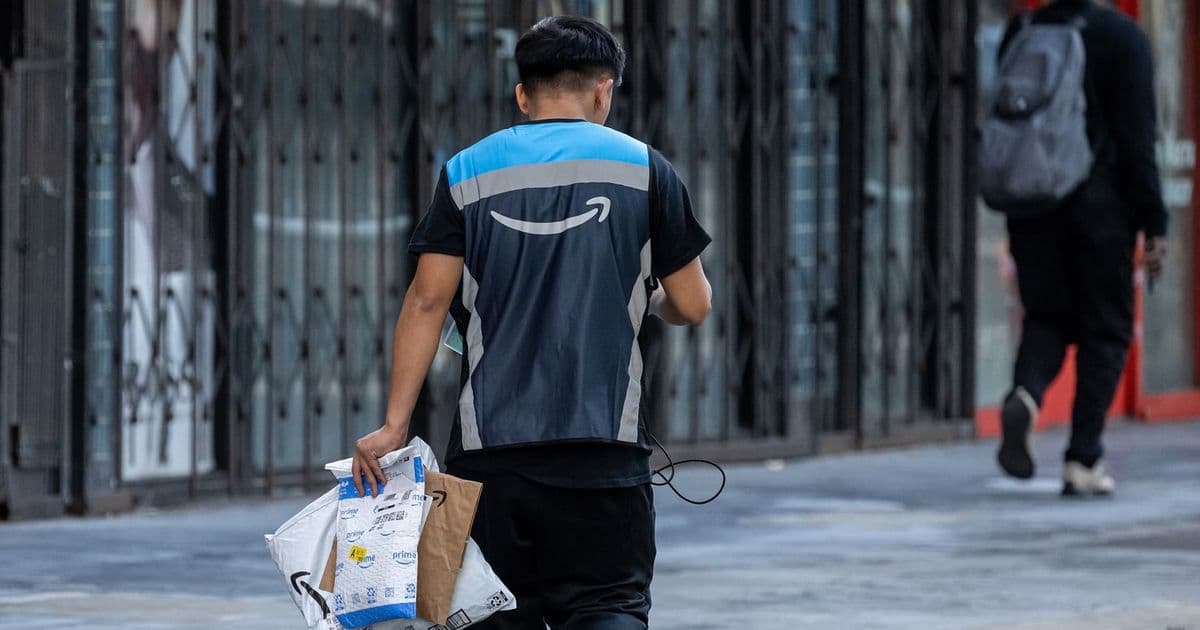
Amazon is rolling out three-hour delivery to approximately 2,000 US cities and towns, with one-hour service in hundreds of those areas, following successful 2025 pilots. The expansion covers over 90,000 products, continuing the company's relentless pursuit of faster fulfillment as consumer expectations continue to evolve.
Amazon's latest delivery expansion represents a significant acceleration in the e-commerce giant's fulfillment capabilities, bringing three-hour delivery service to approximately 2,000 US cities and towns, with one-hour delivery available in hundreds of those areas. This move, following successful pilots conducted throughout 2025, extends the company's already extensive logistics network to reach even more consumers with unprecedented speed.
The expansion covers over 90,000 products, according to Amazon's announcement, suggesting a carefully curated selection rather than the entire catalog. This selective approach likely reflects both operational constraints and strategic priorities, focusing on high-demand items that can consistently meet the accelerated delivery timelines.
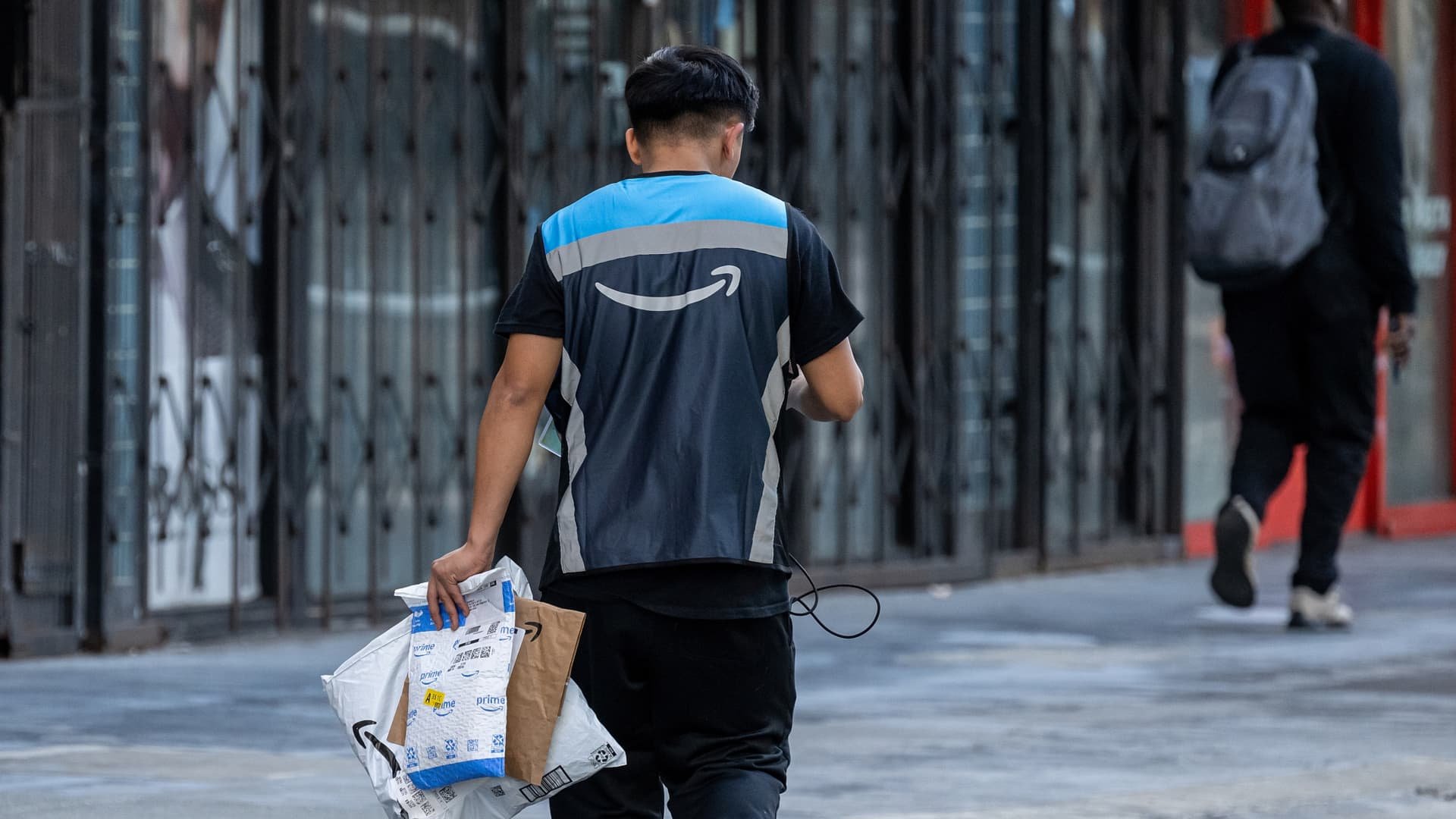
This development comes amid intensifying competition in the fast delivery space, with rivals like Walmart, Target, and Shopify all investing heavily in same-day and even one-hour delivery options. Amazon's scale, however, remains unmatched, with the company having spent billions over the past decade building out its fulfillment infrastructure, including regional sort centers, local delivery stations, and last-mile delivery partnerships.
The push toward ultra-fast delivery appears to be responding to shifting consumer expectations. A 2025 survey by the National Retail Federation found that 78% of consumers now consider same-day delivery a standard expectation, up from just 42% in 2022. This rapid evolution in consumer preferences has forced retailers to continually push the boundaries of what's possible in logistics.
"We're seeing a fundamental shift in how consumers view delivery," says retail analyst Sarah Jenkins. "What was once a competitive advantage is now becoming a baseline expectation. Amazon is simply responding to market forces that were already in motion."
The implementation of three-hour delivery presents both opportunities and challenges for Amazon. On one hand, faster delivery could increase customer loyalty and justify premium pricing through Amazon Prime memberships. On the other hand, the operational complexity and associated costs are substantial, requiring sophisticated inventory placement, route optimization, and staffing coordination.
Amazon has been gradually building toward this expansion for years. The company's acquisition of Whole Foods in 2017 provided a network of physical stores that could serve as fulfillment centers for grocery delivery. More recently, investments in robotics automation at fulfillment centers and the development of more sophisticated delivery route planning algorithms have positioned the company for this next phase of acceleration.
The company's 2025 pilot programs tested various operational models, including different inventory placement strategies and last-mile delivery approaches. The expansion now being implemented appears to be the result of learning from these pilots, with Amazon reportedly refining its approach to balance speed with cost-effectiveness.
Not everyone in the retail community views this expansion as universally positive. Some independent retailers express concern that Amazon's continued investment in ultra-fast delivery further widens the competitive gap between large e-commerce platforms and smaller businesses.
"The economics of three-hour delivery simply don't work for most small businesses," says Michael Chen, founder of a boutique e-commerce platform. "Amazon's scale allows them to absorb costs that would be prohibitive for others, potentially further concentrating market power in their favor."
Environmental considerations also factor into the equation. Faster delivery often requires less efficient routing, potentially increasing carbon emissions per package. Amazon has made commitments to achieve net-zero carbon emissions by 2040, but critics question whether ultra-fast delivery is compatible with those goals.
The company has attempted to address these concerns through investments in electric delivery vehicles and more efficient packaging, but the fundamental tension between speed and sustainability remains unresolved.
From a technological perspective, the expansion relies on sophisticated systems for inventory management, demand forecasting, and route optimization. Amazon's algorithms must predict which products will be in demand in specific geographic areas and position inventory accordingly to enable rapid fulfillment.
"The real innovation isn't just in the delivery itself, but in the predictive systems that make it possible," explains logistics technology expert David Park. "By analyzing search trends, purchase history, and even local events, Amazon can anticipate demand and position inventory strategically, reducing the distance products need to travel."
The expansion also highlights Amazon's continued evolution from an online retailer to a diversified technology and logistics company. With this move, Amazon is further blurring the lines between e-commerce, physical retail, and logistics services, creating an integrated ecosystem that's increasingly difficult for competitors to replicate.
For consumers, the expansion represents another incremental improvement in convenience. The ability to receive products within three hours—or even one hour in select areas—further reduces the friction between purchase and possession, potentially influencing purchasing decisions and consumption patterns.
As Amazon continues to push the boundaries of delivery speed, questions remain about the long-term sustainability of this approach. The company has a history of investing heavily in capabilities that initially seem extravagant but eventually become industry standards. Whether ultra-fast delivery follows this pattern remains to be seen, but for now, Amazon is once again raising the bar for what consumers expect from e-commerce.
The expansion also comes amid broader scrutiny of Amazon's business practices, with regulators examining the company's market power and its treatment of third-party sellers. These factors may influence how aggressively Amazon continues to invest in delivery capabilities in the future.
Nevertheless, for the millions of consumers now living within Amazon's three-hour delivery zone, the company's latest expansion represents another step toward a world where convenience is increasingly taken for granted. As delivery times continue to shrink, the retail landscape will likely continue to evolve in ways that further favor large-scale, technologically sophisticated operators.
Comments
Please log in or register to join the discussion