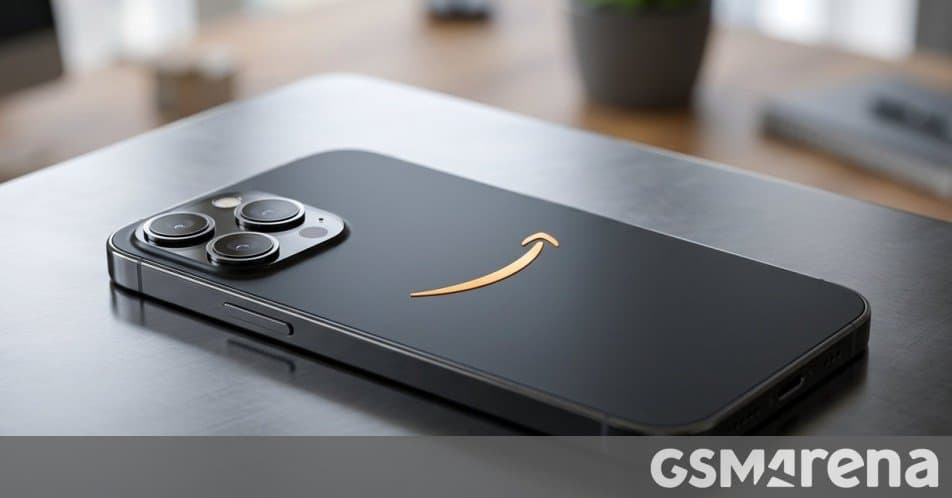
Despite recent rumors suggesting Amazon might be returning to the smartphone market with an AI-powered device, the company's top consumer electronics executive has indicated there's "no clear path" for such a product at this time.
Amazon appears to be steering clear of the smartphone market once again, despite recent rumors suggesting the company might be developing an AI-powered phone. According to Panos Panay, Amazon's head of consumer electronics, the tech giant isn't "necessarily" pursuing a phone at the moment, stating there's "no clear path that makes sense" for the company in this space.
This statement comes after a March 2026 report claimed Amazon was working on an AI-powered smartphone, sparking excitement among tech observers who might have hoped Amazon could bring its unique ecosystem approach to the mobile device market. However, Panay's comments to the Financial Times suggest any such development is either not happening or not in the company's immediate plans.
The Amazon Fire Phone, launched in 2014, stands as one of the company's most notable product failures. The device featured a 3D interface and was heavily integrated with Amazon services, but its high price point, limited carrier support, and lack of compelling features led to poor sales. Amazon reportedly took a $170 million write-down on unsold inventory, and the phone was discontinued after just one year on the market. Learn more about the Fire Phone's history.
Panay's somewhat ambiguous response deserves attention. While he didn't give a definitive "no" when asked directly about phone development, his comments leaned heavily toward Amazon not pursuing a phone in the near future. He stated, "Right now, no" when pressed, but also acknowledged Amazon's willingness to "make a big bet when you need to."
"I think the phone form factor is going through some transformation, and will continue to do so over the next 10 years, for sure," Panay said, suggesting he sees the smartphone market as evolving rather than disappearing. This aligns with industry observations about foldable devices, AI integration, and new form factors emerging in the mobile space. Current smartphone market trends show continued innovation in areas like camera technology, processing power, and AI capabilities.
The hesitation from Amazon makes sense when considering the current smartphone ecosystem. The market is dominated by Apple and Samsung, which command premium pricing and have established customer loyalty. Google and other manufacturers struggle to gain significant market share, and profit margins for hardware companies are often thin compared to the software and services that Amazon excels at.
Amazon's strength lies in its ecosystem of services - Prime, Alexa, Amazon Music, Kindle, and shopping integration. The company has found success with devices like the Echo line of smart speakers, Fire TV sticks, and its Kindle e-readers, all of which serve as gateways to its services rather than standalone profit centers.
If Amazon were to enter the smartphone market again, it would likely need to offer something fundamentally different from existing devices. The AI-powered phone mentioned in rumors might have represented such an approach, but Panay's comments suggest the company hasn't identified a clear advantage that would justify entering the competitive mobile space. Current AI integration in smartphones shows how manufacturers are increasingly using on-device processing for features like photography enhancement, voice assistants, and predictive text.
The timing of these comments is interesting, as smartphone manufacturers are increasingly focusing on AI features. Apple's Siri, Google's Assistant, and Samsung's Bixby are all becoming more sophisticated, and on-device AI processing is becoming a key differentiator. Amazon's own Alexa could potentially offer a unique voice-activated assistant experience, but the company would need to determine how to make it compelling enough to overcome the challenges of entering an established market.
For consumers, Amazon's absence from the smartphone market means one less potential option for those deeply integrated into the Amazon ecosystem. However, the company's existing devices already provide many ways to access Amazon services, making a dedicated phone less essential than it might have been during the Fire Phone era. Amazon's current hardware lineup includes various Echo devices, Fire tablets, and smart home gadgets that all connect to the Amazon ecosystem.
Looking ahead, Panay left the door open for future possibilities, emphasizing Amazon's willingness to make "big bets" when the right opportunity emerges. "What's the right thing for the customer over time?" he asked, suggesting Amazon would only enter the phone market if it could offer a genuinely valuable experience that aligns with its customer-centric approach.
For now, Amazon seems focused on its existing successful hardware products and services, leaving the smartphone market to established players who have already navigated its challenges and built sustainable businesses in the space. The company's current strategy appears to be expanding its ecosystem through devices that complement rather than compete with smartphones, maintaining its presence in consumers' lives without the risks and costs of developing a full-fledged smartphone platform.
Comments
Please log in or register to join the discussion