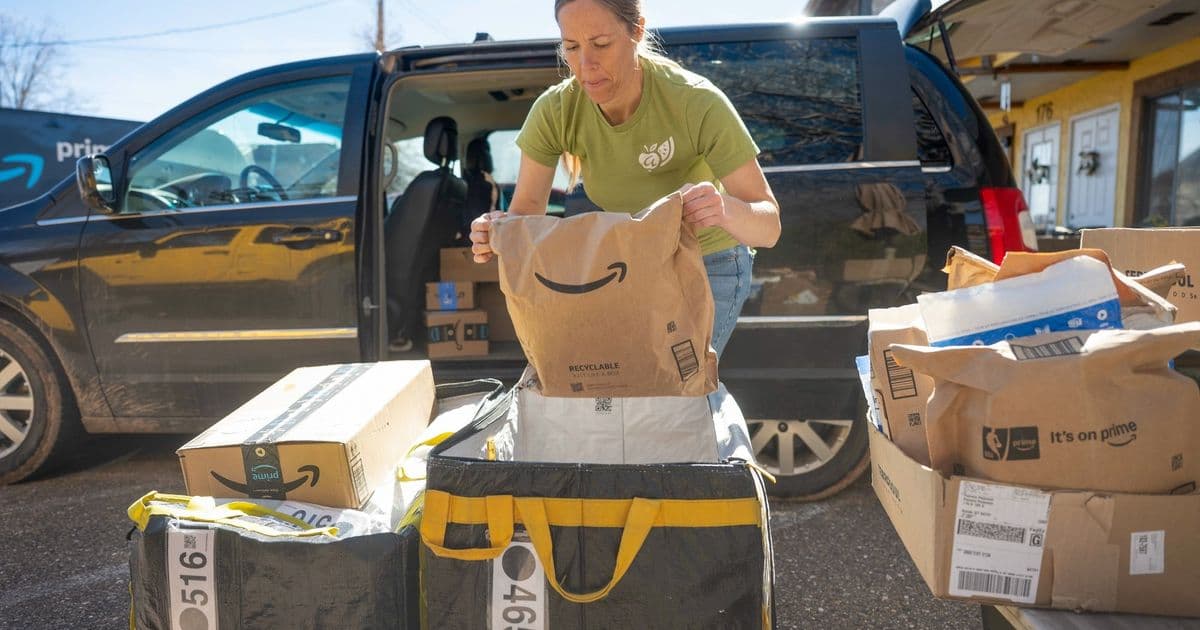
Amazon is aggressively expanding into rural America with 24-hour delivery hubs, directly challenging Walmart's dominance in small-town retail and logistics.
Amazon is making a major push into rural America, building 24-hour delivery distribution centers that are reshaping the competitive landscape between the e-commerce giant and Walmart. This expansion represents a strategic shift as Amazon seeks to capture market share in areas where Walmart has long been the dominant retail force.
According to recent reports, Amazon has been constructing these rural distribution hubs over the past several years, creating a network of facilities designed to enable faster delivery times to small towns and remote areas. The move directly challenges Walmart's traditional strength in rural markets, where the retail giant has built its empire on everyday low prices and convenient locations.
The Strategic Importance of Rural Markets
The rural expansion isn't just about increasing Amazon's geographic footprint—it's about capturing a customer base that has historically been underserved by e-commerce. Rural Americans often face longer delivery times and higher shipping costs, making them less likely to shop online compared to their urban counterparts. By building local distribution centers, Amazon can offer competitive delivery speeds that rival Walmart's in-store pickup options.
This strategy also addresses one of Amazon's key weaknesses: its reliance on third-party logistics providers in rural areas. Direct control over distribution centers allows Amazon to maintain quality standards, reduce costs, and improve delivery reliability in markets where logistics infrastructure has been a challenge.
The 24-Hour Operations Model
The decision to operate these centers 24 hours a day represents a significant investment in rural logistics infrastructure. This round-the-clock model enables Amazon to process orders continuously, reducing delivery times and increasing capacity during peak shopping periods. It also allows the company to better manage its delivery network by shifting volume to off-peak hours when transportation costs are lower.
For rural communities, these facilities bring both opportunities and challenges. They create jobs and economic activity in areas that have often struggled with population decline and limited employment options. However, they also introduce the same concerns about labor conditions and environmental impact that have accompanied Amazon's expansion in urban areas.
Walmart's Response and Market Dynamics
Walmart isn't standing still in the face of Amazon's rural push. The retail giant has been investing in its own e-commerce capabilities and same-day delivery services, particularly through its extensive network of physical stores that can serve as distribution points. The company's existing presence in rural America gives it advantages in local market knowledge and established customer relationships.
The competition between these retail giants in rural markets reflects a broader shift in American retail. As e-commerce continues to grow, even traditionally brick-and-mortar strongholds like Walmart must adapt to changing consumer expectations around convenience and delivery speed. Amazon's rural expansion accelerates this transformation, potentially forcing Walmart to make even larger investments in its digital infrastructure.
Economic and Social Implications
The battle for rural America has significant economic implications beyond just retail competition. These distribution centers represent major capital investments in communities that have often been overlooked by large corporations. They can serve as anchors for local economic development, potentially attracting other businesses and services to support the logistics operations.
However, the concentration of retail power in the hands of two massive corporations also raises concerns about market competition and local business viability. Small-town retailers and local businesses may struggle to compete with the pricing and convenience offered by these retail giants, potentially leading to further consolidation of retail activity in rural areas.
The Future of Rural Retail
As this competition plays out, the future of rural retail is likely to be shaped by the ability of these companies to balance efficiency with community needs. The success of Amazon's rural strategy will depend not just on logistics capabilities but on how well it can integrate into small-town economies and address local concerns about corporate presence.
The expansion also highlights the changing nature of retail competition, where physical presence, logistics infrastructure, and digital capabilities are increasingly intertwined. Companies that can effectively combine these elements—whether through building new facilities like Amazon or leveraging existing store networks like Walmart—will be best positioned to serve the evolving needs of rural consumers.
This rural retail battle represents more than just a market share fight between two corporations. It's a fundamental reshaping of how goods flow to and through America's small towns, with implications for local economies, consumer choice, and the future of retail in underserved areas. As Amazon continues to build out its rural network, the competition with Walmart will likely intensify, potentially leading to innovations in delivery, pricing, and customer service that benefit rural consumers while challenging the traditional retail model that has dominated these communities for decades.
For now, the turf war between Amazon and Walmart in rural America is just beginning, with both companies making substantial investments that will determine who controls the future of retail in small-town America. The outcome will have lasting effects on rural economies, consumer behavior, and the competitive dynamics of American retail for years to come.
Comments
Please log in or register to join the discussion