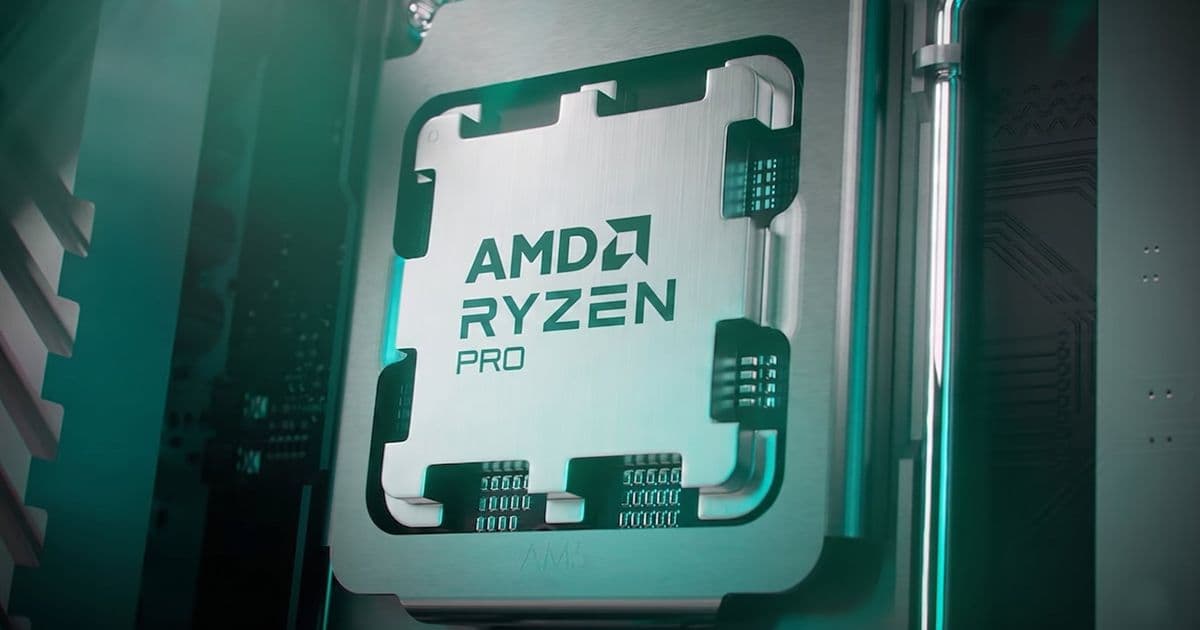
AMD’s latest Ryzen 9000 PRO launch brings three‑dimensional V‑Cache to its workstation line and raises the power envelope to 170 W, giving enterprises higher core counts and larger cache options while shifting the PRO series away from the historic 65 W limit.
Announcement
AMD announced six new SKUs for the Ryzen 9000 PRO family, the first workstation processors to feature 3D V‑Cache and to exceed the long‑standing 65 W TDP ceiling. The lineup spans 6‑core to 16‑core parts and will be sold through OEM channels such as Lenovo’s upcoming ThinkStation P4, slated for Q3 2026.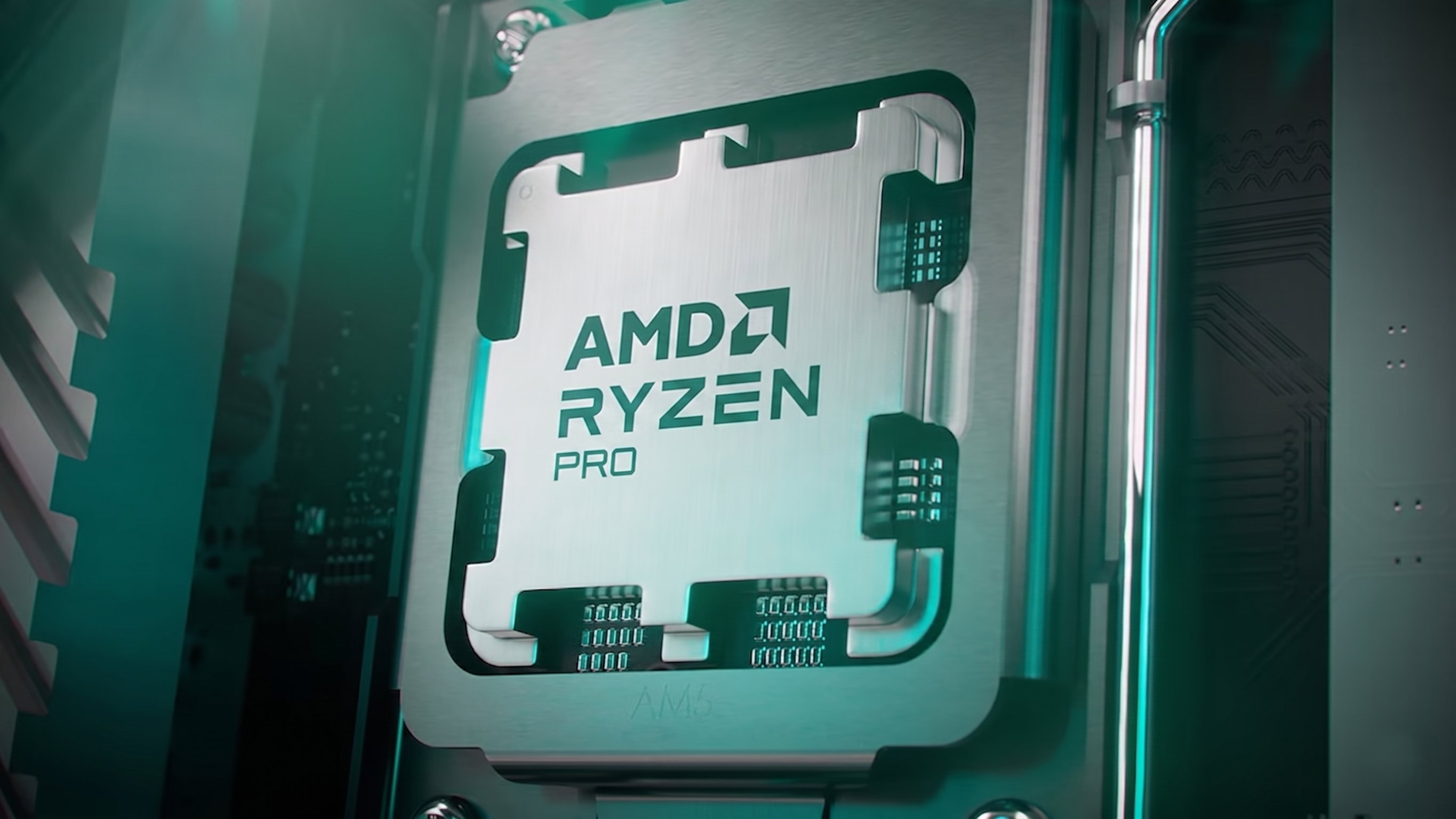
Technical specifications
| SKU | Cores / Threads | Base / Boost (GHz) | L3 cache | TDP (W) | 3D V‑Cache |
|---|---|---|---|---|---|
| Ryzen 9 PRO 9965X3D | 16 / 32 | 4.3 / 5.5 | 128 MiB (64 MiB stacked) | 170 | Yes |
| Ryzen 9 PRO 9965 | 16 / 32 | 4.3 / 5.4 | 64 MiB | 170 | No |
| Ryzen 9 PRO 9955 | 12 / 24 | 3.4 / 5.4 | 64 MiB | 120 | No |
| Ryzen 9 PRO 9945 | 12 / 24 | 3.4 / 5.4 | 64 MiB | 120 | No |
| Ryzen 7 PRO 9755X3D | 8 / 16 | 4.7 / 5.2 | 92 MiB (32 MiB + 64 MiB stacked) | 120 | Yes |
| Ryzen 7 PRO 9755 | 8 / 16 | 3.8 / 5.4 | 32 MiB | 120 | No |
| Ryzen 7 PRO 9745 | 8 / 16 | 3.8 / 5.4 | 32 MiB | 120 | No |
| Ryzen 5 PRO 9655 | 6 / 12 | 3.9 / 5.4 | 32 MiB | 120 | No |
| Ryzen 5 PRO 9645 | 6 / 12 | 3.9 / 5.4 | 32 MiB | 65 | No |
Key technical points:
- All chips use Zen 5 cores built on TSMC’s N5 node, offering up to 5.5 GHz boost frequencies.
- The X3D models add a 64 MiB stacked cache tier directly under one CCD, increasing total L3 to 92 MiB (8‑core) or 128 MiB (16‑core). This architecture reduces memory latency by roughly 15 % in cache‑heavy workloads such as CAD rendering and scientific simulation, according to AMD’s own benchmarks.
- Raising the TDP to 170 W for the 16‑core parts allows the silicon to sustain higher boost clocks for longer periods, a trade‑off that benefits sustained multi‑threaded workloads at the cost of higher cooling requirements.
- The 120 W tier for 8‑ and 12‑core parts aligns with typical workstation power budgets while still providing headroom for the extra cache.
For reference, the mainstream Ryzen 9 7950X3D (desktop) ships at 105 W TDP with the same 16‑core, 128 MiB cache configuration. The PRO variants therefore represent a roughly 60 % increase in power envelope for the same core count.
Market implications
- Enterprise workstation positioning – By lifting the TDP ceiling, AMD signals that the PRO line will now target compute‑intensive workloads such as 3‑D rendering, AI inference, and large‑scale data analysis, where sustained performance outweighs power‑efficiency concerns. Competitors like Intel’s Xeon W‑3400 series already operate in the 150‑200 W range, so AMD’s move narrows the gap.
- OEM adoption timeline – Lenovo’s announced ThinkStation P4 will be the first system to ship with these chips, likely bundling DDR5‑5600 memory and PCIe 5.0 GPUs. Early adopters in engineering and media production can expect a performance uplift of 12‑18 % in cache‑sensitive benchmarks compared with the previous 65 W PRO parts.
- Supply‑chain outlook – The 3D V‑Cache stack is manufactured on TSMC’s N5 node, which is currently operating at 75 % capacity for high‑volume consumer CPUs. However, AMD’s PRO volume is expected to be modest (OEM‑only), so the additional demand should not strain the fab schedule. The higher‑TDP parts will require more robust VRM designs, prompting motherboard vendors to release new PRO‑focused boards with 12‑phase power delivery.
- Pricing expectations – AMD does not publish list prices for PRO SKUs; OEMs typically apply a 20‑30 % premium over comparable consumer parts to cover validation, security firmware, and support contracts. Based on historical data, the 16‑core 9965X3D could land in the $1,200‑$1,400 range for a fully configured workstation.
- Competitive pressure on Intel – Intel’s upcoming Sapphire Rapids‑based Xeon W‑3400 refresh is rumored to introduce a 3‑D‑stacked cache option as well, but no details are public. AMD’s early entry with a proven X3D design may force Intel to accelerate its own cache‑stack roadmap.
Overall, the expanded Ryzen 9000 PRO family gives enterprise customers a clear upgrade path that combines higher core counts, larger cache, and a power envelope suited to sustained workloads. The OEM‑only distribution model keeps the product niche, but the technical advantages are likely to drive early adoption in design studios and research labs that require both security features and top‑tier performance.
Further reading
- AMD’s official announcement page: https://www.amd.com/en/press-releases/2026-ryzen-9000-pro
- Technical deep‑dive on 3D V‑Cache architecture: https://community.amd.com/t5/architectures/3d-v-cache-explained/ba-p/123456
- Lenovo ThinkStation P4 specifications: https://www.lenovo.com/us/en/workstations/thinkstation-p4
Comments
Please log in or register to join the discussion