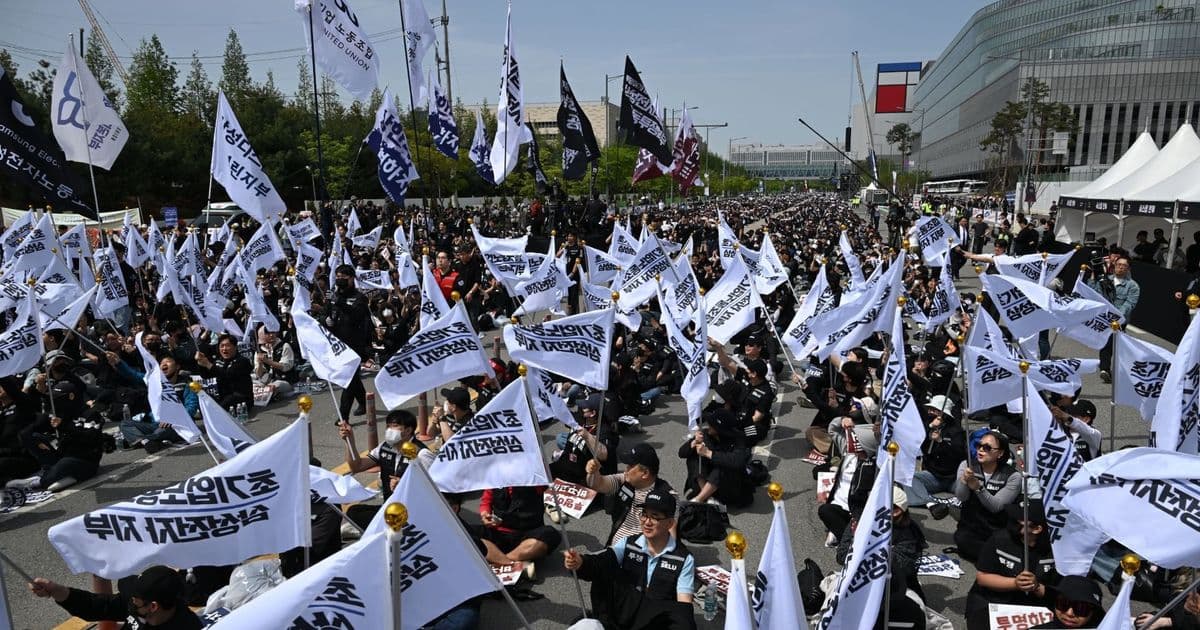
Negotiations between Samsung Electronics and its labor union have collapsed, setting the stage for an 18-day strike that could cost the company up to $700 million daily and disrupt global chip supplies. The breakdown comes as semiconductors account for 37% of South Korea's exports, raising significant concerns about the global tech supply chain.
Samsung Electronics faces a critical juncture as union negotiations have collapsed just eight days before an 18-day strike that threatens to disrupt global semiconductor supplies. The breakdown in government-mediated talks leaves the world's largest memory chip producer vulnerable to significant production losses, with estimates projecting daily costs of approximately $700 million.
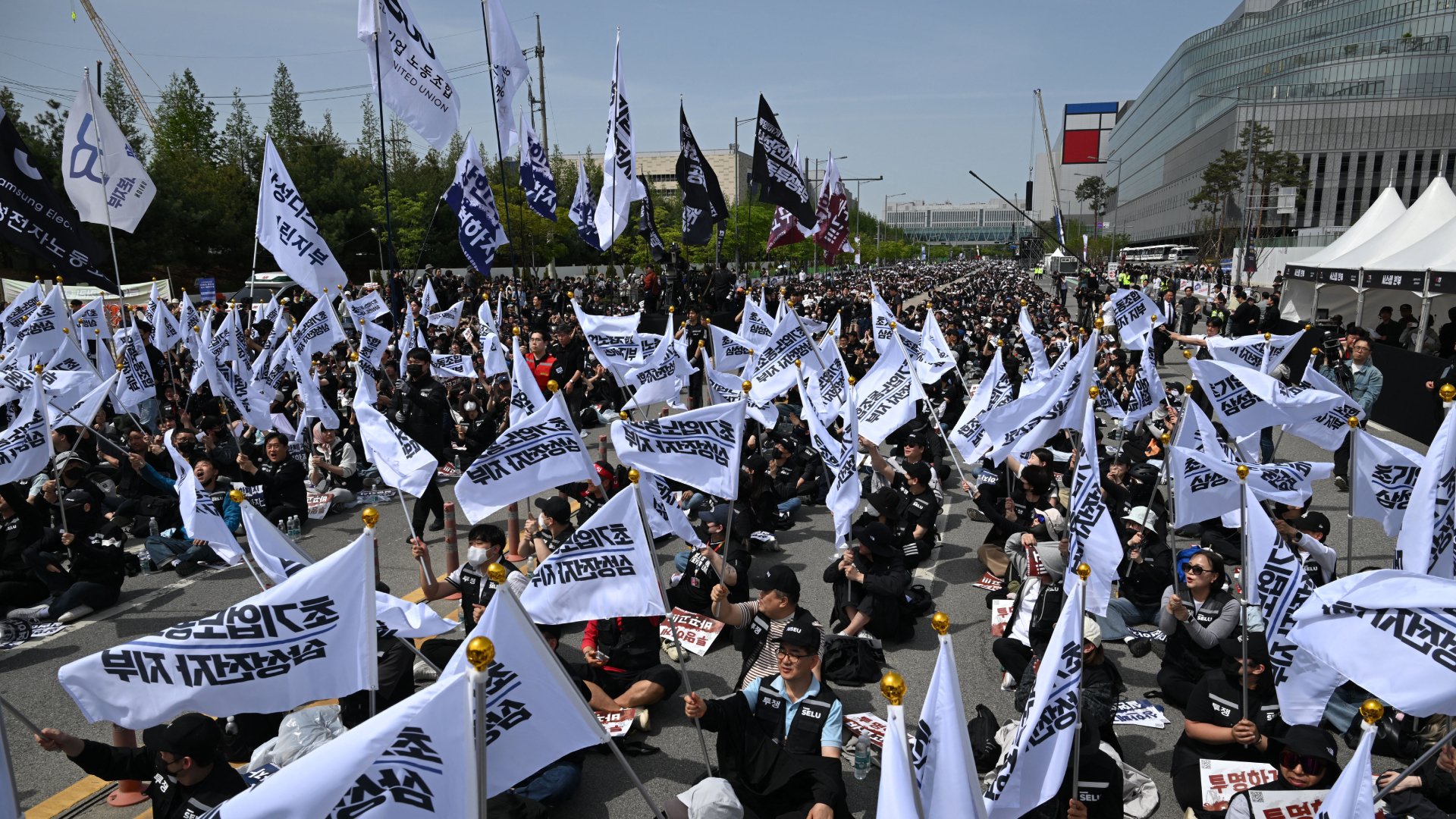
The strike, scheduled to begin May 21, would primarily impact Samsung's semiconductor manufacturing operations, which include critical NAND flash memory and DRAM production facilities. These facilities represent approximately 43% of the global NAND flash market and 27% of the DRAM market, according to recent industry data. A prolonged shutdown would immediately tighten supplies across multiple segments, affecting everything from consumer electronics to data center infrastructure.
"The potential disruption extends beyond Samsung's direct production capacity," explained industry analyst Mark Li of SemiAnalysis. "Samsung's fabs operate on extremely tight cycles, and even short interruptions can create ripple effects throughout the supply chain. Memory chips require continuous manufacturing processes to maintain wafer integrity, making them particularly vulnerable to work stoppages."
Economic Impact Projections
Multiple estimates quantify the potential damage:
- JPMorgan calculates direct revenue losses of over 4 trillion won (approximately $3 billion) for the full 18-day strike
- Professor Song Heon-jae of the University of Seoul projects daily losses of approximately 1 trillion won ($700 million)
- The union itself estimates potential total damages of up to 30 trillion won ($20.3 billion)
These figures reflect not just lost production but also potential market share erosion as customers shift to alternative suppliers during the disruption. Samsung's competitors, including SK Hynix and Micron, would likely benefit from any supply constraints caused by the strike.
Technical Operations at Risk
Samsung's semiconductor division operates several critical fabs in South Korea, including:
- Pyeongtaek campus: Advanced NAND production
- Hwaseong campus: DRAM and foundry operations
- Giheung campus: Research and development, plus some production
The union's earlier one-day strike in April provided a preview of potential impacts:
- Memory fab output fell 18% on the affected shift
- Contract foundry production dropped 58%
An 18-day strike would likely cause more severe disruptions, particularly affecting:
- 10nm-class and below DRAM production
- V-NAND (3D NAND) stacking operations
- Advanced packaging processes
Union Demands and Samsung's Position
The union, which has grown from 32,000 members during Samsung's first-ever strike in 2024 to over 90,000 now (representing more than 70% of Samsung's South Korean workforce), has made specific demands centered on compensation structures:
- Removal of a cap on bonus pay currently set at 50% of base salary
- Allocation of 15% of annual operating profit to performance payouts
- More transparent bonus calculation methodologies
Samsung has offered a one-time payment for 2026 but refused to commit to permanent changes in bonus calculations. "We spent 16 out of the 17 hours of mediation simply waiting around," said union representative Choi Seung-ho. "Management kept extending the mediation without making any meaningful changes to its proposal, which appeared to be an attempt to weaken momentum for a general strike."
Market Context and Supply Chain Implications
Semiconductors now account for 37% of South Korea's total exports, up from 20% a year earlier, according to government data. This increasing importance makes any disruption particularly concerning for both the South Korean economy and global tech supply chains.
"Samsung's memory chips are fundamental components in virtually all electronic devices," noted semiconductor analyst Dan Hutcheson of TechInsights. "A prolonged strike would affect everything from smartphone production to automotive systems. The timing is particularly concerning as we're entering a period of increasing demand for AI infrastructure and advanced computing systems."
Potential Mitigation Scenarios
Several options remain on the table to prevent or mitigate the strike:
Emergency arbitration: A legal mechanism that would freeze industrial action for 30 days while the labor commission mediates. South Korean Labor Minister Kim Young-hoon has stopped short of invoking it, preferring dialogue.
Government intervention: South Korean Prime Minister Kim Min-seok has convened an emergency ministerial meeting, instructing officials to manage the situation given its potential impact on the national economy.
Last-minute compromise: The union has indicated it would consider a new offer if Samsung puts one forward before the May 21st strike date.
Industry observers note that Samsung has significant incentives to resolve the dispute quickly. Beyond the immediate financial impact, prolonged labor strife could damage Samsung's reputation as an employer and potentially affect its ability to attract talent in an increasingly competitive semiconductor labor market.
Historical Context and Future Implications
This standoff represents a significant development in labor relations within South Korea's tech sector. Historically, Samsung has maintained a paternalistic relationship with employees, but the growing unionization reflects broader changes in South Korean labor dynamics.
"Samsung's approach to labor has been evolving, but this strike represents a fundamental challenge to their traditional operational model," said Dr. Park Min-jun of Seoul National University's Industrial Relations Institute. "The union's growth from 32,000 to over 90,000 members in a short period indicates a significant shift in workforce expectations and organizing power."
For the global semiconductor industry, the potential strike underscores the concentration of advanced manufacturing capacity in specific geographic locations and companies. As the industry continues to grapple with geopolitical tensions and supply chain complexities, the Samsung situation highlights the vulnerability of just-in-time manufacturing models to labor disruptions.
Samsung has stated it "regrets the outcome" and will "continue seeking dialogue," but the clock is ticking as the potential strike date approaches. The coming days will determine whether this developing situation can be resolved or whether the global semiconductor industry braces for a significant disruption.
Comments
Please log in or register to join the discussion