In a post-CES 2026 roundtable, AMD's Josh Hort detailed the strategic decisions behind FSR Redstone's rapid adoption, the rationale for omitting RDNA 4 from the new Ryzen AI 400 mobile series, and the company's long-term vision for integrating machine learning into the graphics pipeline, from driver-level enhancements to path-tracing democratization.
At AMD's CES 2026 press roundtable, Senior Director of ISV Enablement Josh Hort provided a candid look into the company's graphics strategy, fielding questions that ranged from the practical limitations of multi-frame generation to the strategic calculus behind silicon allocation. The discussion, following AMD's keynote announcements, centered on the successful rollout of FSR Redstone, the open-source trajectory of its software stack, and a critical hardware decision that has sparked industry debate.
FSR Redstone's Rapid Ascent and the Open-Source Flywheel
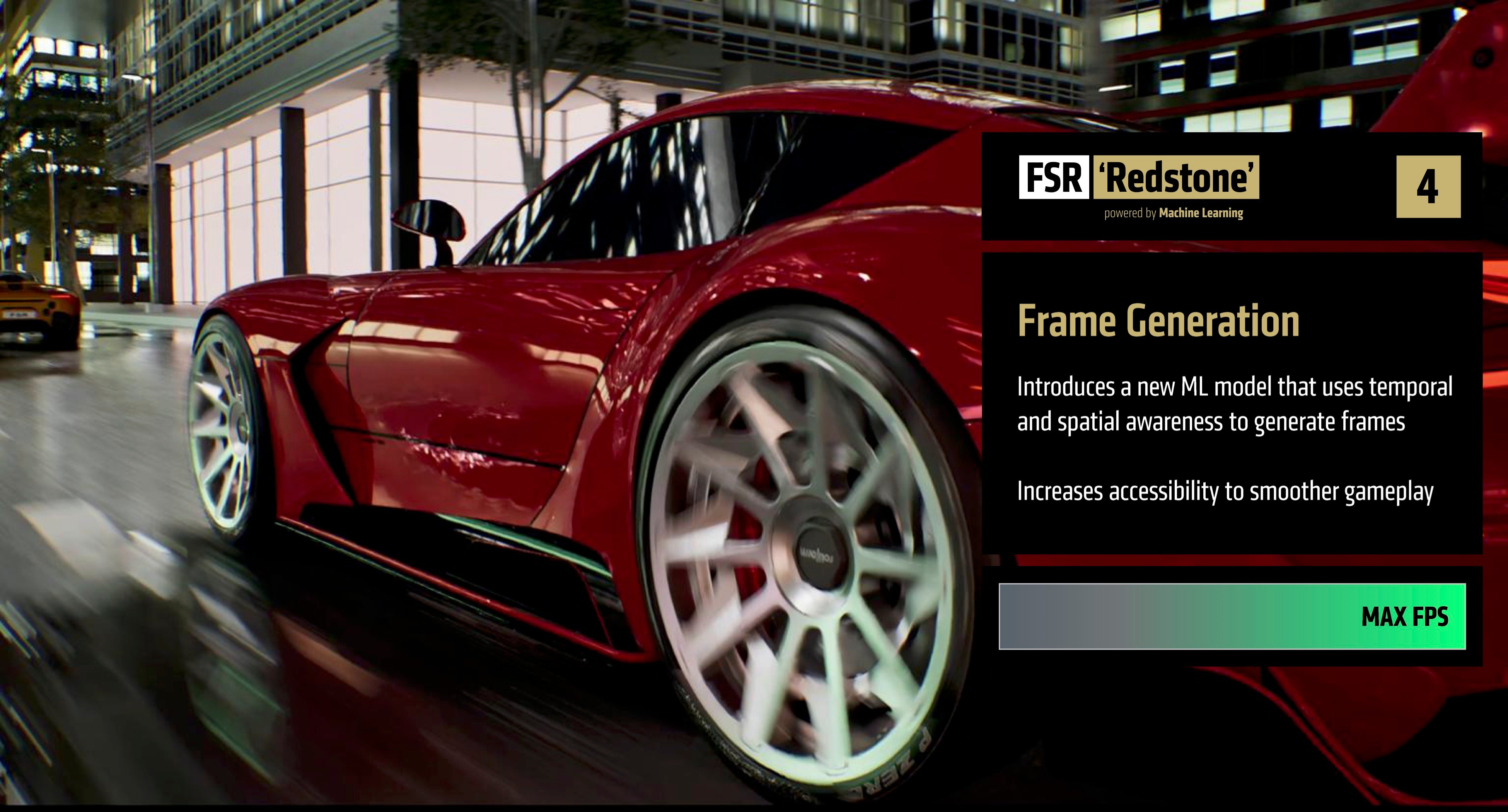
Hort opened by highlighting the explosive growth of FSR Redstone, AMD's latest upscaling and frame generation technology exclusive to its RDNA 4-based Radeon RX 9000-series GPUs. "We have over 200 titles that we delivered in 2025," he stated, contrasting this with the mere 30-33 titles available at launch in late February. This growth, he attributed to a strategic shift: publishing the source code on AMD's GPUOpen platform.
"We can't be everything to everyone," Hort explained. "Putting the code out on GPUOpen has also leveraged some uptake that we weren't even anticipating." This move created a "flywheel" effect. As Digital Foundry and other outlets published glowing reviews validating the technology's quality, game publishers took notice. The accessibility of the code lowered the barrier to entry, allowing developers to integrate the technology without waiting for direct AMD engineering support. This strategy is a cornerstone of AMD's plan to proliferate its technologies, as evidenced by the company's commitment to open-sourcing FSR 4 in the future, a point Hort confirmed was still on the roadmap, though without a specific timeline.
The RDNA 4 Omission in Ryzen AI 400: A Product Decision
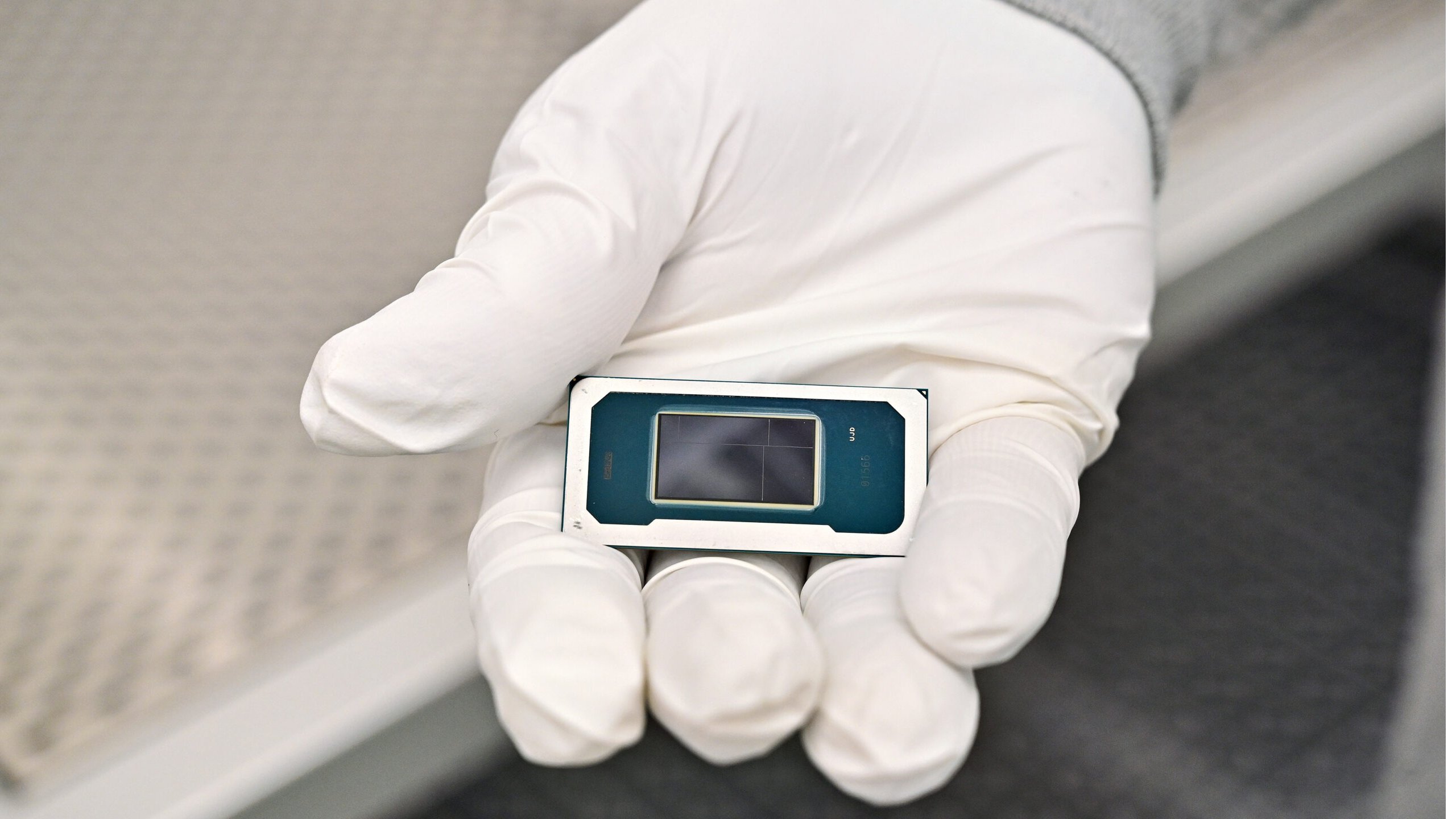
A recurring and pointed question from journalists centered on why AMD's new Ryzen AI 400 mobile series, a flagship platform for AI PCs and handhelds, features RDNA 3.5 graphics instead of the newer RDNA 4 architecture found in the desktop Radeon RX 9000 series. This was particularly salient given Intel's simultaneous announcement of its Panther Lake mobile chips, which include integrated graphics capable of multi-frame generation.
Hort was direct in his response: "That one was a product decision, right? And I'm not the product decision-maker." He elaborated that AMD must make "the right priority call" across its vast product portfolio. The implication is a complex trade-off involving die space, power budgets, thermal design, and the timing of the Ryzen AI 400 series tape-out relative to the RDNA 4 development cycle. Integrating a new GPU architecture into a mobile SoC is a multi-year process, and aligning the schedules of the CPU, NPU, and GPU teams is a monumental task. For the AI 400 series, AMD prioritized the NPU (Neural Processing Unit) and CPU advancements, leaving the GPU as a proven, efficient RDNA 3.5 design. This decision leaves a performance gap in integrated graphics compared to a hypothetical RDNA 4-based APU, a gap Intel is aiming to exploit with its Panther Lake offerings.
The Handheld Ecosystem and Driver-Level Ambitions
The conversation then turned to the thriving handheld gaming PC market, where AMD's Ryzen Z2 Extreme and similar chips dominate. Journalists noted a disparity in feature enablement across OEMs like ASUS, Lenovo, and MSI, with some devices offering robust driver-level features like AMD Fluid Motion Frames (AFMF) and Radeon Super Resolution (RSR), while others do not.
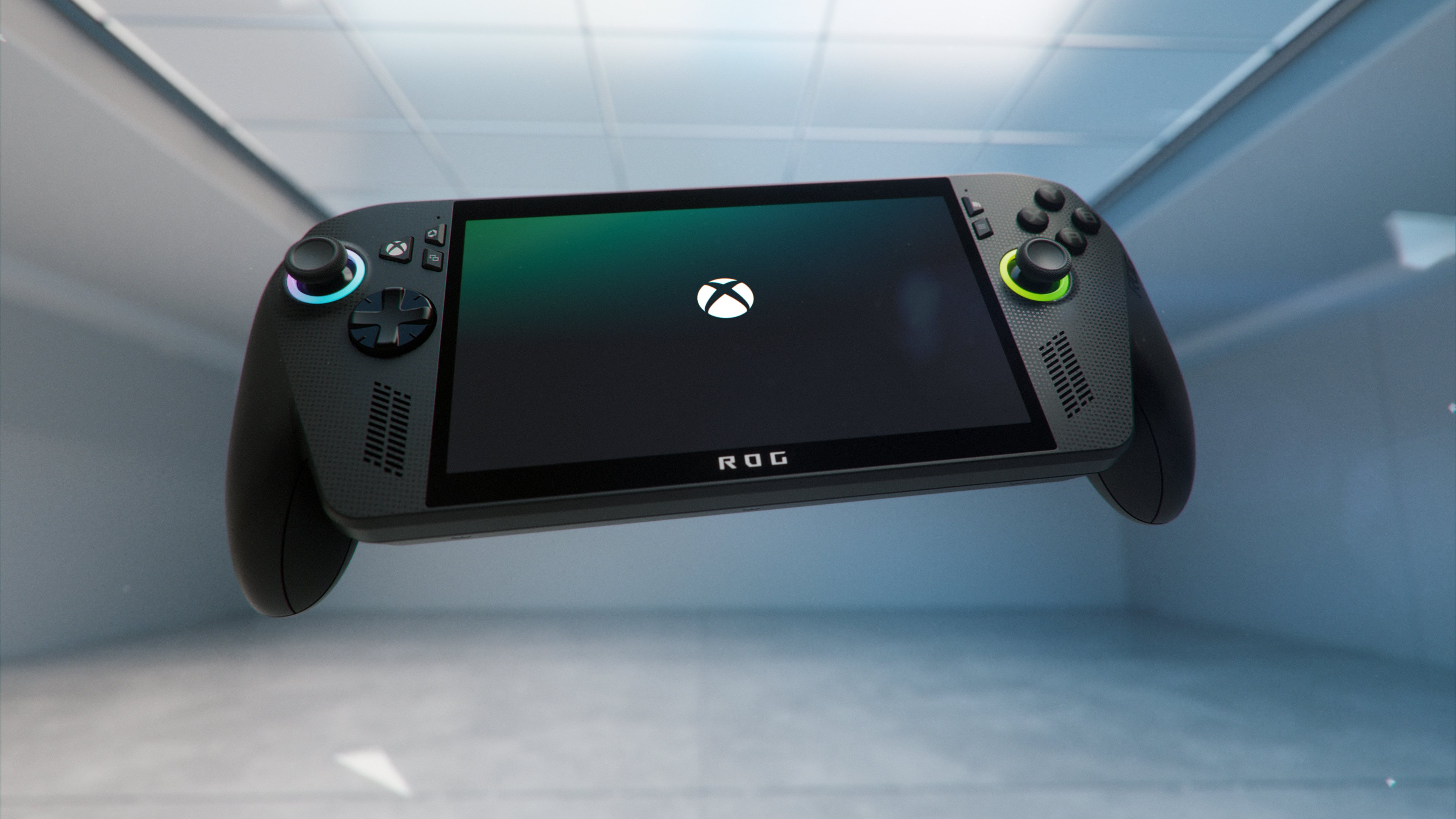
Hort acknowledged that while the technology exists in the Adrenalin driver suite, implementation is ultimately up to the OEM. "The technology exists and it works, right?" he said, pointing to the ASUS ROG Xbox Ally X as a prime example of a device that fully leverages AMD's software stack. He also confirmed ongoing collaboration with Valve for SteamOS, stating, "We're absolutely investigating it with them," regarding bringing more driver-level features to the Linux-based platform. This is crucial as SteamOS gains traction beyond the Steam Deck.
This discussion naturally led to the future of driver-level AI features. Hort revealed that AMD is "definitely investigating" how to bring more machine learning technologies directly into the driver. The goal is to move beyond "enlightened" (in-engine) implementations to "unenlightened" driver-level solutions that work universally. "It gives you backward compatibility with games that will never get updated ever again," he noted. This could potentially include multi-frame generation at the driver level, a feature currently limited to in-game implementations, which would dramatically expand its applicability.
Beyond Upscaling: The Future of AI in the Rendering Pipeline
When asked about applications of AI in graphics beyond upscaling and frame generation, Hort outlined a broader vision that extends into professional workstations and advanced rendering techniques.
"In workstation, there's a lot of CAD/CAM applications... that lend themselves very well to not only upscaling and frame gen, but also things like ray-trace denoising, like ray generation, and even neural radiance caching," he explained. These are the "more advanced things we've been bringing towards the ray-tracing [and] path-tracing acceleration."
He provided specific examples of ML techniques in development:
- Neural Intersection Functions (NIF): Using ML to predict which rays are important and where they will intersect with scene geometry, potentially bypassing the computationally expensive process of traversing the Bounding Volume Hierarchy (BVH) tree. This could make real-time path tracing feasible on more mainstream hardware.
- Neural Radiance Caching: A complex feature that requires significant input data and is "intrusive into the pipeline," but offers substantial performance benefits for global illumination.
Hort emphasized that the goal is to "democratize" path tracing, bringing it "more to the masses." The strategy is to focus on features with clear developer and ISV (Independent Software Vendor) uptake, rather than pursuing technology for its own sake.
Latency, Multi-Frame Generation, and Practical Limits
The roundtable also touched on the practical and perceptual limits of current technologies. On the topic of multi-frame generation (generating more than one interpolated frame between rendered frames), Hort was cautious. While acknowledging AMD is "looking at it," he stressed the inherent latency trade-off.
"Multi-frame gen, of course, introduces latency. And so how do you combat that? We have technologies like Anti-Lag, but we have to marry those two technologies together so that you can improve the latency the best as possible," he said. He questioned the value proposition for high-refresh-rate gaming, noting that for competitive esports titles, latency is critical, and for casual gaming, high frame rates are often unnecessary. "If you're doing 6x, 8x, 32x frame gen? The latency falls apart," he stated plainly.
This pragmatic view extends to VR. While super-resolution is "almost a requirement" for high-refresh-rate VR headsets, frame generation is problematic due to the nausea-inducing latency it introduces. "If your brain can perceive one frame that's behind it immediately gets sick, you're done," Hort explained.
Conclusion: A Strategy of Openness and Calculated Moves
The CES 2026 roundtable painted a picture of a company executing a dual strategy: aggressively open-sourcing its software to drive adoption and ecosystem growth, while making calculated, sometimes controversial, hardware decisions based on product segmentation and development timelines. The omission of RDNA 4 from Ryzen AI 400 is a clear example of the latter, creating a short-term vulnerability that Intel is poised to challenge. Meanwhile, AMD's push to integrate more AI and ML features at the driver level and in professional applications signals a long-term commitment to making advanced graphics techniques accessible across its entire product stack, from handhelds to workstations. The success of this strategy will depend on continued developer buy-in and AMD's ability to execute on its ambitious, AI-driven roadmap for 2026 and beyond.
Comments
Please log in or register to join the discussion