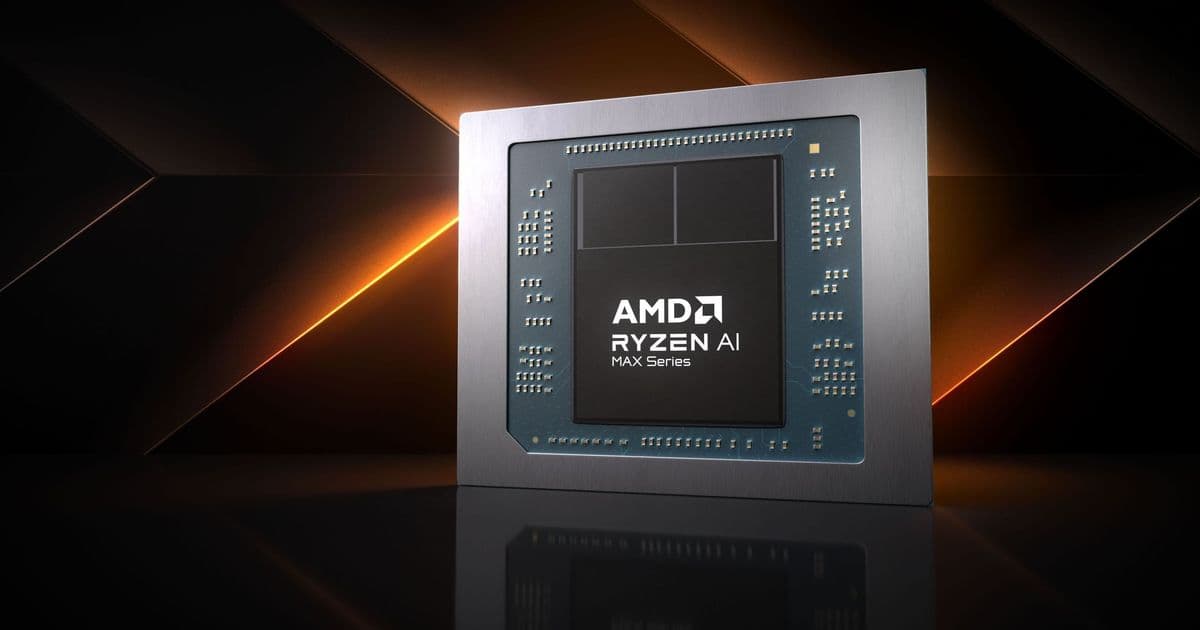
AMD announces Ryzen AI Max 400 'Gorgon Halo' processors, featuring up to 192GB of unified memory, Zen 5 CPU cores, RDNA 3.5 graphics, and targeting AI workloads with enhanced performance for large language models.
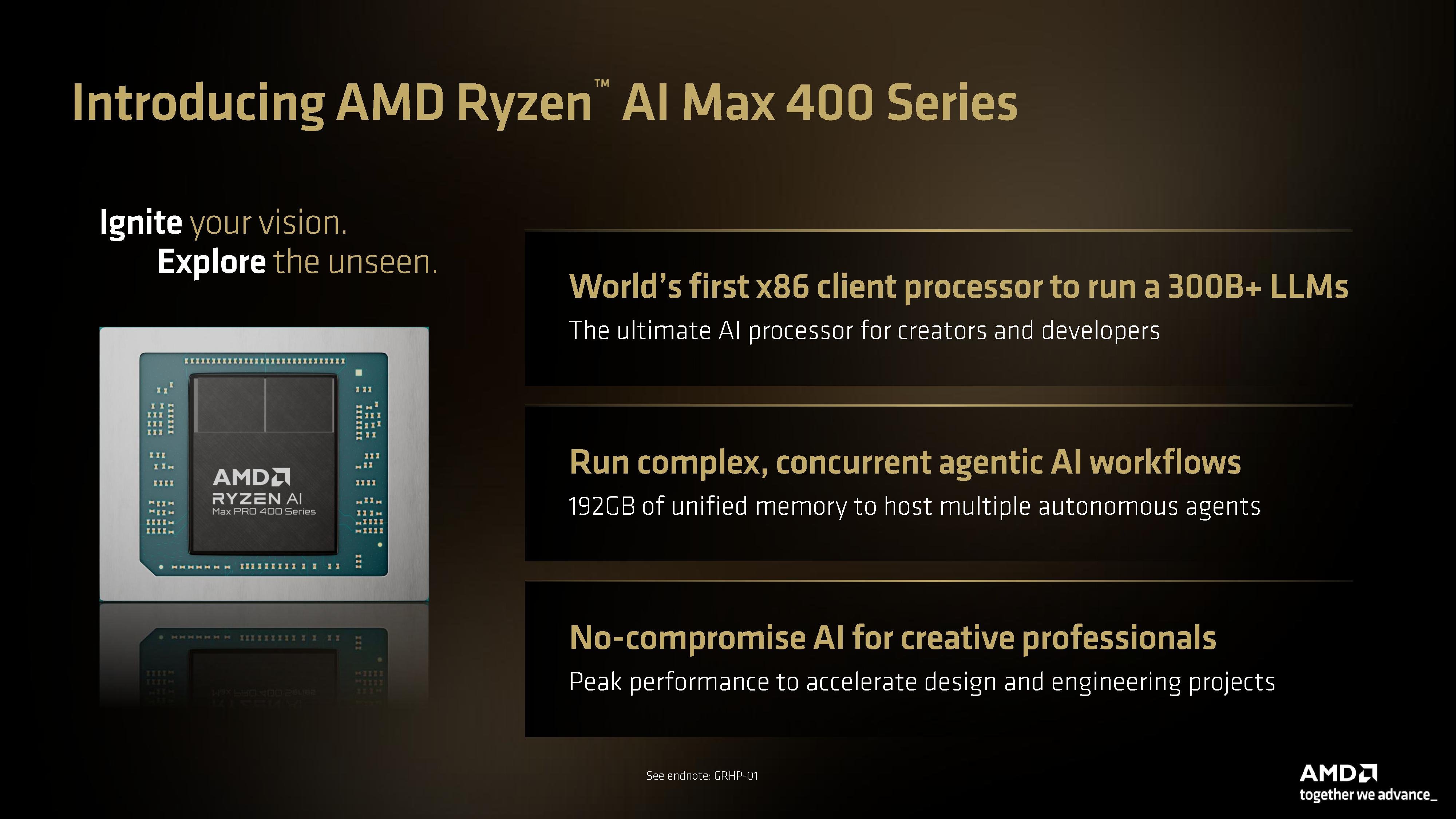
AMD has officially unveiled its Ryzen AI Max 400 'Gorgon Halo' processor family, representing a significant refresh of the company's large system-on-chip (SoC) lineup. The most notable advancement is support for up to 192GB of unified memory, a substantial increase from the 128GB limit in the previous Ryzen AI Max 300 'Strix Halo' generation. This memory expansion positions AMD's latest offering as a competitive solution for AI workloads, particularly for running large language models with over 300 billion parameters.
Technical Specifications and Architecture
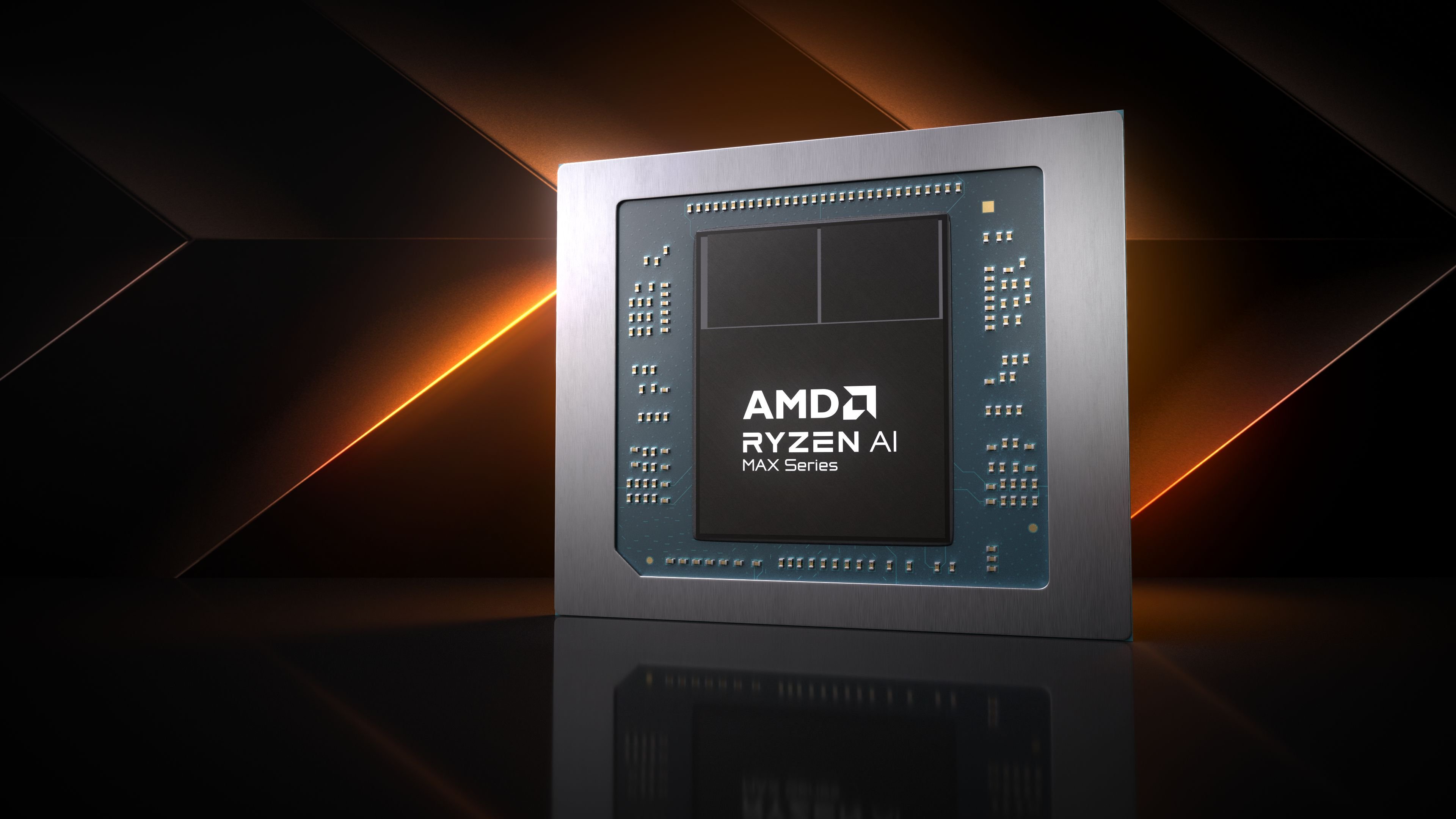
The Ryzen AI Max 400 series builds upon AMD's latest architectural innovations, combining Zen 5 CPU cores with RDNA 3.5 graphics processing and an integrated XDNA 2 neural processing unit. The family consists of three models, each targeting different performance segments:
- Ryzen AI Max+ Pro 495: 16-core/32-thread configuration, 5.2 GHz boost clock, 80MB total cache, 55 TOPS NPU, Radeon 8065S GPU with 40 compute units
- Ryzen AI Max Pro 490: 12-core/24-thread configuration, 5 GHz boost clock, 76MB total cache, 50 TOPS NPU, Radeon 8050S GPU with 32 compute units
- Ryzen AI Max Pro 485: 8-core/16-thread configuration, 5 GHz boost clock, 40MB total cache, 50 TOPS NPU, Radeon 8050S GPU with 32 compute units
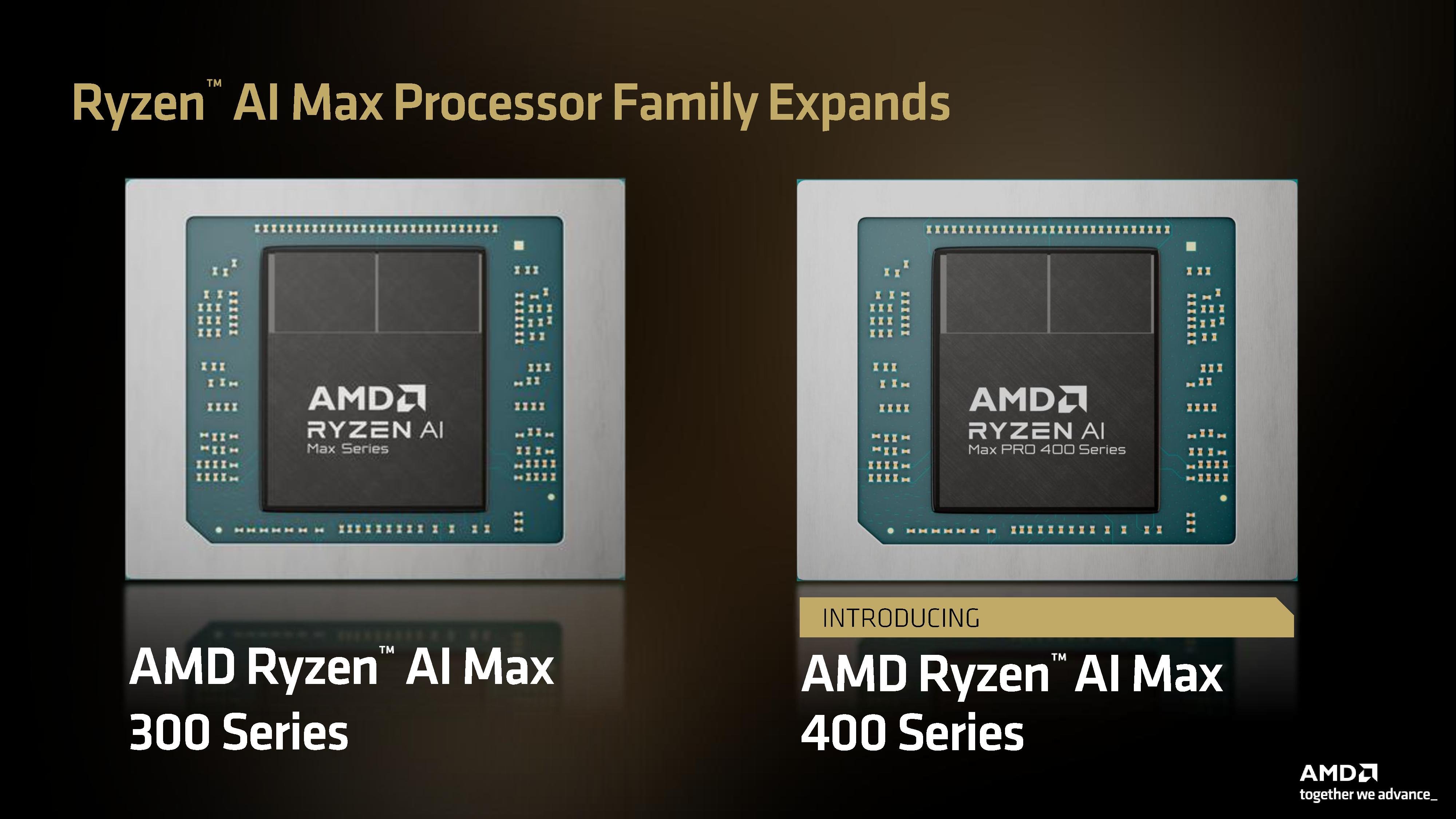
All three models support up to 192GB of unified memory, with 160GB available as GPU VRAM (32GB reserved for system use). This memory capacity represents a 50% increase over the previous generation and positions AMD as the first x86 client processor manufacturer to enable execution of 300B+ parameter large language models.
The architecture maintains consistency with AMD's previous generation in terms of core components, with the primary differentiator being the memory capacity increase. Interestingly, AMD has retained the Radeon 8050S GPU with 32 compute units for the mid-range and entry-level models, while the flagship model features the Radeon 8065S with 40 compute units.
Market Implications and Supply Chain Context
The timing of this memory expansion presents both opportunities and challenges for AMD. On one hand, the increased memory capacity addresses growing demand from AI developers and researchers working with increasingly large models. On the other hand, global DRAM shortages have been pushing prices upward across all market segments, potentially limiting the availability and increasing the cost of systems utilizing the full 192GB memory configuration.
"It'll be a minor miracle if AMD is able to actually ship Gorgon Point with 192GB of unified memory consistently," notes industry analysts, pointing to Apple's recent reduction of memory options in the Mac Studio due to supply constraints.
Currently positioned as "Pro" chips targeting the commercial market, the Ryzen AI Max 400 series incorporates enterprise-grade security, manageability, and reliability features. AMD has confirmed that systems featuring these processors will be announced by partners starting in Q3 2026, though consumer availability remains uncertain.
Competitive Positioning and Performance Claims
AMD positions the Ryzen AI Max 400 series as a direct competitor to Nvidia's data center solutions and Apple's M-series chips. The company claims significant advantages over Nvidia's DGX Spark, which is currently priced at $4,700 with 128GB of unified memory. In Linux-based AI workloads, AMD reports up to 14% higher tokens per second than the DGX Spark with the GLM 4.7 Flash 30B model, and up to 4% higher with Qwen 3.6 35B.
Compared to Apple's Mac Mini M4 Pro, AMD demonstrates approximately 4X scaling in AI workloads, though this comparison may not be entirely equitable given the different form factors and target markets. The Ryzen AI Halo box, which will be available with the Ryzen AI Max+ Pro 495, represents a more direct competitor to Apple's Mac Studio in terms of overall compute capability.
System Implementation and Pricing
The first confirmed system utilizing the Ryzen AI Max 400 series is the Ryzen AI Halo, a compact form-factor measuring 5.9 x 5.9 x 1.7 inches. The base configuration features the Ryzen AI Max+ 395 (from the previous generation) with 128GB of unified memory and 2TB of storage, priced at $3,999. Pre-orders are set to begin in June 2026.
The Ryzen AI Halo includes modern connectivity options with Wi-Fi 7, Bluetooth 5.4, 10Gbps Ethernet, and HDMI 2.1b display output. It features three USB-C ports (speeds unspecified) plus a fourth USB-C port for power delivery, with a rated TDP of up to 120W.
AMD frames the Ryzen AI Halo around the "token economy," suggesting that one unit can save up to $750 monthly compared to cloud compute services, potentially reaching cost breakeven after six months assuming six million tokens per day usage.
Future Outlook
As AMD continues to expand its AI-optimized processor portfolio, the Ryzen AI Max 400 series represents a significant step forward in memory capacity for x86 client systems. The company's ability to deliver on the 192GB memory promise in the current supply-constrained environment will be a key factor in determining the success of this product family.
With systems expected to begin shipping in Q3 2026, AMD has positioned itself to compete in the growing market for AI development workstations, particularly for developers requiring large memory capacities for training and inference of massive language models. The company's continued focus on the integration of CPU, GPU, and NPU resources through its unified memory architecture may provide a competitive advantage as AI workloads continue to evolve.
Comments
Please log in or register to join the discussion