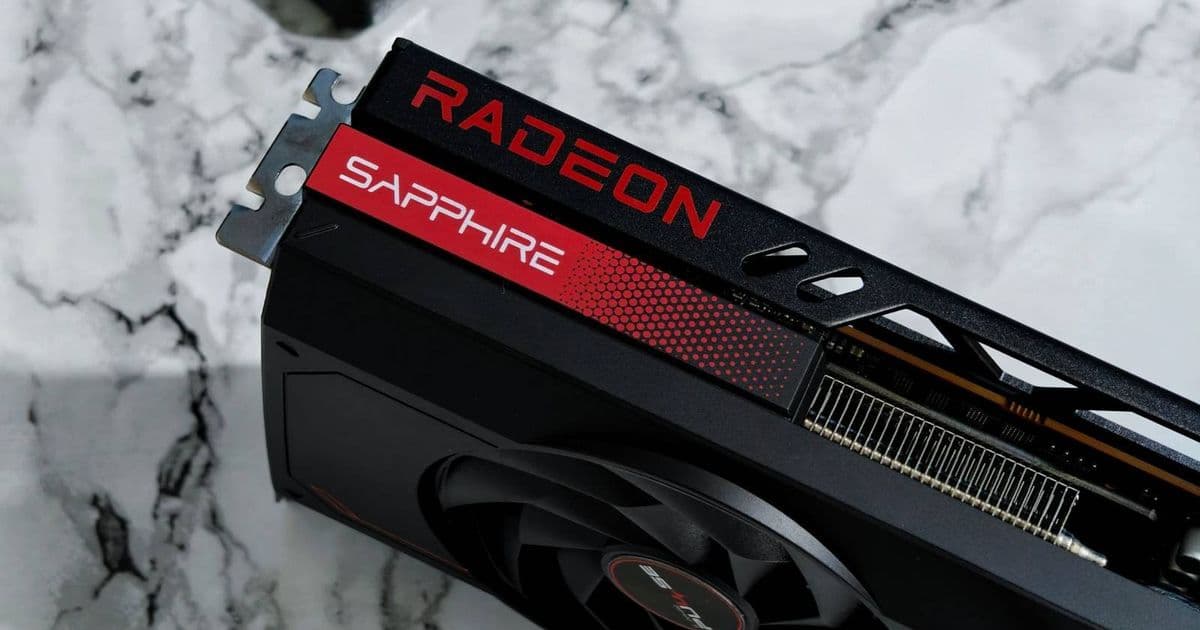
AMD's commitment to maintaining affordable GPU prices during the global DRAM shortage reveals a strategic balancing act between supply chain pressures and market positioning, with implications for both consumers and the competitive landscape.
AMD has publicly stated its intention to keep graphics card prices stable despite ongoing challenges in the DRAM market, a move that highlights the complex interplay between component shortages, manufacturing costs, and competitive dynamics in the GPU industry. This announcement comes as the semiconductor industry continues to grapple with supply constraints that have affected everything from memory chips to specialized processors.
The DRAM shortage, which has persisted through 2024, stems from multiple converging factors. Memory manufacturers like Samsung, SK Hynix, and Micron have faced production challenges as they transition to more advanced process nodes while simultaneously managing demand from AI data centers, smartphone manufacturers, and automotive applications. For GPU makers, DRAM represents a significant portion of their bill of materials, particularly for cards with higher memory configurations like the Radeon RX 7900 XTX with its 24GB of GDDR6 memory.
AMD's position is particularly interesting given its dual role as both a GPU and CPU manufacturer. Unlike NVIDIA, which relies entirely on third-party memory suppliers, AMD has more vertical integration through its CPU business, which also uses DRAM. This gives them some leverage in memory procurement, though not enough to completely insulate them from market pressures. The company's statement suggests they're absorbing some of the increased costs rather than passing them directly to consumers, a decision that reflects both competitive strategy and brand positioning.
From a developer perspective, this pricing stability has several implications. First, it maintains predictable hardware costs for development studios planning their next-generation titles. When GPU prices remain stable, studios can budget more accurately for their hardware refresh cycles, whether for in-house development machines or cloud-based rendering farms. This predictability is particularly valuable for indie developers and smaller studios operating on tight budgets.
Second, AMD's approach affects the competitive landscape for cross-platform development. With both AMD and NVIDIA maintaining relatively stable pricing, developers can continue to target both ecosystems without worrying about one platform becoming prohibitively expensive. This is crucial for game developers who need to ensure their titles perform well across different hardware configurations, from high-end gaming PCs to more affordable systems.
The DRAM shortage also impacts mobile development, though in different ways. While mobile GPUs don't typically use GDDR memory, the shortage has affected LPDDR memory used in smartphones and tablets. This has indirect effects on mobile game development, as manufacturers may need to make trade-offs between memory capacity and device pricing, potentially affecting the performance envelope available to mobile game developers.
AMD's pricing strategy also reflects broader industry trends. The company has been working to expand its market share in both gaming and professional graphics, competing against NVIDIA's dominant position. By keeping prices stable, AMD can maintain its value proposition—offering competitive performance at more accessible price points. This strategy has been particularly effective in the mid-range segment, where the Radeon RX 7700 XT and RX 7800 XT have found strong adoption among gamers seeking solid 1440p performance without premium pricing.
For developers working with AMD's hardware, this stability means continued access to affordable development hardware. The company's ROCm platform, which provides open-source compute capabilities for AMD GPUs, remains a viable alternative to NVIDIA's CUDA ecosystem. Developers interested in exploring AMD's compute capabilities can find resources at AMD's ROCm documentation and the AMD GPUOpen initiative, which provides tools and libraries for game development.
The broader context of DRAM shortages also affects development workflows. Studios relying on high-memory workstations for tasks like video editing, 3D rendering, and AI training may face challenges in upgrading their systems. AMD's stable GPU pricing helps, but memory prices themselves remain elevated. This has led some developers to explore alternative approaches, such as cloud-based development environments or more efficient memory management in their applications.
Looking at the competitive landscape, AMD's pricing stance creates interesting dynamics. NVIDIA, facing similar DRAM costs, has maintained its premium pricing strategy, particularly for its RTX 40-series cards. This creates a clear differentiation: AMD positions itself as the value-conscious option, while NVIDIA emphasizes cutting-edge features like DLSS 3 and Ray Tracing performance. For developers, this means considering both ecosystems when optimizing their titles, as the performance characteristics and feature sets differ significantly.
The impact extends to emerging technologies like AI upscaling and frame generation. AMD's FSR (FidelityFX Super Resolution) technology, which is open-source and cross-platform, benefits from stable hardware pricing as more gamers can access compatible cards. Developers adopting FSR can reach a broader audience, including those on AMD hardware and even NVIDIA cards through compatibility layers. The FSR 3.0 announcement demonstrates AMD's commitment to open standards that work across hardware platforms.
From a practical standpoint, developers should consider several factors when planning their hardware strategy. First, the DRAM shortage shows no immediate signs of resolving, so budgeting for current market conditions remains prudent. Second, AMD's pricing stability makes their current generation of GPUs a solid investment for development workstations, particularly for studios that need to balance performance with cost. Third, the open nature of AMD's software stack (ROCm, FSR, etc.) provides flexibility that proprietary solutions may lack.
The situation also highlights the importance of software optimization. With hardware costs remaining relatively high, developers who can squeeze maximum performance from existing hardware gain a competitive advantage. This means focusing on efficient rendering techniques, smart memory management, and leveraging hardware-specific features. AMD's RDNA 3 architecture, for instance, offers features like hardware-accelerated ray tracing and AI acceleration that developers can target for performance gains.
For mobile developers, the DRAM shortage serves as a reminder of the importance of optimization. While mobile devices use different memory technologies, the principles of efficient resource management remain the same. Techniques like texture compression, efficient asset streaming, and careful memory allocation become even more critical when hardware resources are constrained.
AMD's commitment to stable pricing also affects the second-hand market, which many developers rely on for test devices and backup hardware. When new card prices remain stable, used prices tend to follow suit, making it easier to budget for additional development machines. This is particularly important for studios building large test farms to ensure compatibility across different hardware configurations.
The company's strategy also has implications for cloud gaming and streaming services. With GPU prices stable, cloud providers can more accurately forecast their infrastructure costs, which may lead to more stable pricing for developers using cloud rendering services. AMD's Instinct accelerators, used in data centers, benefit from the same DRAM supply chain, though they compete in a different market segment focused on AI and high-performance computing.
Developers working with AMD hardware should stay informed about the company's software updates and driver releases. AMD frequently updates its Adrenalin software with performance improvements and new features. The AMD Driver Download page provides access to the latest drivers, while the AMD Developer Portal offers resources for game developers and compute programmers.
The DRAM shortage also affects the broader ecosystem of development tools. Many development platforms, from game engines like Unreal and Unity to specialized software for 3D modeling and animation, rely on substantial memory resources. Stable GPU pricing helps, but developers should also consider their overall system configuration when planning upgrades. A balanced approach that considers CPU, GPU, memory, and storage needs will provide the best value for development work.
In conclusion, AMD's decision to maintain stable GPU pricing during the DRAM shortage represents a calculated business strategy with multiple benefits. For developers, it provides predictability in hardware costs and maintains competitive options across different price points. The open nature of AMD's software ecosystem offers flexibility for developers who want to avoid vendor lock-in. While the DRAM shortage presents challenges, AMD's approach helps mitigate some of the impact on the development community, allowing studios to focus on creating great software rather than worrying about unpredictable hardware costs.
The situation underscores the interconnected nature of the technology ecosystem, where component shortages in one area can ripple through the entire industry. AMD's response demonstrates how companies can navigate these challenges while maintaining their commitment to developers and consumers. As the DRAM shortage continues, developers would be wise to monitor both hardware pricing trends and software developments to make informed decisions about their development infrastructure and target platforms.
Comments
Please log in or register to join the discussion