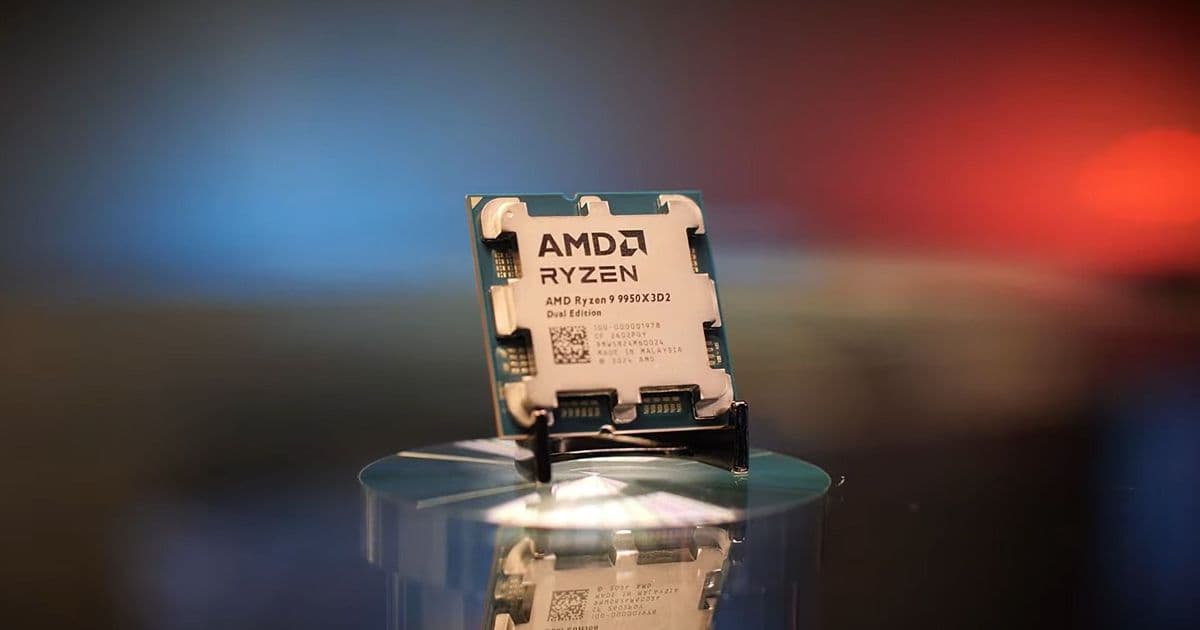
AMD announces the Ryzen 9 9950X3D2 Dual Edition, featuring 208MB total cache across both CCDs, 200W TDP, and modest performance gains over the 9950X3D.
AMD has officially unveiled the Ryzen 9 9950X3D2 Dual Edition, marking a significant milestone as the world's first desktop CPU to implement 3D V-Cache across both Core Complex Dies (CCDs). The flagship processor, scheduled for release on April 22, brings a substantial 208MB total cache configuration to AMD's Zen 5 lineup, promising modest but meaningful performance improvements for high-end desktop users.
Technical Specifications and Architecture
The Ryzen 9 9950X3D2 maintains the same core configuration as its predecessor, featuring 16 cores and 32 threads built on AMD's Zen 5 architecture. However, the dual-CCD 3D V-Cache implementation represents a fundamental shift in AMD's cache stacking strategy. While the original 9950X3D featured 128MB of L3 cache on a single CCD, the 9950X3D2 distributes 192MB of L3 cache across both CCDs, complemented by 16MB of L2 cache for a total of 208MB.
This architectural change comes with a slight clock speed trade-off, with the 9950X3D2 featuring a maximum boost frequency of 5.6 GHz compared to the 5.7 GHz found on the standard 9950X3D. The reduction in clock speed reflects the thermal and power constraints associated with the additional cache layers.
Power and Thermal Considerations
The most notable specification change is the 30W increase in TDP, bringing the 9950X3D2 to 200W compared to the 9950X3D's 170W. This makes it AMD's most power-hungry desktop consumer processor to date, potentially requiring more robust cooling solutions than previous X3D models. The increased power draw is directly attributable to the additional cache layers and the complexity of managing dual-CCD cache stacking.
Performance Projections
According to AMD's internal testing, the 9950X3D2 delivers approximately 5-10% performance gains over the 9950X3D across various workloads. The company projects up to 7% improvements in rendering benchmarks like V-Ray and Blender, with content creation applications such as DaVinci Resolve showing 5-7% faster performance. AI and simulation workloads could see up to 13% gains, while Unreal Engine compilation speeds may improve by 8%.
However, AMD has not yet released gaming benchmarks, leaving questions about the real-world impact for the primary audience of X3D processors. The modest performance gains suggest that the 9950X3D2 may appeal primarily to enthusiasts and professionals who prioritize maximum cache capacity over other considerations.
Market Positioning and Pricing
While AMD has not disclosed official pricing for the 9950X3D2, the company has confirmed April 22 availability. The processor will ship in distinctive monochrome packaging to differentiate it from other Ryzen 9000 series SKUs.
For context, the current Ryzen 9 9950X3D retails for $699, while the standard 9950X is priced at $545 ($599 MSRP). Given the 9950X3D2's enhanced specifications, it's likely to command a premium over the existing X3D model, potentially positioning it as AMD's new flagship desktop processor.
Platform Compatibility
The 9950X3D2 maintains compatibility with AMD's AM5 platform, supporting DDR5 memory, PCIe Gen 5 connectivity, and Precision Boost Overdrive 2. This ensures users can leverage existing AM5 infrastructure while benefiting from the latest architectural improvements.
Industry Context and Competition
The announcement comes amid growing competition in the high-performance desktop market, with Intel's latest Raptor Lake Refresh and upcoming Arrow Lake processors providing alternative options for enthusiasts. AMD's dual-CCD X3D approach represents a unique value proposition, particularly for workloads that benefit from massive cache capacity.
Leaked Performance Data
Earlier leaks in December provided preliminary performance indicators, with the 9950X3D2 scoring 71,585 in PassMark multi-core tests and 4,716 in single-core performance. Geekbench results showed approximately 3,456 in single-core and 21,062 in multi-core performance. However, these figures remain unofficial, and AMD's final performance numbers may differ.
Manufacturing and Supply Chain Implications
The dual-CCD 3D V-Cache implementation presents interesting manufacturing challenges, as it requires precise alignment and stacking of cache layers across multiple CCDs. This complexity could impact production yields and availability, particularly during the initial launch period.
Target Audience and Use Cases
The 9950X3D2 appears designed for a specific subset of users who require maximum cache capacity for their workloads. Content creators working with large datasets, AI researchers, and simulation professionals may find the additional cache beneficial. However, gamers and general users might find the performance gains insufficient to justify the likely premium pricing.
Future of X3D Technology
The 9950X3D2 represents AMD's continued evolution of 3D V-Cache technology, suggesting the company sees value in expanding cache stacking beyond single-CCD implementations. This could indicate future developments in multi-CCD cache architectures as AMD refines the technology and addresses manufacturing challenges.
Conclusion
The Ryzen 9 9950X3D2 Dual Edition represents a significant technical achievement for AMD, being the first desktop CPU to implement 3D V-Cache across both CCDs. While the performance gains appear modest, the processor pushes the boundaries of desktop CPU architecture and cache technology. The 200W TDP and likely premium pricing will limit its appeal to enthusiasts and professionals who specifically need maximum cache capacity. As April 22 approaches, the computing community will be watching closely to see how this innovative processor performs in real-world scenarios and whether the dual-CCD X3D approach becomes a viable strategy for future high-end desktop processors.
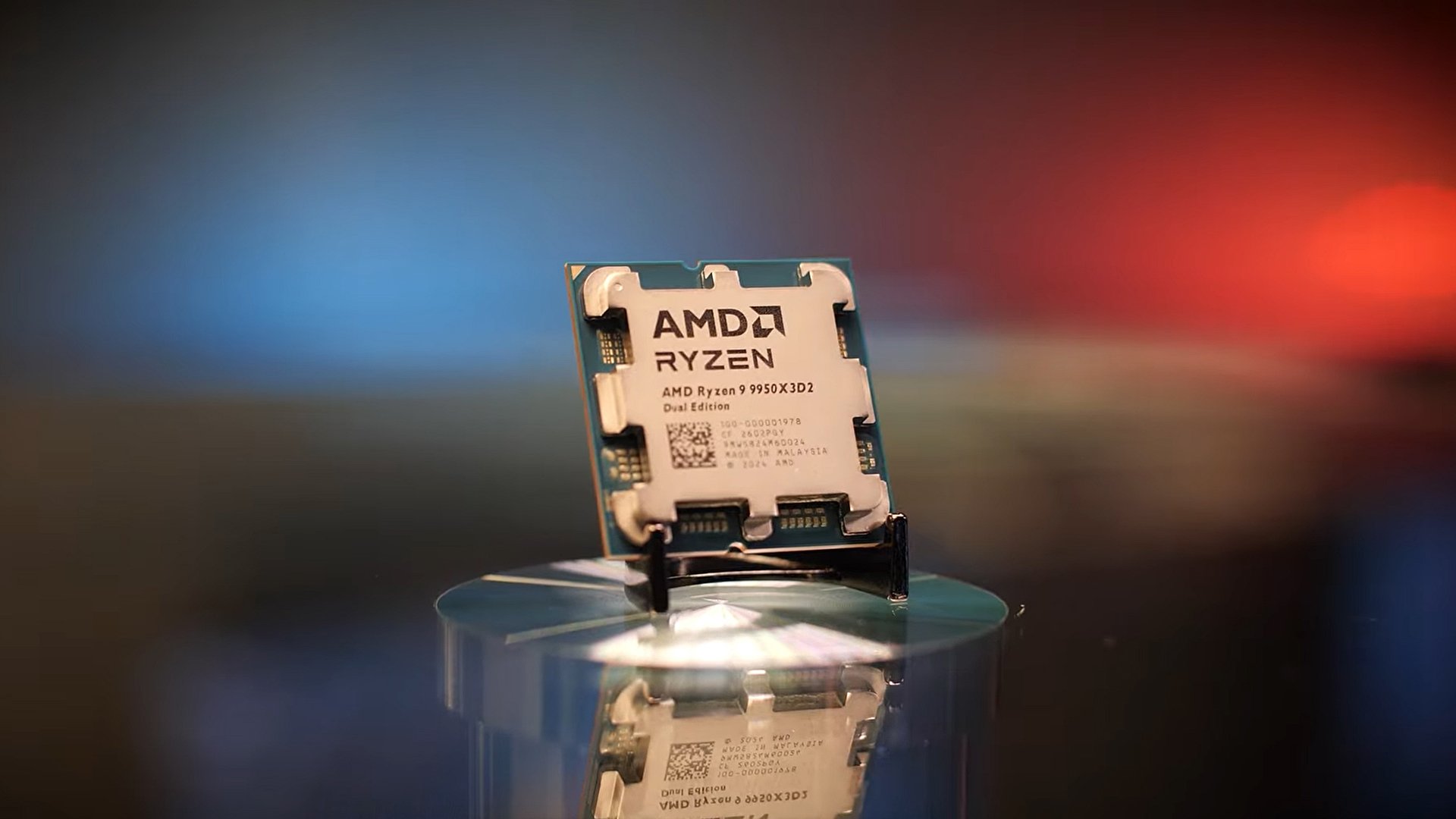
The AMD Ryzen 9 9950X3D2 Dual Edition represents a significant milestone in desktop CPU architecture, being the first processor to implement 3D V-Cache across both CCDs. This innovative design delivers 208MB of total cache while maintaining AM5 platform compatibility and supporting DDR5 memory and PCIe Gen 5 connectivity.
Comments
Please log in or register to join the discussion