Linux 7.1 brings native AMDGPU driver support for GCN 1.1 APUs, delivering significant performance gains and Vulkan compatibility for older AMD hardware.
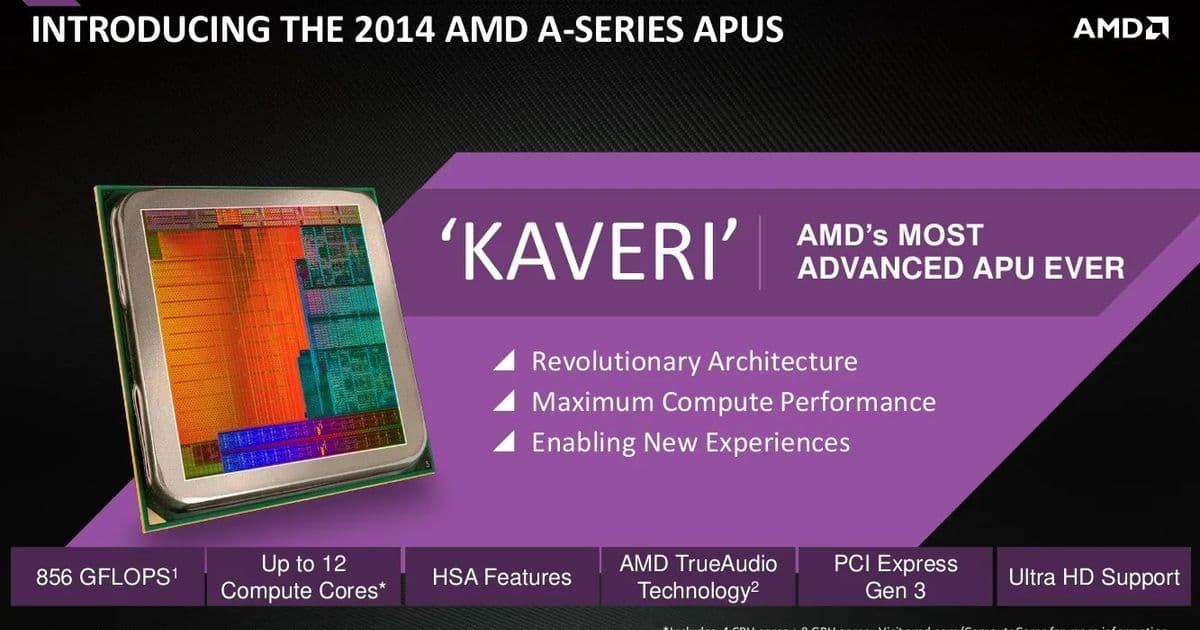
After years of experimental support, the Linux kernel is finally delivering a major upgrade to millions of older AMD APUs. The upcoming Linux 7.1 release, currently in its merge window, brings a significant change that will dramatically improve the experience for users with AMD's Kaveri, Kabini, and Mullins APUs.
The Long Road to Native Support
For years, these GCN 1.1 "Sea Islands" APUs have been running on the legacy Radeon DRM driver, which lacked many modern features and optimizations. The newer AMDGPU driver, which has been the default for newer AMD hardware for some time, only had experimental support for these older chips. This meant users were missing out on performance improvements, better power management, and crucially, native Vulkan support through the RADV driver.
What Changes in Linux 7.1
The final pull request to DRM-Next, submitted just before the Linux 7.1 merge window, makes the AMDGPU driver the default for all GCN 1.0 and GCN 1.1 hardware. This completes the transition that began years ago for discrete GPUs and brings the same benefits to APU users.
Performance Benefits
Users can expect:
- Significant performance improvements across the board due to better driver architecture
- Native RADV Vulkan support out-of-the-box, opening up modern gaming and compute workloads
- Improved power management through the more efficient AMDGPU driver stack
- Better overall stability with fewer driver-related issues
Technical Improvements
The AMDGPU pull for Linux 7.1 also includes several other important changes:
- Audio regression fixes that were affecting some users
- GPU partition updates for better resource management
- New CONFIG_GCOV_PROFILE_AMDGPU Kconfig option for code profiling
- SMU (System Management Unit) updates for better hardware control
- Various bug fixes and stability improvements
The Valve Connection
Much of the credit for this transition goes to Timur Kristóf from the Valve Linux graphics team. Over the past year, Kristóf has been the primary steward of the work to complete feature parity on AMDGPU for these older GPUs/APUs. His efforts have included not just enabling the driver by default, but also fixing numerous bugs and ensuring the driver works as well as or better than the legacy Radeon driver it replaces.
Impact on Users
This change affects a significant number of users still running older AMD hardware. Kaveri APUs, in particular, were popular in both laptops and desktops, and many systems with these chips are still in active use today. The Kabini and Mullins APUs, while more limited in performance, are also found in many low-power devices and embedded systems.
For users, the upgrade to Linux 7.1 should be seamless. The driver change is handled automatically, and users will immediately benefit from the improved performance and features without any manual configuration required.
Looking Forward
This transition marks the end of an era for AMD's Linux driver stack. With all GCN 1.0 and 1.1 hardware now on the modern AMDGPU driver, the focus can shift entirely to supporting newer architectures and continuing to improve the driver for current and future hardware.
The timing is particularly good, as it comes just as Linux 7.1 enters its merge window, ensuring that this important change makes it into the next stable release cycle. Users can expect to see these improvements in distributions that adopt the Linux 7.1 kernel in the coming months.
For anyone still running AMD hardware from the Kaveri/Kabini era, Linux 7.1 represents a welcome performance boost and modernization that will extend the useful life of these systems for years to come.
Comments
Please log in or register to join the discussion