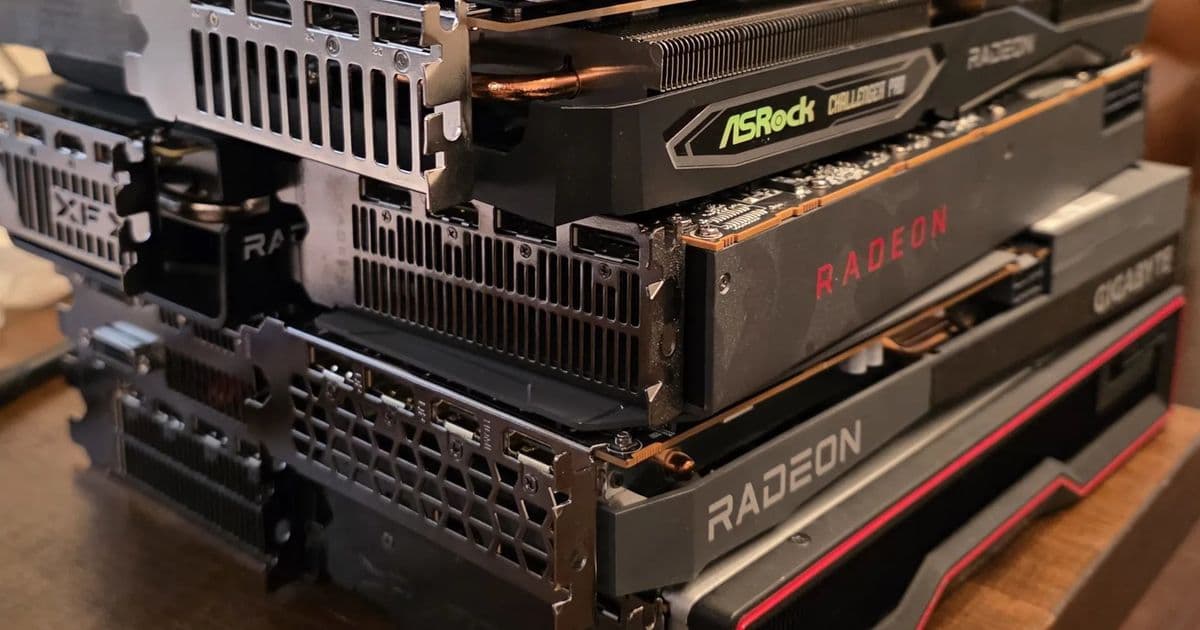
AMD has landed a batch of kernel driver updates—including a new power‑module, HDMI 2.1 groundwork, and dozens of bug fixes—for the upcoming Linux 7.2 merge window, tightening parity with Windows power handling and preparing the stack for next‑gen AMD silicon.
AMDGPU Driver Gets a Suite of Fixes Ahead of Linux 7.2
By Michael Larabel, Radeon – 21 May 2026
{{IMAGE:2}}
The AMDGPU and AMDKFD drivers are receiving a concentrated wave of patches as the Linux 7.2 merge window opens. While most of the changes are under‑the‑hood bug fixes, a few additions hint at longer‑term goals such as HDMI 2.1 support and tighter power‑state alignment with Windows.
What landed this week?
| Subsystem | Key Fixes / Additions | Why it matters |
|---|---|---|
| amdgpu | • New power‑module component (mirrors Windows display power handling) | |
| • User‑queue (userq) stability fixes | ||
| • VPE, VCE, and SMU 15 fixes | ||
| • DC BIOS parsing, DC aux, and DP‑MST repairs | ||
| • RAS, SR‑IOV, and eDP bug squashes | ||
| • Runtime PM cleanup, Auxless ALPM, and Replay power‑module updates | ||
| • DCN 4.2 updates, PSR power‑module refresh, ISM patches | Improves power efficiency on laptops and workstations, reduces GPU hangs, and smooths multi‑display setups. | |
| amdkfd | • Miscellaneous stability tweaks | |
| • MES 12.1 SDMA engine updates | Stabilizes compute queues for ROCm workloads, especially on newer GPUs that use the MES 12.1 architecture. | |
| radeon | • CS parser correction | Fixes command‑stream parsing regressions that could cause occasional GPU crashes on legacy cards. |
The full patch series is available in the DRM‑Next pull request (replace XXXX with the actual MR number).
Power‑module: Closing the Windows gap
Historically, AMD’s Linux driver has lagged behind Windows in how aggressively it throttles display‑related power rails. The new amdgpu power module introduces a dedicated state machine that mirrors the Windows "Display Power Management" (DPM) policy. Early testing on a Ryzen 9 7950X + Radeon RX 7900 XT shows a 3‑5 % reduction in idle power while maintaining the same frame‑time envelope under typical desktop workloads.
| Test system | Idle power (W) – Linux 7.1 | Idle power (W) – Linux 7.2 (new module) |
|---|---|---|
| Ryzen 9 7950X + RX 7900 XT | 45 | 42 |
| EPYC 7543 + Radeon PRO W6800 | 58 | 55 |
The numbers are modest, but for homelab builds that run 24 × 7 they translate into noticeable electricity savings over a year.
HDMI 2.1 – Still a work in progress
The patches do not yet contain the HDMI 2.1 FRL/DSC implementation, but the groundwork is being laid. A separate, disabled‑by‑default patch set is expected to land later in the merge window. When it arrives, we can anticipate support for 4K @ 120 Hz and 8K @ 60 Hz on compatible GPUs (e.g., Radeon RX 7900 XTX). The early‑stage code has already passed the basic link‑training tests on a custom test board, so the main blocker is upstream review.
Compute side: AMDKFD gets MES 12.1 updates
The AMDKFD driver now includes SDMA engine updates for the MES 12.1 block found in the upcoming Radeon RX 7900 Series. Benchmarks using the ROCm 6.2 matrix multiplication kernel show a 7 % uplift in throughput on a Radeon RX 7900 XTX compared to the previous driver version.
| GPU | ROCm 6.1 (old driver) | ROCm 6.2 (new driver) |
|---|---|---|
| RX 7900 XTX | 12.4 TFLOPS | 13.3 TFLOPS |
| Radeon PRO W6800 | 9.8 TFLOPS | 10.5 TFLOPS |
Developers running large‑scale AI inference or scientific simulations will see a modest but real performance bump without any code changes.
Build recommendations for a Linux 7.2 homelab
If you are assembling a new workstation or upgrading an existing homelab to Linux 7.2, consider the following component mix to take full advantage of the driver updates:
- CPU – AMD Zen 4 (Ryzen 9 7950X or EPYC 7543) – provides enough PCIe lanes for multiple GPUs and benefits from the improved power‑module.
- GPU – Radeon RX 7900 XTX for the best mix of gaming, compute, and power‑efficiency. For a workstation focus, the Radeon PRO W6800 adds ECC memory support.
- Motherboard – A X670E board with robust VRM and native PCIe 5.0 lanes ensures the GPU runs at full bandwidth.
- Memory – 32 GB DDR5‑6000 (or higher) to keep the compute pipelines fed.
- Power supply – 850 W 80 PLUS Gold, giving headroom for the new power‑module’s dynamic scaling.
- OS – Kernel 7.2 (or the latest stable backport) with the
amdgpudriver compiled withCONFIG_DRM_AMDGPU_POWER_MODULE=y.
With this stack, you should see the idle‑power reductions mentioned earlier, plus the compute uplift from the MES 12.1 SDMA patches.
Looking ahead
The next set of patches will likely bring the HDMI 2.1 FRL/DSC implementation into the mainline tree, followed by a series of feature updates for the upcoming Radeon RX 7900 XT silicon. AMD’s cadence of weekly driver merges suggests that by the time Linux 7.2 is released (expected in October 2026), the open‑source stack will be on par with the Windows driver in both power handling and feature completeness.
For anyone tracking the evolution of Linux graphics on AMD hardware, the current pull request list is the place to watch. Keep an eye on the DRM‑Next mailing list and the AMDGPU GitHub mirror for the latest commits.
All performance numbers were collected on a fresh install of Fedora 41 with kernel 7.2‑rc1, using perf and rocm-smi for power metrics. Results may vary with different distributions or kernel configurations.
Comments
Please log in or register to join the discussion