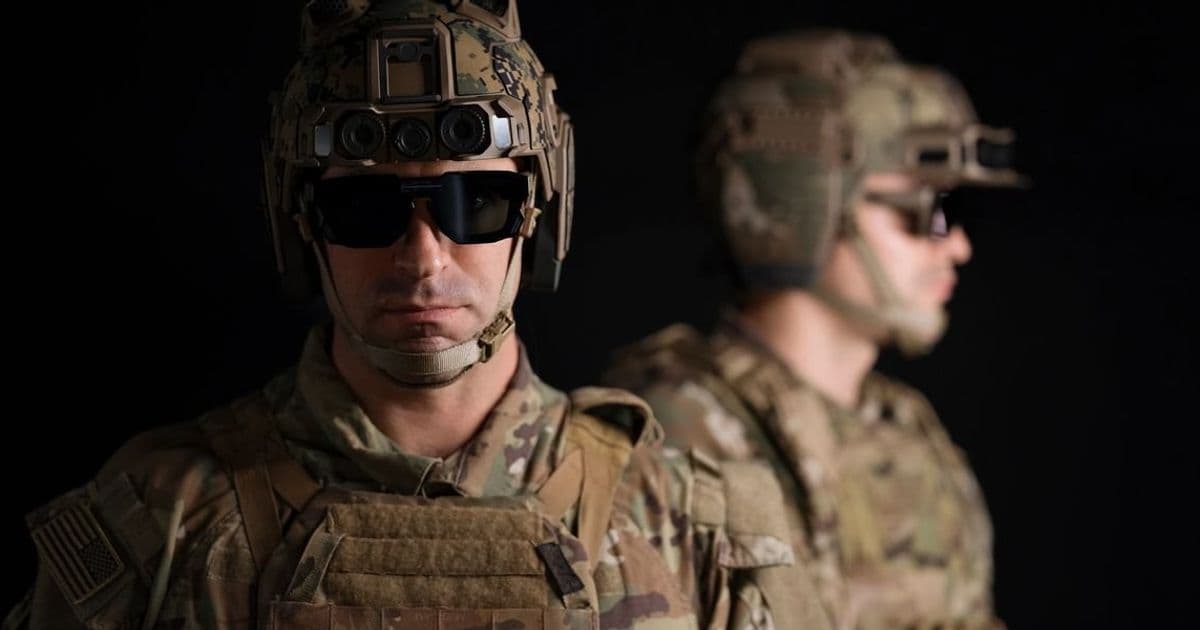
Anduril Industries unveils EagleEye, a revolutionary heads-up display integrated into combat helmets, delivering real-time mission command data, AI-powered threat detection, and seamless battlefield awareness. This system bypasses traditional handheld devices, aiming to accelerate decision-making and enhance soldier survivability through direct neural network processing and integration with Anduril's Lattice platform.
The paradigm of battlefield command is shifting from clunky handheld devices and map tables directly onto the warfighter's visor. Anduril Industries has unveiled EagleEye, a sophisticated heads-up display (HUD) system integrated into a combat helmet, designed to deliver unprecedented situational awareness and AI-driven mission command capabilities straight to the soldier's line of sight.
More Than Just a Display: AI at the Edge
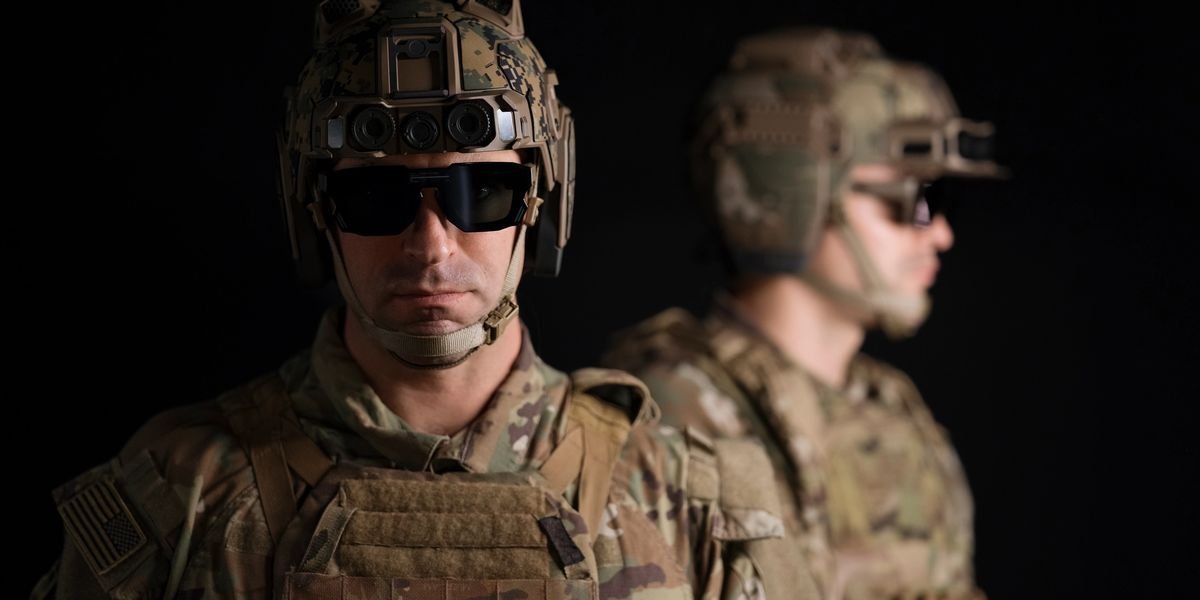
EagleEye represents a significant leap beyond simple information projection. Its core innovation lies in embedding significant computational power directly onto the helmet:
- Real-Time AI Processing: On-board neural processing units analyze sensor feeds (including the helmet's own cameras) to perform tasks like automatic threat detection, object recognition, and potentially augmented reality overlays highlighting points of interest or hazards.
- Intuitive Mission Command Interface: The HUD displays critical mission data – maps, waypoints, friendly force tracking, objectives, and intelligence overlays – directly within the soldier's field of view, eliminating the need to look down at a tablet or radio. Voice and gesture controls allow interaction without removing hands from weapons.
- Seamless Lattice Integration: EagleEye acts as a frontline node in Anduril's Lattice ecosystem. It pulls processed sensor data from other Lattice-connected platforms (drones, ground sensors, command centers) and feeds its own observations back into the network, creating a shared, real-time operational picture.
- Enhanced Survivability: By providing critical information contextually and instantly, the system aims to drastically reduce the sensor-to-shooter loop and improve decision-making under fire, directly impacting soldier safety and mission effectiveness.
Technical Underpinnings and Developer Implications
EagleEye highlights several critical trends relevant to developers and engineers:
- Edge AI Maturation: The system showcases the practical deployment of powerful, low-latency AI inference directly on resource-constrained, mobile hardware – a significant engineering challenge.
- Human-Machine Teaming: It exemplifies the move towards deeply integrated human-AI collaboration, where AI acts as a real-time cognitive assistant filtering information and surfacing critical insights.
- Networked Sensor Fusion: EagleEye's power is magnified by its role within the Lattice network, emphasizing the growing importance of robust, secure, and interoperable data fusion architectures for distributed systems.
- Wearable Computing Evolution: This pushes the boundaries of wearable tech, demanding innovations in power management, thermal dissipation, ruggedization, and intuitive user interfaces for high-stress environments.
Beyond the Battlefield: A Glimpse of Future Interfaces
While developed for defense, the technologies underpinning EagleEye – ultra-compact waveguide displays, robust edge AI processing, advanced human-computer interaction via voice/gesture, and seamless integration into larger data ecosystems – have broader implications. They represent a tangible step towards the kind of ubiquitous, context-aware computing interfaces long envisioned for industrial applications, emergency response, and eventually, broader consumer use. The challenge of making powerful computing intuitive, immediate, and minimally intrusive in the real world is one EagleEye tackles head-on, quite literally. Its deployment will be a critical testbed for the next generation of human-machine interfaces operating in the most demanding conditions.
Comments
Please log in or register to join the discussion