
Anthropic CEO Dario Amodei predicts AI will write 90% of code within 3-6 months and essentially all code within 12 months, signaling a seismic shift in software development.
Dario Amodei, CEO of Anthropic, has made a bold prediction about the future of software development that's sending shockwaves through the tech industry. Speaking at a Council on Foreign Relations event, Amodei stated that AI could be writing 90% of code within three to six months, with that figure jumping to "essentially all of the code" within twelve months.
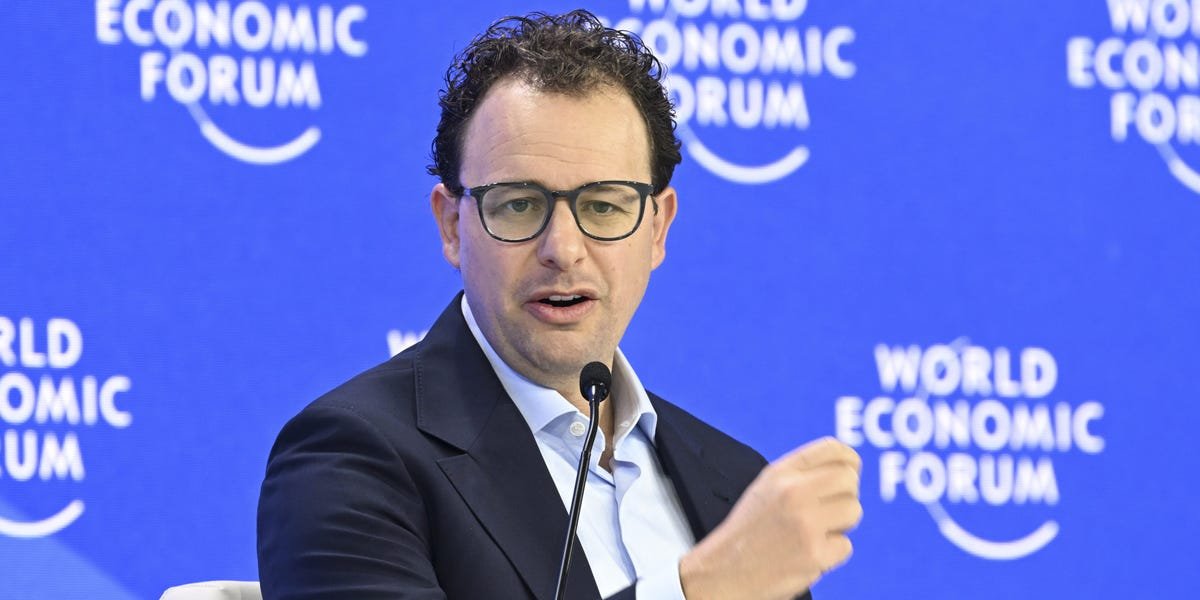
This timeline represents an aggressive forecast for AI's impact on software development, suggesting that the industry is on the cusp of a fundamental transformation. Amodei's prediction comes from one of the leading figures in AI development, lending significant weight to the claim.
The Current State of AI-Assisted Development
The prediction aligns with emerging trends in software development. Y Combinator's president, Garry Tan, recently reported that 25% of founders in the company's 2025 winter batch are relying heavily on AI for coding, with 95% of their code being AI-generated. This represents a significant shift from traditional development practices.
Tools like GitHub Copilot, Amazon CodeWhisperer, and Anthropic's own Claude have already demonstrated the ability to assist developers with code generation, debugging, and refactoring. These tools have been gradually improving, handling increasingly complex programming tasks.
The Human Role in an AI-Dominated Future
Amodei acknowledges that software developers won't disappear overnight. He suggests that humans will still play a crucial role in the near term by providing design specifications, requirements, and quality control. The AI systems will need human guidance to understand what needs to be built and under what constraints.
However, Amodei predicts that these "little islands" of human involvement will gradually be automated away. As AI systems become more sophisticated, they'll be able to handle the entire software development lifecycle, from initial design to deployment and maintenance.
Beyond Software Development
What makes Amodei's prediction particularly noteworthy is his assertion that this pattern will repeat "in every industry." He's suggesting that software development is just the first domino to fall in a broader AI-driven transformation of knowledge work.
This perspective aligns with other industry leaders' assessments. Kristalina Georgieva, managing director of the International Monetary Fund, has stated that AI could impact about 40% of global jobs. She notes that roughly half of exposed jobs may benefit from AI integration, while the other half could see tasks automated away, potentially leading to reduced labor demand.
The Technical Feasibility Question
From a technical standpoint, the prediction raises several questions. Current AI coding assistants excel at generating boilerplate code, implementing standard patterns, and handling routine tasks. However, complex system architecture, debugging subtle bugs, and understanding nuanced business requirements remain challenging for AI systems.
The timeline Amodei proposes suggests either a dramatic acceleration in AI capabilities or a redefinition of what constitutes "writing code." It's possible that as AI handles more routine coding tasks, the definition of software development shifts toward higher-level design and architecture work.
Industry Implications
If Amodei's prediction proves accurate, the implications for the software industry are profound. Companies may need fewer traditional developers but could see increased demand for AI specialists, prompt engineers, and system architects who can effectively direct AI coding systems.
The economics of software development could shift dramatically. Development cycles might accelerate, potentially reducing costs but also changing the competitive landscape. Companies that effectively leverage AI coding could gain significant advantages in speed and efficiency.
Skepticism and Counterarguments
Not everyone in the industry shares Amodei's optimism about the timeline. Some developers argue that AI will augment rather than replace human developers, handling routine tasks while humans focus on complex problem-solving, system design, and creative solutions.
Others point out that software development involves more than just writing code. Understanding user needs, designing intuitive interfaces, and making architectural decisions require human judgment and creativity that AI may not replicate soon.
The Broader Context
Amodei's prediction comes amid growing concern about AI's impact on employment. His comments echo similar warnings from other tech leaders about the need to prepare for significant workforce disruption.
The prediction also reflects Anthropic's positioning in the AI market. As a company developing AI systems, projecting rapid advancement serves both as a forecast and a statement of confidence in their technology's capabilities.
Looking Ahead
The next twelve months will be critical in determining whether Amodei's prediction holds true. If AI systems do achieve the capability to write most code autonomously, it could mark one of the most significant shifts in software development since the advent of high-level programming languages.
Whether or not the specific timeline proves accurate, the trend toward AI-assisted development is undeniable. The question isn't whether AI will transform software development, but rather how quickly and completely that transformation will occur.
For developers, businesses, and the broader tech industry, Amodei's prediction serves as a wake-up call to prepare for a future where human and artificial intelligence collaborate in ways that are only beginning to be understood.
Comments
Please log in or register to join the discussion