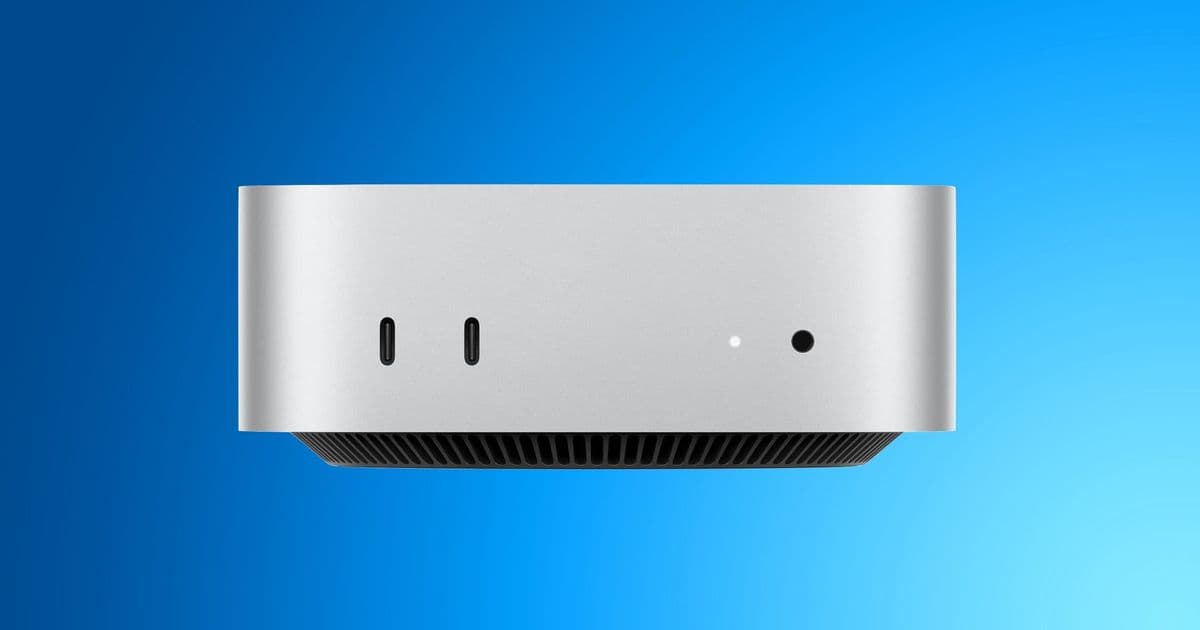
Apple has discontinued the 256GB storage option for the Mac mini globally, raising the entry price to $799 for a 512GB model. This strategic move reflects Apple's positioning for AI and machine learning workloads, though it may price out budget-conscious developers and students who have traditionally favored the compact desktop.
Apple's recent decision to eliminate the 256GB storage option for the Mac mini marks a significant shift in the company's entry-level desktop strategy. The compact computer, long favored by developers, students, and budget-conscious professionals, now begins at $799 with 512GB of storage—a $200 increase from the previous base model pricing. This change, implemented globally, signals Apple's increasing focus on positioning its hardware for AI and machine learning workloads.
The timing of this decision coincides with growing demand for AI-capable computing devices. During Apple's recent earnings call, CEO Tim Cook noted that both the Mac mini and Mac Studio are seeing increased interest from users working with AI and agentic tools, adding that "may take several months to reach supply demand balance." This suggests that Apple is responding to market demand for more powerful, storage-intensive systems capable of handling modern AI applications.
Several factors likely influenced this decision. Modern AI and machine learning workflows require substantial storage space for models, datasets, and development environments. The 256GB base configuration, while sufficient for basic tasks, may have been limiting for users engaging with AI development tools like TensorFlow, PyTorch, or Apple's own Create ML. Additionally, the rise of large language models and AI applications has increased the storage requirements even for mainstream applications.
From a business perspective, this move aligns with Apple's strategy of increasing average selling prices and maximizing profit margins. The Mac mini has traditionally been Apple's most affordable desktop option, but by increasing the entry price point, the company can potentially improve its margins while still maintaining a competitive offering in the compact desktop segment.
However, this change may alienate some of Mac mini's core user base. Students, educators, and budget-conscious developers who have relied on the entry-level configuration for years may now find the platform less accessible. The 512GB minimum configuration also eliminates the option for users who prefer to manage their own storage solutions through external drives or network-attached storage.
Industry analysts have offered mixed reactions to the change. Some view it as a necessary evolution to support modern computing demands, while others see it as Apple moving further away from its prosumer roots. "Apple is clearly positioning the Mac mini as a more serious machine for developers and AI work," noted tech analyst Mark Gurman. "But they risk alienating the very users who made the Mac mini popular in the first place."
The decision also raises questions about Apple's broader hardware strategy. With the Mac mini now starting at $799, it's positioned closer to the entry-level 13-inch MacBook Pro, potentially creating some overlap in Apple's product lineup. This could indicate Apple's intention to differentiate its products more clearly by use case rather than price point.
From a technical perspective, the increased storage baseline makes sense for modern workflows. AI development environments, virtual machines, and containerized applications all benefit from faster internal storage. Apple's transition to Apple Silicon has already improved storage performance across its Mac lineup, making the internal drive more critical for system responsiveness than in previous generations.
The timing of this change also coincides with Apple's increased focus on AI capabilities across its platforms. With Apple Intelligence features rolling out across iOS, iPadOS, and macOS, the company may be ensuring that its hardware meets the minimum requirements for these features, even at the entry level.
For users who have purchased Mac minis with 256GB configurations, the change may create a sense of obsolescence. However, Apple has historically provided software updates for several years even on older hardware, suggesting that the 256GB models will remain viable for basic tasks for the foreseeable future.
Looking forward, this move may prompt Apple to reconsider its storage options across its entire Mac lineup. If the 512GB configuration becomes the new standard for entry-level Macs, we could see similar changes to the MacBook Air and iMac lines, further elevating Apple's minimum hardware specifications.
The Mac mini has long been Apple's most customizable desktop option, allowing users to configure systems to their specific needs. By increasing the base storage, Apple is making a statement about the minimum requirements for modern computing, even as it continues to offer higher-end configurations for power users.
This change also reflects broader industry trends, as other manufacturers similarly adjust their minimum specifications to accommodate AI workloads and modern applications. As AI becomes increasingly integrated into everyday software, the baseline requirements for personal computers continue to rise across the industry.
For developers and power users, the increased storage baseline may be welcomed, as it provides more headroom for development environments and large datasets. For casual users and students, however, the higher price point may make the Mac mini less accessible, potentially driving some toward Windows alternatives or refurbished older models.
Apple's decision to eliminate the 256GB option also highlights the company's confidence in its product positioning. Despite economic uncertainties and potential pricing sensitivity in some markets, Apple appears committed to maintaining premium specifications across its lineup, even at the entry level.
The Mac mini has historically been Apple's most affordable desktop option, but with this change, it's now positioned more firmly as a developer and professional machine rather than a budget-friendly entry point. This shift aligns with Apple's broader strategy of targeting higher-margin segments while maintaining its premium brand positioning.
As AI continues to reshape the computing landscape, Apple's hardware decisions will likely continue to evolve. The elimination of the 256GB Mac mini configuration may be just one step in a broader reimagining of Apple's desktop lineup to better serve the needs of modern developers and AI practitioners.
In conclusion, while the removal of the 256GB option may disappoint some long-time Mac mini users, it reflects Apple's strategic positioning for the future of computing—one where AI and machine learning workloads drive hardware requirements upward. As the company continues to invest in AI capabilities across its platforms, we can expect further adjustments to its hardware lineup to meet these evolving demands.
Comments
Please log in or register to join the discussion