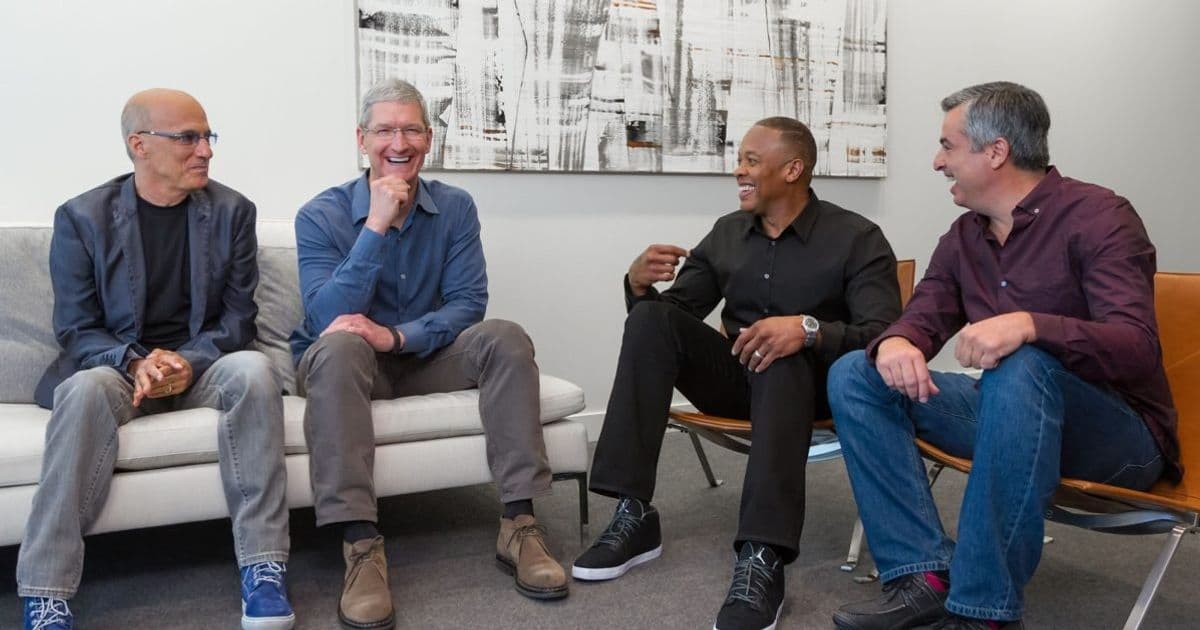
From Touch ID to Apple Music, Tim Cook's 15-year acquisition strategy transformed Apple's product landscape, integrating hardware, software, and services through strategic purchases that continue to influence the company's direction.
As Tim Cook prepares to hand over the CEO role to John Ternus in September 2026, it's worth examining how his strategic acquisition strategy has fundamentally shaped Apple's product ecosystem. While Apple famously passed on acquiring Tesla, Cook's tenure has been marked by a diverse portfolio of smaller acquisitions that have become integral to Apple's hardware, software, and services offerings.
The Evolution of Apple's Acquisition Strategy Under Cook
When Tim Cook took over as CEO in 2011, Apple was already a company with a strong acquisition history. However, Cook's approach differed from his predecessor's in several key ways. Under Cook, Apple has pursued a more strategic, targeted acquisition strategy focused on acquiring companies that can quickly integrate into existing products rather than attempting large, transformative purchases like the rumored Tesla deal.
Cook's acquisition philosophy appears to be centered on three main objectives:
- Acquiring technology that enhances existing hardware capabilities
- Building out service offerings to create recurring revenue streams
- Hiring specialized talent to strengthen internal development teams
Hardware Transformations: From Biometrics to Modems
Perhaps the most visible impact of Cook's acquisitions has been in Apple's hardware capabilities. Two of the earliest and most significant acquisitions directly enabled Apple's biometric authentication systems that now define the iPhone experience.
In July 2012, Apple acquired AuthenTec, a company specializing in fingerprint sensor technology. This $356 million acquisition proved prescient, as Apple introduced Touch ID with the iPhone 5s in September 2013. Touch ID revolutionized smartphone security and set the stage for Apple's focus on biometric authentication.
Building on this success, Apple acquired Israeli startup PrimeSense in 2014 for an estimated $350 million. PrimeSense had developed the 3D sensing technology that would eventually power Face ID, which debuted with the iPhone X in 2017. These acquisitions demonstrate Cook's willingness to invest in foundational technologies that define user interactions with Apple devices.
More recently, Apple's $1 billion acquisition of Intel's smartphone modem business in July 2019 has positioned the company to reduce its reliance on Qualcomm. This strategic move culminated in the Apple C1 modem appearing in the iPhone 16e last year, with plans to expand Apple-designed modems across more iPhone and iPad models in the coming months.
Service Expansion: Building the Apple Ecosystem
While hardware acquisitions have been visible, Cook's most transformative acquisitions have been in the services space, which now represents a growing portion of Apple's revenue.
The $3 billion acquisition of Beats Electronics in August 2014 stands as Cook's boldest and most visible acquisition. While Apple continues to develop and sell Beats-branded headphones and speakers, the more significant impact was the integration of Beats Music into what would become Apple Music. This acquisition marked Apple's serious entry into the music streaming market and demonstrated Cook's willingness to make substantial bets on new service categories.
In 2018, Apple acquired Texture, a subscription magazine service that would evolve into Apple News+. This acquisition helped Apple establish a foothold in the digital content subscription space, complementing its existing services like Apple Music and iCloud.
Most recently, Apple acquired Pixelmator in late 2024, which became part of the Apple Creator Studio in 2026. This acquisition, along with the purchase of MotionVFX, indicates Apple's continued investment in professional content creation tools that complement its hardware offerings.
Software Integration: From Workflow to Shortcuts
Cook's acquisitions have also significantly enhanced Apple's software capabilities, particularly in automation and productivity.
The 2017 acquisition of Workflow, an automation and scripting app for iPhone and iPad, exemplifies this strategy. The Workflow team developed what would become Apple's Shortcuts app, which has become a core part of iOS, iPadOS, and macOS. Shortcuts not only enhances user productivity but also provides developers with powerful automation tools that integrate deeply with the Apple ecosystem.
Similarly, Apple's acquisition of Dark Sky in March 2020 brought sophisticated weather forecasting capabilities to Apple's Weather app and WeatherKit. This acquisition demonstrated Apple's willingness to acquire specialized companies to improve core app experiences.
Emerging Technologies: VR, AI, and the Future
As technology has evolved, so too has Apple's acquisition strategy. Recent acquisitions indicate where Apple sees future growth opportunities.
The 2020 acquisition of NextVR, a firm focused on virtual reality events, has begun to bear fruit with Apple Vision Pro offering select LA Lakers NBA games in immersive format. This suggests Apple's long-term vision for spatial computing and content experiences.
In the AI space, Apple's recent acquisition of Q.ai for approximately $2 billion signals a significant investment in artificial intelligence capabilities. Given Apple's focus on privacy and on-device processing, this acquisition likely aims to enhance Siri and Apple Intelligence features while maintaining Apple's privacy principles.
Developer Impact and Migration Considerations
For developers, these acquisitions have both immediate and long-term implications. When Apple acquires a company like Workflow, it often means the existing app may be discontinued as features are integrated into Apple's own software. This requires developers to adapt their workflows and potentially migrate to new tools.
The acquisition of Shazam in 2018 provides a case study in this integration. While the Shazam app continues to exist, its technology has been deeply integrated into Siri, Spotlight search, and Control Center, changing how users interact with music recognition.
The Road Ahead for John Ternus
As John Ternus prepares to take over as CEO, he inherits a company with a well-established acquisition strategy. The question becomes how Ternus will adapt this strategy to meet future challenges and opportunities.
Given Apple's current focus on AI, spatial computing, and health technologies, we can expect Ternus to continue acquiring companies in these spaces. However, the specific priorities may shift as Apple's strategic goals evolve.
Conclusion: A Legacy of Strategic Integration
Tim Cook's acquisition strategy has been characterized by its pragmatism and focus on integration rather than disruption. Rather than attempting to transform Apple through massive acquisitions, Cook has pursued a series of targeted purchases that have incrementally strengthened the company's product ecosystem.
From biometric authentication to music streaming, from automation tools to weather forecasting, these acquisitions have become invisible threads woven into the fabric of Apple's products. For developers and users alike, the impact of these acquisitions is often most noticeable not when they're announced, but when their technologies become integral parts of everyday interactions with Apple devices.
As Apple moves forward under new leadership, the acquisitions made during Cook's tenure will continue to shape the company's direction and define the user experience for years to come.
Comments
Please log in or register to join the discussion