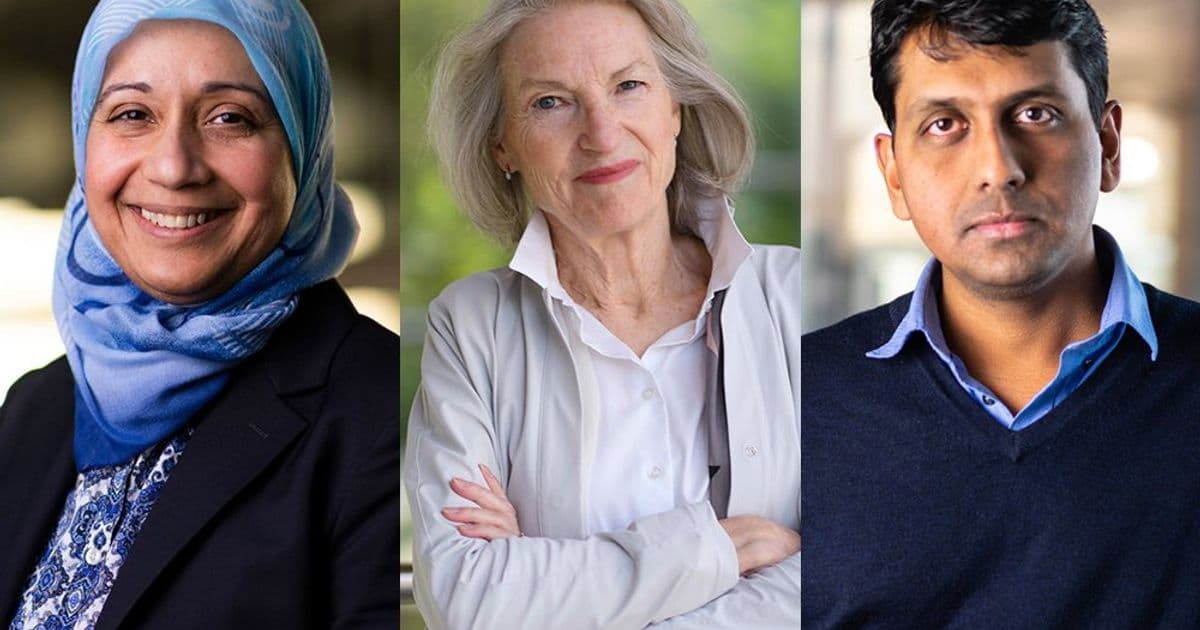
MIT affiliates Afreen Siddiqi, Kathleen Thelen, and Vinod Vaikuntanathan, along with alumna Kate Manne, have been named 2026 Guggenheim Fellows, recognizing their exceptional contributions to systems engineering, political economy, and cryptography research.
The John Simon Guggenheim Memorial Foundation has named four MIT affiliates among its 2026 class of distinguished fellows, recognizing their exceptional achievements and potential for future breakthroughs across engineering, political science, and computer science. The prestigious fellowships, awarded to just 223 individuals selected from nearly 5,000 applicants, provide substantial funding to support independent work at the highest level under the freest possible conditions.
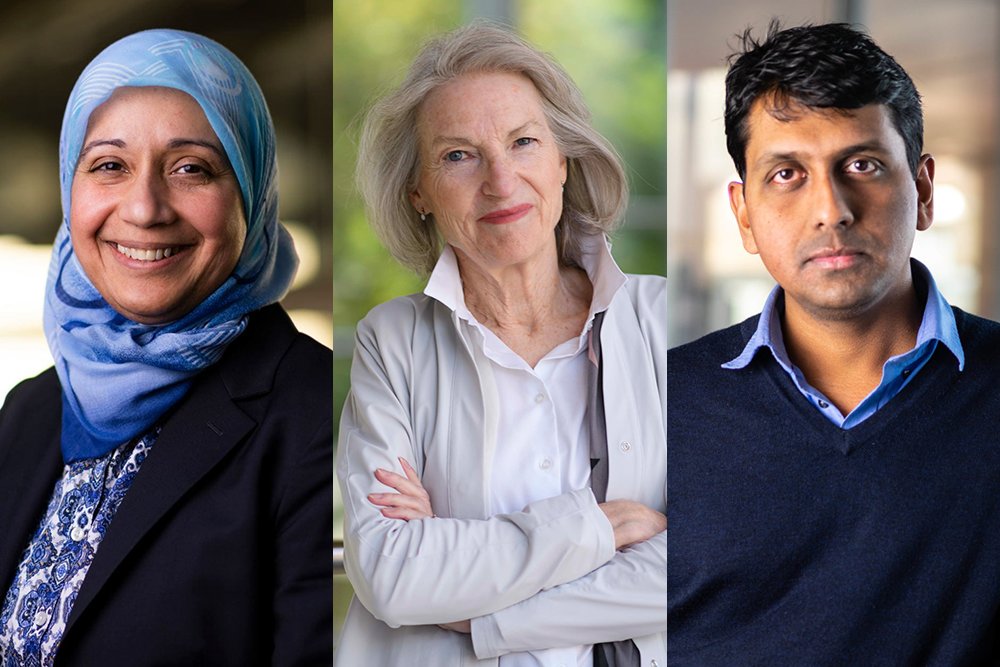
Among this year's MIT recipients are Afreen Siddiqi, Kathleen Thelen, and Vinod Vaikuntanathan, with alumna Kate Manne also recognized for her work. Since its founding in 1925, the Guggenheim Foundation has awarded nearly $450 million in fellowships to more than 19,000 individuals across diverse disciplines.
Engineering Innovation for Space and Critical Infrastructure
Afreen Siddiqi, a research scientist in the Engineering Systems Laboratory within MIT's Department of Aeronautics and Astronautics, has been recognized for her pioneering work in developing systems-theoretic analytical methods and quantitative modeling for technical systems operating in changing environments. Her research bridges theoretical frameworks with practical applications in space exploration, satellite Earth observation, and critical infrastructure planning.
"Siddiqi's approach represents a significant advancement in how we model complex systems that must adapt to uncertain conditions," explains a colleague in the Department of Aeronautics and Astronautics. "Her work enables more robust planning for space missions and critical infrastructure that must withstand evolving environmental and operational challenges."
Her contributions extend to climate science as well, having served as a contributing author to the sixth assessment report of the Intergovernmental Panel on Climate Change (IPCC) in 2022, focusing on water, energy, and food interconnections for climate adaptation. Her research has earned multiple prestigious awards, including the Amelia Earhart Fellowship and the Richard D. DuPont Fellowship.
Political Economy of Contemporary Capitalism
Kathleen Thelen, the Ford International Professor of Political Science, has been honored for her influential research on the political economy of wealthy democracies, with particular emphasis on American capitalism in comparative perspective. Her most recent book, "Attention Shoppers! American Retail Capitalism and the Origins of the Amazon Economy," published by Princeton University Press in 2025, examines how retail institutions have shaped American economic development.

"Thelen's work provides crucial insights into how institutional arrangements and political processes interact to shape economic outcomes," notes a fellow political scientist. "Her comparative approach helps us understand not just how American capitalism developed, but why it differs from other advanced economies and what those differences mean for contemporary policy challenges."
Thelen's scholarly contributions have been recognized with numerous awards, including the Friedrich Schiedel-Award for Politics and Technology, the Aaron Wildavsky Enduring Contribution Prize, and the Michael Endres Research Prize. She was elected to the American Academy of Arts and Sciences in 2015.
Foundations of Cryptography for the Quantum Era
Vinod Vaikuntanathan, the Ford Foundation Professor of Engineering in the Department of Electrical Engineering and Computer Science and principal investigator at CSAIL, has been recognized for his foundational work in cryptography and its applications to theoretical computer science. His research addresses some of the most pressing challenges in information security, particularly in the context of quantum computing.
"Vaikuntanathan's contributions to fully homomorphic encryption represent a paradigm shift in how we think about privacy-preserving computation," explains a colleague in CSAIL. "His work enables complex computations on encrypted data without exposing the underlying information—a capability with profound implications for secure cloud computing, privacy-preserving machine learning, and confidential data analysis."
His research in lattice-based cryptography has established new mathematical foundations for cryptography in the post-quantum world, developing systems that can resist attacks from quantum computers. These contributions have earned him numerous prestigious awards, including the Godel Prize (often considered the highest honor in theoretical computer science), the Simons Investigator Award, and he was named a MacVicar Faculty Fellow in 2024.
Broader Impact and Recognition
The recognition of these MIT researchers through Guggenheim Fellowships highlights the Institute's strength across diverse disciplines and its commitment to both fundamental research and practical applications. Each recipient represents excellence in their respective fields, with work that bridges theory and practice.
"Our new class of Guggenheim Fellows is representative of the world's best thinkers, innovators, and creators in art, science, and scholarship," said Edward Hirsch, president of the Guggenheim Foundation. "As the foundation enters its second century and looks to the future, I feel confident that this new class of 223 individuals will do bold and inspiring work, undaunted by the challenges ahead."
The fellowships will provide each recipient with a monetary stipend to support their research endeavors without institutional constraints, allowing them to pursue ambitious projects that might otherwise be difficult to fund through traditional research grants. This freedom to explore high-risk, high-reward research is particularly valuable for the kind of innovative work being done by these MIT researchers.
For more information about the Guggenheim Foundation and the complete list of 2026 fellows, visit the official Guggenheim Foundation website. Additional details about the research being conducted at MIT can be found on the MIT News website and the CSAIL research portal.
Comments
Please log in or register to join the discussion