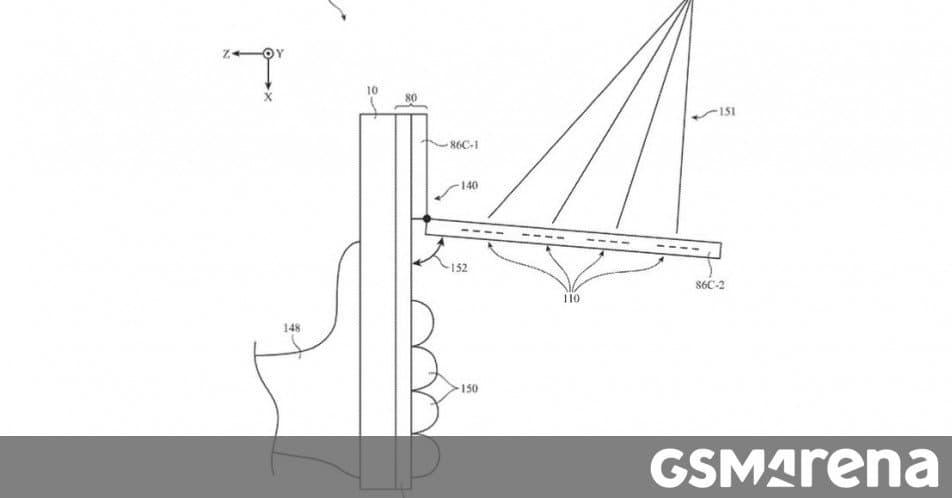
A newly surfaced Apple patent application details a unique flip-open case design with integrated phased antenna arrays to significantly enhance satellite connectivity for iPhones and iPads.
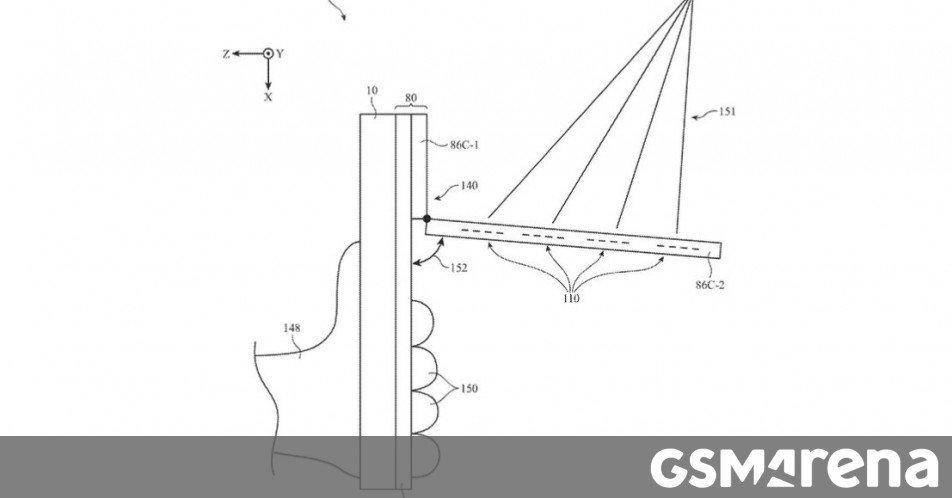
Apple has explored an innovative hardware solution to overcome current satellite connectivity limitations on mobile devices, according to a patent application filed in 2024 and recently made public. The patent, titled "Electronic Device and Case with Satellite Communication Capabilities," describes a specially designed protective case featuring advanced antenna technology that significantly boosts satellite signal reception.
The core innovation lies in the case's mechanical design. As illustrated in the patent drawings, the accessory includes a hinged section that users can flip open to expose an integrated phased antenna array. This positioning mechanism serves two critical functions: physically orienting the antennas toward optimal satellite positioning in the sky, and preventing signal interference caused by hand placement during use. When closed, the case functions as standard protection, but flipping open the antenna section creates a dedicated satellite communication zone isolated from handling interference.
Phased antenna arrays represent sophisticated radio technology that electronically steers signal direction without moving parts. By coordinating multiple antenna elements, the system can simultaneously connect with satellite constellations rather than individual satellites. This approach potentially enables faster data transmission speeds and more reliable connections compared to current satellite implementations in smartphones. Apple suggests the case could connect to devices through various methods, including radio-frequency connectors or near-field communication (NFC) for both power delivery and data transfer.
The patent emerges amid Apple's ongoing satellite initiatives, including Emergency SOS via Satellite introduced in iPhone 14 models and satellite connectivity features expanding across recent iOS versions. Current implementations face inherent limitations due to smartphone antenna constraints and signal obstruction issues. This case concept directly addresses these challenges by providing dedicated, optimally positioned satellite antennas without requiring internal device redesigns.
However, patent filings don't guarantee commercial products. Apple routinely patents concepts that never reach consumers, using these applications to protect exploratory research. While the technical approach demonstrates Apple's interest in solving satellite connectivity hurdles, market viability depends on multiple factors including manufacturing costs, carrier partnerships, and whether users would accept the flip-open form factor for occasional satellite use.
If developed, such a case could potentially extend advanced satellite capabilities to older iPhone and iPad models lacking built-in satellite hardware. The patent explicitly mentions compatibility across multiple Apple mobile devices. As satellite communication evolves beyond emergency services toward messaging and data applications, accessory-based solutions like this could provide intermediate solutions while manufacturers work on more integrated antenna designs for future devices.
Comments
Please log in or register to join the discussion