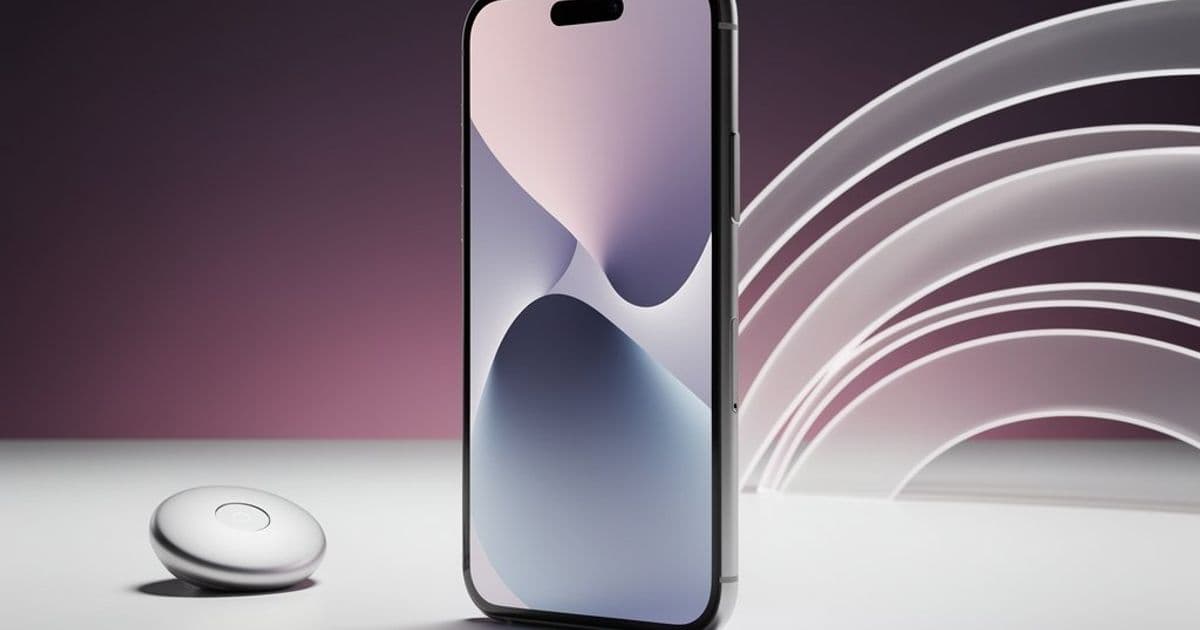
New reports detail Apple's evolving AI strategy, from a full Siri chatbot experience in iOS 27 to an experimental AI pin, while iPhone 18 Pro display rumors finally get a clear resolution.
The Apple AI narrative is shifting from vague promises to concrete product timelines. According to Bloomberg's reporting, the long-awaited Siri roadmap is taking a more defined shape, with delayed features now targeted for iOS 18.4 and a complete chatbot experience slated to arrive before the end of 2026. This represents a significant pivot from Apple's previous approach, where Siri's capabilities remained largely unchanged for years.
The most substantial change appears to be the transformation of Siri from a voice assistant into a full conversational AI. The report suggests Apple is developing a "chatbot experience" that will replace the current Siri interface in iOS 27. This isn't merely an incremental update—it's a fundamental reimagining of how users interact with Apple's AI. The traditional Siri waveform and voice-first interface will give way to a more comprehensive chat interface that can handle complex queries, maintain context across conversations, and potentially integrate with third-party applications more deeply.
Perhaps the most surprising detail is the infrastructure question. The Information reports that Apple is considering running its new Siri chatbot on Google's servers rather than its own. This would be a dramatic departure from Apple's typical vertical integration strategy, where hardware, software, and services all run on Apple-controlled infrastructure. The decision likely reflects the computational demands of large language models and the current limitations of Apple's data center capabilities. While Apple has been expanding its server infrastructure, the scale required for a global AI chatbot service may exceed what they can currently deploy. This arrangement would mirror Apple's existing partnership with Google for search, where Google pays Apple billions annually to remain the default search engine on iOS devices.
Beyond Siri, Apple appears to be exploring more experimental AI hardware. The Information reports that Apple is developing an AI-powered wearable pin. While details remain sparse, this suggests Apple is investigating form factors beyond the traditional smartphone and smartwatch. A wearable pin could serve as a dedicated AI interaction device, potentially offering always-on voice interaction without requiring users to pull out their phones. This aligns with Apple's historical pattern of exploring multiple form factors before settling on the most viable solution—remember the Apple Watch was preceded by years of rumors about various wearable concepts.
On the hardware front, the confusing rumors about iPhone 18 Pro display cutouts have finally been clarified. Earlier reports suggested Apple might move the front camera and Face ID sensors to different locations, creating uncertainty about the Dynamic Island's future. The latest information indicates that Apple has settled on a clear positioning strategy for the iPhone 18 Pro lineup. While the exact implementation details remain under wraps, this clarification should help developers and accessory manufacturers plan for the next generation of devices. The Dynamic Island, introduced with iPhone 14 Pro, has become an established part of the iOS interface, and Apple appears committed to refining rather than replacing it.
Apple's advertising strategy is also evolving in subtle ways. The company is testing a new App Store design that further blurs the line between organic search results and paid advertisements. This change makes sponsored listings even less distinguishable from regular search results, which could impact developer visibility and user trust. For iOS developers, this means the App Store optimization game continues to become more complex, requiring not just keyword optimization but also strategic bidding for ad placement.
These developments represent a broader shift in Apple's approach to AI. For years, the company emphasized on-device processing and privacy as core differentiators. The potential use of Google's servers for the Siri chatbot suggests a pragmatic recognition that some AI capabilities require cloud-scale computation. This doesn't mean Apple is abandoning its privacy principles entirely, but rather adapting its strategy to meet the technical realities of modern AI systems.
For iOS developers, these changes have significant implications. A more capable Siri chatbot could open new avenues for app integration and voice-controlled workflows. The potential shift to cloud-based AI processing might also change how developers need to structure their apps, with more emphasis on API integrations and less on on-device model optimization. The wearable pin concept, while still speculative, suggests Apple is thinking about AI interaction beyond the screen, which could influence how developers design for multiple form factors.
The timeline for these changes is aggressive. If Apple is targeting a full chatbot experience before the end of 2026, that leaves less than two years for development, testing, and refinement. This suggests the company is feeling competitive pressure from other AI assistants and wants to establish a stronger position in the AI conversation space. The iOS 18.4 timeline for initial Siri improvements indicates a phased rollout, which is typical for Apple's major software updates.
The potential partnership with Google for server infrastructure raises interesting questions about Apple's long-term AI strategy. While Apple has historically preferred to control its entire stack, the computational demands of large language models may force a more collaborative approach. This could lead to a hybrid model where Apple controls the user interface, privacy layers, and integration points, while relying on partners for the heavy computational lifting.
For users, these changes promise a more capable and conversational Siri, though the exact experience will depend on how well Apple can integrate its privacy principles with cloud-based AI processing. The wearable pin concept, if it materializes, could offer a new way to interact with AI without the distractions of a smartphone screen.
The iPhone 18 Pro display clarification provides much-needed certainty for developers planning for the next generation of devices. With the Dynamic Island position settled, app developers can design interfaces that account for the expected display characteristics, and accessory manufacturers can develop cases and screen protectors with confidence.
As Apple continues to develop these features, the company faces the challenge of maintaining its privacy-first reputation while delivering AI capabilities that match or exceed competitors. The balance between on-device processing and cloud computation will be crucial, as will the transparency about how user data is handled in these new AI systems.
The next 18-24 months will be critical for Apple's AI ambitions. The company needs to deliver on these promises to maintain its position in the increasingly competitive AI landscape, where competitors like Google, Microsoft, and OpenAI are rapidly advancing their own assistant capabilities. For iOS developers and users alike, the evolution of Siri from a simple voice assistant to a full AI chatbot represents one of the most significant software updates in recent memory.
Read the full Bloomberg report on Apple's AI roadmap
The Information's coverage of Apple's AI pin development
Comments
Please log in or register to join the discussion