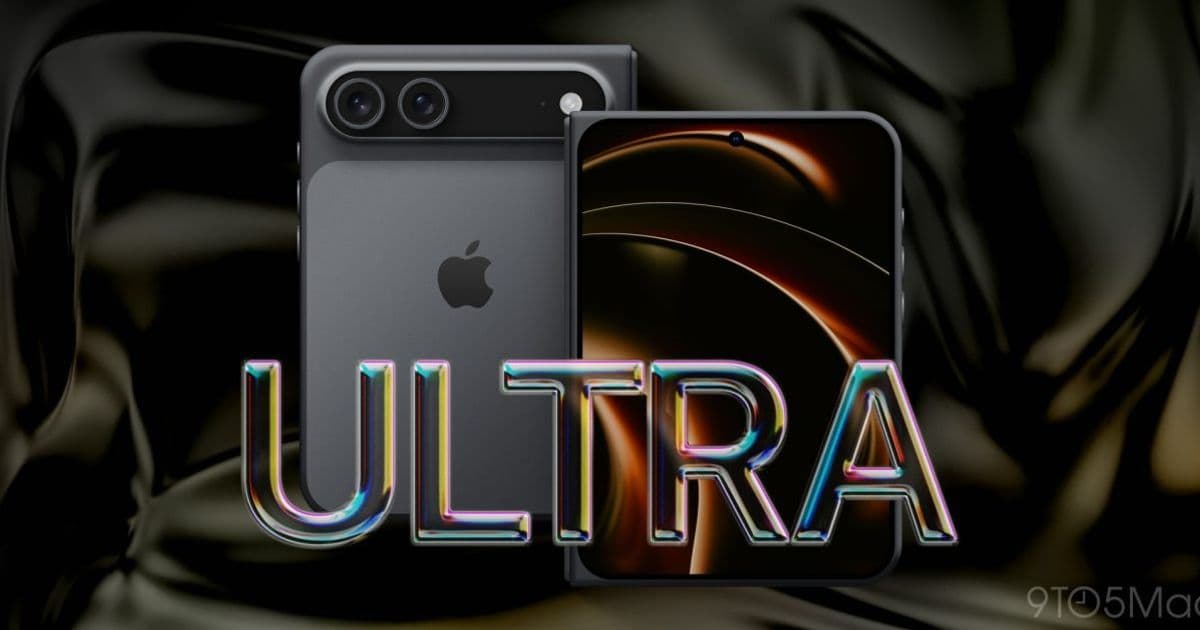
Leaks from Weibo source Instant Digital confirm that Apple’s first foldable iPhone has achieved a visually crease‑free display, but a problematic hinge is delaying production. The team believes a September release remains realistic if the hinge reliability can be fixed, a timeline that will shape UI work for iOS and cross‑platform frameworks.
Apple’s Foldable iPhone Ultra Hits Crease‑Free Milestone, Hinge Issues Push September Launch Into Focus

Platform update
Apple’s upcoming iPhone Ultra is now in trial production, according to recent posts from the Weibo leaker Instant Digital. The most significant news is a confirmed breakthrough on the display side: test results show a visually crease‑free state with long‑term stability. This puts the device ahead of most current foldables, which still display a faint line after repeated folds.
However, the same leaks reveal a snag with the hinge mechanism. Repeated high‑frequency opening and closing cycles have not met Apple’s reliability standards, prompting an indefinite pause in assembly lines. The leaker stresses that the hinge issue is the only remaining hardware blocker.
Despite the setback, the source remains confident that the September launch window is still viable, provided Apple resolves the hinge problem quickly enough to allow mass production to ramp up.
Developer impact
UI layout and state preservation
A crease‑free display means developers can finally design interfaces that treat the folded screen as a single, continuous canvas. iOS 18’s new UITraitCollection values for folded and unfolded states will let apps query the current geometry without resorting to manual size calculations. This reduces the need for custom view‑controller logic that previously handled unpredictable crease artifacts.
Performance considerations
The Ultra’s hinge will likely be driven by a high‑torque micro‑motor that Apple has not detailed yet. If the motor draws noticeable power during frequent folding, developers may need to monitor UIApplication background activity to avoid battery‑drain warnings. Apple’s upcoming FoldablePowerMetrics API (expected in the iOS 18 beta) will expose motor usage stats, allowing fine‑grained throttling.
Cross‑platform frameworks
Flutter, React Native, and Kotlin Multiplatform already support foldable devices on Android via the Jetpack WindowManager and AndroidX libraries. With Apple’s official foldable SDK, these frameworks will need to map the new iOS traits to their own layout engines. Early adapters are already experimenting with a FoldableSurface widget that abstracts the folded‑state rectangle, making a single code path possible for both platforms.
Migration path for existing apps
- Update to Xcode 16 – The new iOS 18 SDK includes the
UITraitCollectionextensions for foldable screens. Projects still on Xcode 15 will miss compile‑time checks for the new traits. - Add fallback layouts – Use size classes (
compact/regular) as a baseline, then refine with thefoldedandunfoldedtraits. This ensures the app works on both traditional iPhones and the Ultra. - Test with the simulator – Xcode 16 ships a Foldable iPhone Ultra simulator that mimics hinge latency and motor power usage. Run UI tests across both states to catch layout glitches early.
- Integrate
FoldablePowerMetrics– If your app performs heavy animations during folding, subscribe to the power‑metric notifications and scale back effects when the motor is active. - Cross‑platform adjustments – For Flutter, upgrade to Flutter 3.22 and enable the
foldable_supportflag. In React Native, install thereact-native-foldablemodule, which wraps the iOS traits into the existingDimensionsAPI.
By following these steps, developers can ship a single binary that runs flawlessly on the iPhone Ultra while preserving the existing experience on all other iOS devices.
Outlook
If Apple resolves the hinge reliability issue within the next few weeks, the September debut will give developers a solid runway to adopt the new APIs before the holiday season. The foldable market is still nascent, but a crease‑free Apple device could accelerate adoption of responsive UI patterns across both iOS and Android, pushing cross‑platform toolchains to converge on a common set of foldable abstractions.
Stay tuned for further updates on the hinge fix and the official iOS 18 beta release.
Comments
Please log in or register to join the discussion