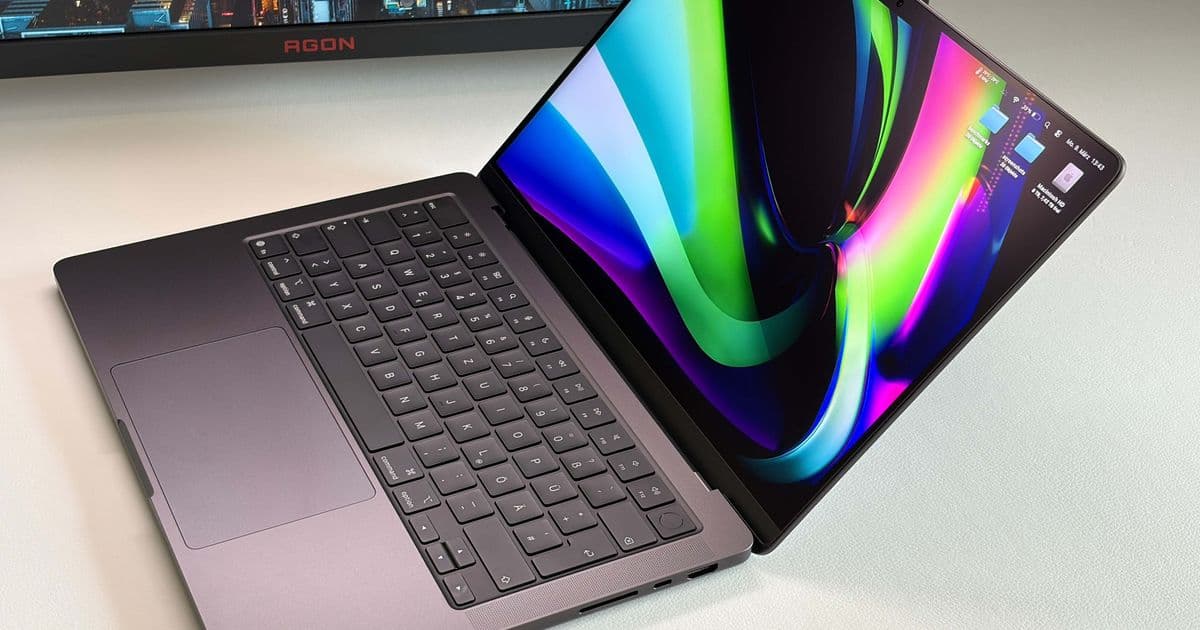
The MacBook Pro 14 with M5 Max delivers unmatched CPU performance and excellent GPU capabilities, but thermal constraints and inconsistent performance prevent it from reaching its full potential.
The Apple MacBook Pro 14 with M5 Max processor represents a fascinating case study in engineering trade-offs. While the device showcases Apple's silicon prowess, it also reveals the limitations of cramming maximum performance into a compact 14-inch chassis.
Performance That Can't Be Fully Utilized
The fundamental challenge with the MacBook Pro 14 M5 Max is that the hardware simply cannot handle the processor's full capabilities. Compared to its larger sibling, the MacBook Pro 16, the M5 Max in the 14-inch model runs approximately 15% slower both in CPU and GPU performance. This performance gap isn't just theoretical - it manifests as actual throttling and instability issues that prevent the chip from maintaining peak performance.
This limitation is particularly frustrating because the M5 Max's CPU performance remains unmatched in the market. Even AMD's Strix Halo processors, which represent the most serious competition in mobile computing, cannot keep pace with Apple's offering. The GPU performance is equally impressive, especially when considering the shared memory architecture that eliminates the need for dedicated VRAM.
Creator Workloads Tell the Real Story
Where the MacBook Pro 14 M5 Max truly shines is in professional content creation workloads. Using PugetBench benchmarks for Adobe Photoshop, Premiere Pro, and DaVinci Resolve, the device demonstrated clear superiority over Windows competitors. In head-to-head testing against the Asus ProArt P16 equipped with a mobile GeForce RTX 5090, the MacBook Pro 14 consistently outperformed its rival.
What makes this particularly noteworthy is that the MacBook maintains this performance advantage even when running on battery power. Unlike many Windows laptops that significantly throttle under battery conditions, Apple's optimization ensures consistent performance regardless of power source.
The GPU Reality Check
Despite the impressive benchmark results, the raw GPU performance tells a more nuanced story. The M5 Max GPU performs comparably to a mobile RTX 5070 in terms of raw computational power. This means that Windows laptops with more powerful GPUs, such as the Asus ROG Zephyrus G14 (available with mobile GeForce RTX 5080 and 16GB VRAM), can outpace the MacBook in GPU-intensive tasks.
GeForce GPUs maintain advantages in specific scenarios, particularly in CGI rendering and applications with CUDA support. Gaming performance also heavily favors the Windows ecosystem, where the broader game library and better driver optimization provide a superior experience.
Display and Design Considerations
The MacBook Pro 14's Mini-LED display represents another area where Apple has made deliberate trade-offs. The screen offers exceptional brightness and is available in a matte finish option, making it ideal for professional use in various lighting conditions. This contrasts sharply with OLED alternatives like the one found in the AMD-powered Asus ProArt P16, which delivers darker maximum brightness levels.
The Unrivaled Combination
Despite its flaws, the MacBook Pro 14 M5 Max remains almost unrivaled in its specific niche. The combination of high CPU performance, capable GPU performance, bright and versatile display, and compact form factor creates a unique value proposition. There simply isn't another device that matches this specific combination of attributes in a 14-inch package.
The Bottom Line
The MacBook Pro 14 M5 Max exemplifies Apple's approach to mobile computing: prioritize certain aspects of performance while accepting compromises in others. For professionals who need maximum CPU performance in a portable package, particularly those working in creative applications optimized for Apple Silicon, the device delivers exceptional value. However, users requiring maximum GPU performance, gaming capabilities, or those working extensively with CUDA applications might find better options in the Windows ecosystem.
[The featured image shows the MacBook Pro 14 M5 Max in its sleek aluminum chassis, highlighting the compact design that houses this powerful hardware.](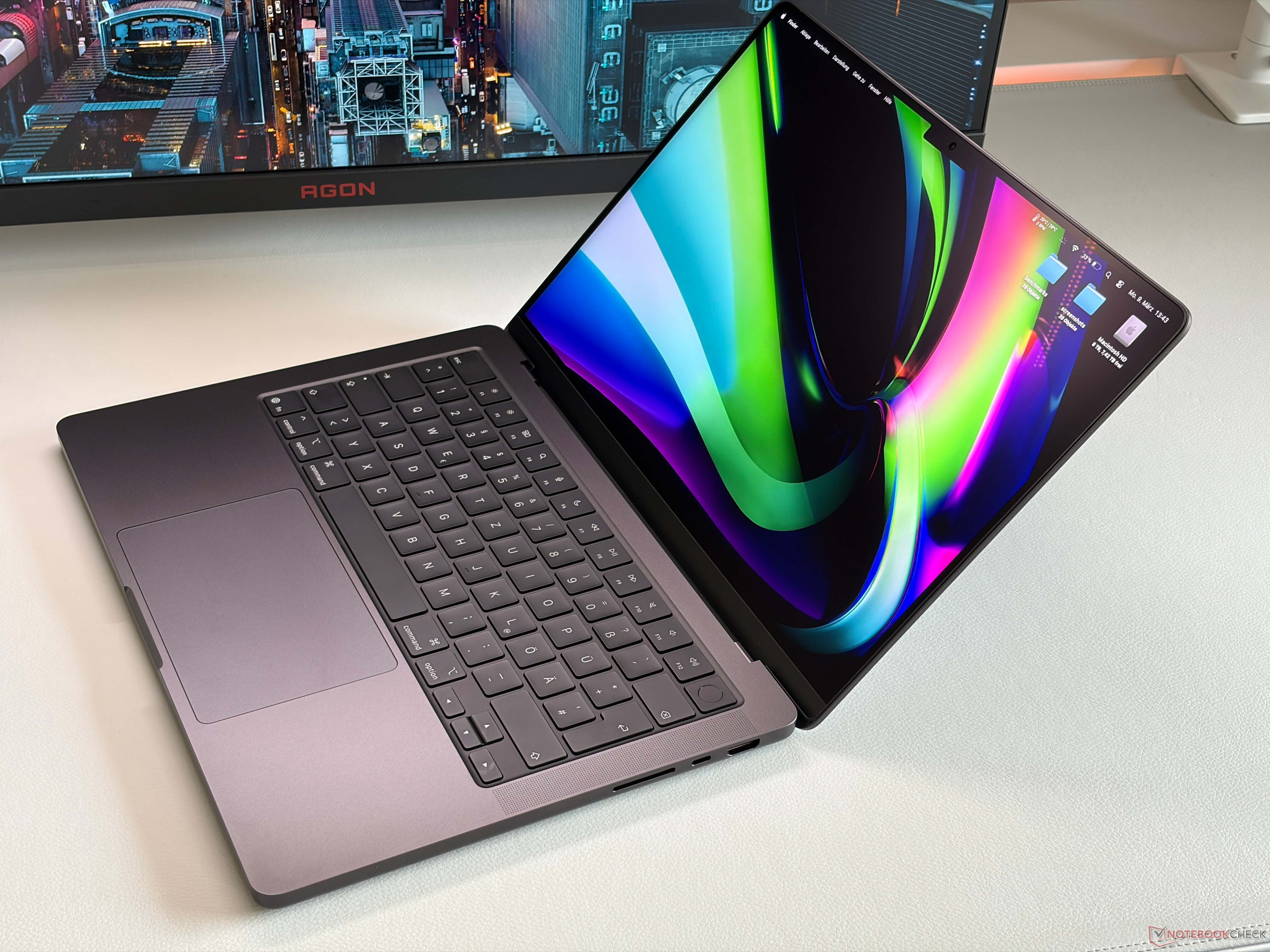 )
)
The device ultimately succeeds not by being perfect, but by excelling where it matters most for its target audience while accepting that some performance potential must be sacrificed for portability and thermal management.
Comments
Please log in or register to join the discussion