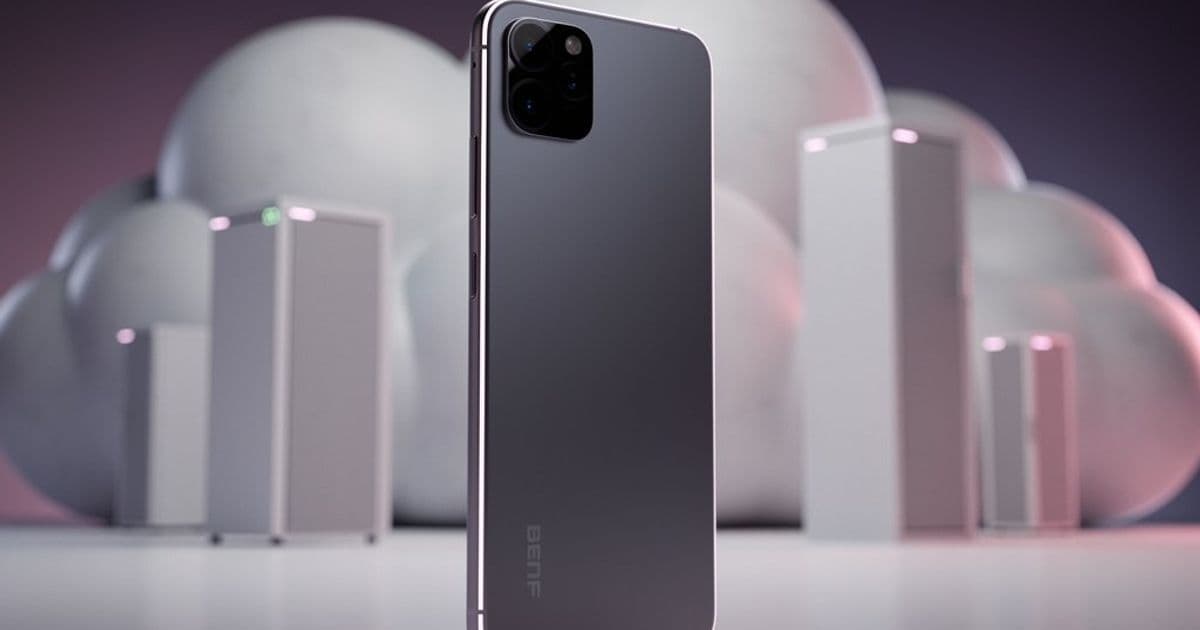
Apple's confirmed partnership with Google to use Gemini models for the new Siri represents a fundamental shift in its AI strategy, with a reported multi-billion dollar contract that will see the models run on Apple's own Private Cloud Compute infrastructure. This move, following OpenAI's reported decision to decline a similar partnership, has significant implications for iOS developers, platform consistency, and the competitive landscape of on-device AI.
Apple's announcement this week that Google's Gemini AI models will power the new Siri marks one of the most significant strategic shifts in the company's recent history. While the official statement focused on the multi-year nature of the deal and privacy assurances, the financial implications and competitive dynamics reveal a much deeper story about Apple's AI ambitions and the challenges of building a competitive large language model from scratch.
The Financial Reality: A Multi-Billion Dollar Commitment
The Financial Times report provides crucial context that Apple's own announcement lacked. According to sources familiar with the agreement, the deal is structured as a cloud computing contract that could see Apple paying "several billion dollars to Google over time." While vague, this aligns with industry speculation that Apple is paying approximately $1 billion annually for access to Gemini's capabilities.
For context, this represents a substantial investment but one that Apple can likely justify through its existing search revenue. The company reportedly receives over $20 billion annually from Google for search engine placement on its devices. Even at $1 billion per year for Gemini, the AI partnership represents a fraction of that revenue stream while potentially delivering a more sophisticated Siri experience.
The financial structure is particularly interesting from a developer perspective. By framing this as a cloud computing contract rather than a simple licensing deal, Apple maintains flexibility in how it deploys and scales the service. This approach allows for potential cost adjustments based on usage patterns and provides a framework for future expansion into other AI services beyond Siri.
Technical Implementation: Privacy-First AI in Practice
What makes this partnership particularly compelling for iOS developers is Apple's insistence that Gemini models will run on its own Private Cloud Compute (PCC) servers. This isn't merely a branding exercise—it represents a fundamental architectural decision that has significant implications for privacy, latency, and developer integration.
Private Cloud Compute, first introduced with Apple Intelligence, is Apple's proprietary infrastructure designed to process AI requests without exposing user data to external servers. By running Gemini models on PCC, Apple achieves several objectives:
- Data Sovereignty: User queries never leave Apple's controlled environment, maintaining the privacy standards Apple has built its brand around.
- Latency Optimization: Processing within Apple's infrastructure allows for better integration with iOS system services and faster response times.
- Cost Control: While the initial investment in PCC infrastructure is substantial, it provides long-term cost advantages compared to pure cloud API usage.
For developers, this means that Siri's new capabilities will be accessible through the same privacy-preserving APIs they're already familiar with. The SiriKit framework and Core ML APIs will likely see updates to expose Gemini-powered features, but the underlying privacy model remains consistent with Apple's existing approach.
The OpenAI Decision: Strategic Implications
The report's claim that OpenAI made a "conscious decision" to decline an Apple partnership adds a fascinating competitive dimension. According to sources close to the company, OpenAI chose to focus on building its own AI device rather than becoming a "custom model provider for Apple." This decision, reportedly made in autumn of last year, suggests several strategic considerations:
For OpenAI: Providing custom models for Apple would have created a dependency relationship and potentially limited their ability to compete directly in the hardware space. By maintaining independence, OpenAI preserves its ability to launch its own consumer-facing AI products.
For Apple: The rejection likely accelerated the company's partnership with Google and may have influenced the aggressive timeline for Siri's overhaul. It also means Apple maintains full control over the user experience without a third-party AI provider potentially competing for attention within their own ecosystem.
For Developers: This separation of concerns creates clearer boundaries. Developers working with Siri will be dealing with Apple's implementation of Gemini, not OpenAI's models. This should result in more consistent behavior and better integration with iOS frameworks, though it may also mean fewer cutting-edge features compared to what OpenAI might have provided.
Impact on iOS Development
The Gemini partnership will manifest in several ways that iOS developers need to understand:
SiriKit Evolution
The SiriKit framework, which allows apps to integrate with Siri, will likely see significant updates. Currently, SiriKit supports a limited set of intents and domains. With Gemini's natural language understanding capabilities, we can expect:
- Expanded Intent Recognition: More sophisticated parsing of user requests, reducing the need for rigid command structures.
- Contextual Understanding: Better handling of multi-turn conversations and maintaining context across different app interactions.
- Cross-App Coordination: Improved ability to chain actions across multiple applications based on a single user request.
Core ML Integration
While Gemini models will primarily run on Apple's servers, the company will likely provide distilled versions of these models for on-device use. This follows Apple's established pattern of server-side heavy lifting combined with on-device inference for privacy and speed.
Developers should prepare for:
- Larger Model Sizes: On-device models may grow in size to handle more complex tasks locally.
- New APIs: Additional Core ML APIs for specific AI tasks that leverage Gemini's capabilities.
- Performance Requirements: Higher computational demands may affect battery life and thermal management, requiring more careful optimization.
Privacy-Preserving AI Patterns
Apple's PCC architecture creates a unique development paradigm. Unlike cloud-based AI services where data leaves the device, Apple's approach requires developers to work within strict privacy boundaries:
- Data Minimization: Apps will need to provide only the necessary context for AI processing.
- Transparent Processing: Users will see indicators when AI processing occurs, similar to the current Siri listening indicators.
- Local Fallbacks: Apps should implement graceful degradation when network conditions don't support PCC connectivity.
Cross-Platform Considerations
For developers maintaining apps on both iOS and Android, this development creates an interesting asymmetry. Android's Gemini integration is already available through Google's AI SDKs, offering developers direct access to model capabilities. iOS developers will receive a curated, privacy-focused implementation through Apple's frameworks.
This means:
- Feature Parity Challenges: Some Gemini features available on Android may not come to iOS immediately due to Apple's privacy constraints.
- API Differences: Developers will need to implement platform-specific AI features rather than using a unified cross-platform AI SDK.
- Testing Complexity: AI behavior may differ between platforms due to different model implementations and privacy settings.
The Competitive Landscape
Apple's decision to partner with Google rather than build its own competitive LLM from scratch reflects pragmatic engineering leadership. Training a model capable of competing with GPT-4 or Gemini Ultra requires:
- Massive Computational Resources: Billions of dollars in GPU infrastructure.
- Specialized Talent: Access to top AI researchers and engineers.
- Data Access: Vast datasets for training, which Apple has historically limited due to privacy concerns.
By partnering, Apple can focus on integration, privacy, and user experience while leveraging Google's AI research investment. This mirrors Apple's historical approach with mapping services (using TomTom initially) and search (paying Google for placement).
Timeline and Developer Preparation
The multi-year nature of the deal suggests a gradual rollout rather than an immediate transformation. Developers should anticipate:
Short-term (2026): Initial Siri improvements with basic Gemini integration, likely limited to specific domains like messaging, calendar, and reminders.
Medium-term (2027-2028): Expanded capabilities including more sophisticated natural language understanding, better context awareness, and deeper app integration.
Long-term (2029+): Potential expansion of Gemini-powered features beyond Siri into other system services and developer APIs.
Strategic Recommendations for Developers
Audit Current SiriKit Integration: Review existing Siri shortcuts and intents. The new capabilities may allow for simplification or enhancement of current implementations.
Plan for Gradual Enhancement: Don't expect a complete rewrite of Siri interactions immediately. Apple typically rolls out features incrementally to ensure stability.
Consider Privacy-First Design: As AI capabilities expand, users will become more sensitive to data handling. Design your apps with privacy as a core feature, not an afterthought.
Stay Informed on API Changes: The Siri and Core ML frameworks will see significant updates.
Test Across Device Classes: AI performance will vary between iPhone models due to different chip capabilities. Ensure your app provides good experiences across the device lineup.
The Bigger Picture
This partnership represents Apple acknowledging the reality that building competitive AI models requires scale and expertise that may not align with its core competencies. By focusing on integration, privacy, and user experience while leveraging Google's AI research, Apple can deliver a competitive Siri without diverting resources from its hardware and software innovations.
For the iOS development community, this means the AI capabilities they've been waiting for are finally arriving, but with Apple's signature privacy and integration focus. The challenge will be adapting to these new capabilities while maintaining the standards users expect from iOS apps.
The multi-billion dollar investment signals Apple's serious commitment to AI-powered experiences. Developers who understand and prepare for these changes will be well-positioned to create compelling applications that leverage the new Siri's capabilities while respecting user privacy and platform conventions.
Related Resources
- Apple Intelligence Documentation - Official developer resources for Apple's AI platform
- SiriKit Programming Guide - Current implementation guidelines
- Core ML Framework - Machine learning integration for iOS apps
- Private Cloud Compute Overview - Apple's privacy-preserving AI infrastructure
- Google Gemini API Documentation - Technical details on Gemini models (for reference)
The partnership between Apple and Google marks a new chapter in mobile AI development. While the financial terms are substantial, the real value will be measured in the developer experiences and user capabilities that emerge from this collaboration over the coming years.
Comments
Please log in or register to join the discussion