Approximately 50% of Democratic lawmakers boycotted President Trump's 2026 State of the Union address, marking a significant escalation in partisan tensions and congressional attendance patterns.
Around half of Democrats skip Trump State of the Union
Approximately 50% of Democratic lawmakers boycotted President Trump's 2026 State of the Union address, marking a significant escalation in partisan tensions and congressional attendance patterns.
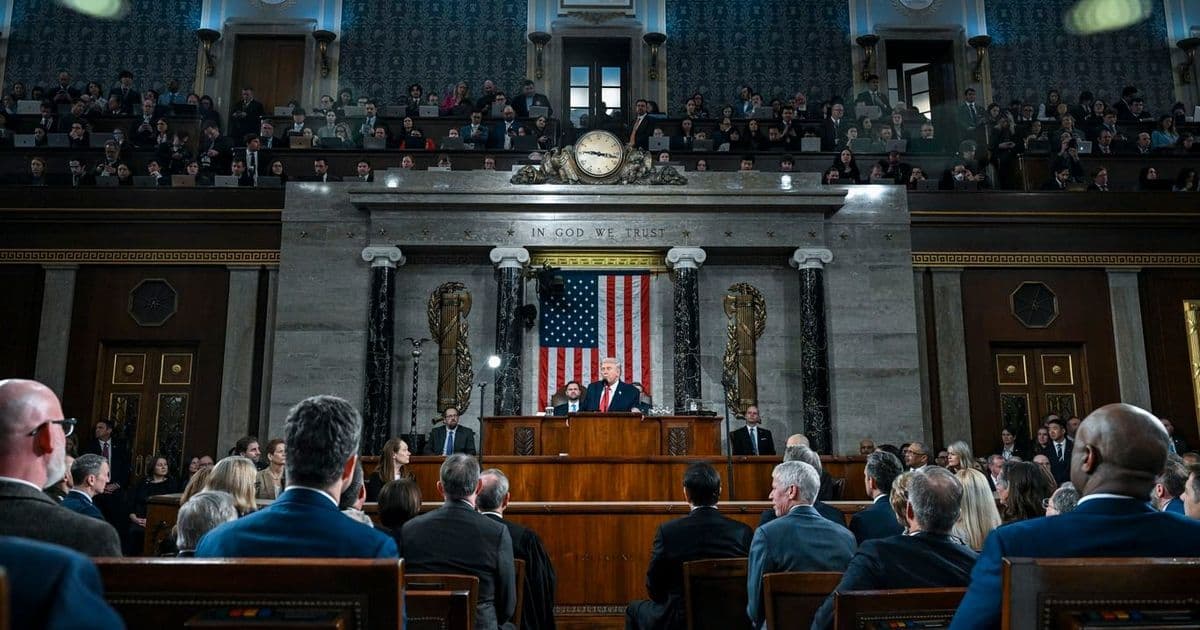
Trump delivers the State of the Union address at the U.S. Capitol on Feb. 24, 2026. Photo: Kenny Holston-Pool/Getty Images
The boycott represents a sharp departure from traditional congressional protocol, where attendance at the annual presidential address has historically been near-universal regardless of party affiliation. Sources indicate that between 100-120 Democratic members of Congress chose not to attend the Feb. 24 address, compared to typical attendance figures of 95%+ in previous years.
Key factors driving the boycott include:
- Ongoing disputes over executive authority and congressional oversight
- Recent legislative gridlock on major policy initiatives
- Heightened rhetoric between the White House and Democratic leadership
- Strategic positioning ahead of the 2026 midterm elections
Democratic leadership has not issued an official unified statement on the boycott, with individual members citing various reasons for their absence. Some lawmakers stated they would watch the address remotely or read the transcript, while others indicated they would use the time for constituent meetings or policy work.
The White House characterized the boycott as "petty political theater" that undermines democratic institutions. Press Secretary Sarah Matthews stated that "elected officials have a duty to show up and hear directly from the president, regardless of party."
Historical context: While skipping presidential addresses is not unprecedented, the scale of this boycott is notable. Previous instances of mass absences have typically involved smaller numbers and specific policy disagreements rather than broad partisan rejection.
Political analysts suggest the boycott could have several implications:
- Further erosion of bipartisan cooperation on legislative priorities
- Increased pressure on moderate Democrats in swing districts
- Potential backlash from voters who expect congressional attendance at ceremonial events
- Reinforcement of Trump's narrative about Democratic obstructionism
The State of the Union address proceeded with reduced Democratic presence in the House chamber, though Republican members filled the available seats. Trump's speech focused on economic achievements, national security, and calls for unity, though the empty seats on one side of the aisle provided a visual reminder of the current political divisions.
Looking ahead: The boycott raises questions about the future of this traditional presidential address and whether attendance will become increasingly politicized in an era of heightened partisan tensions. Some congressional observers suggest alternative formats or virtual participation may emerge as attendance patterns continue to shift.
Comments
Please log in or register to join the discussion