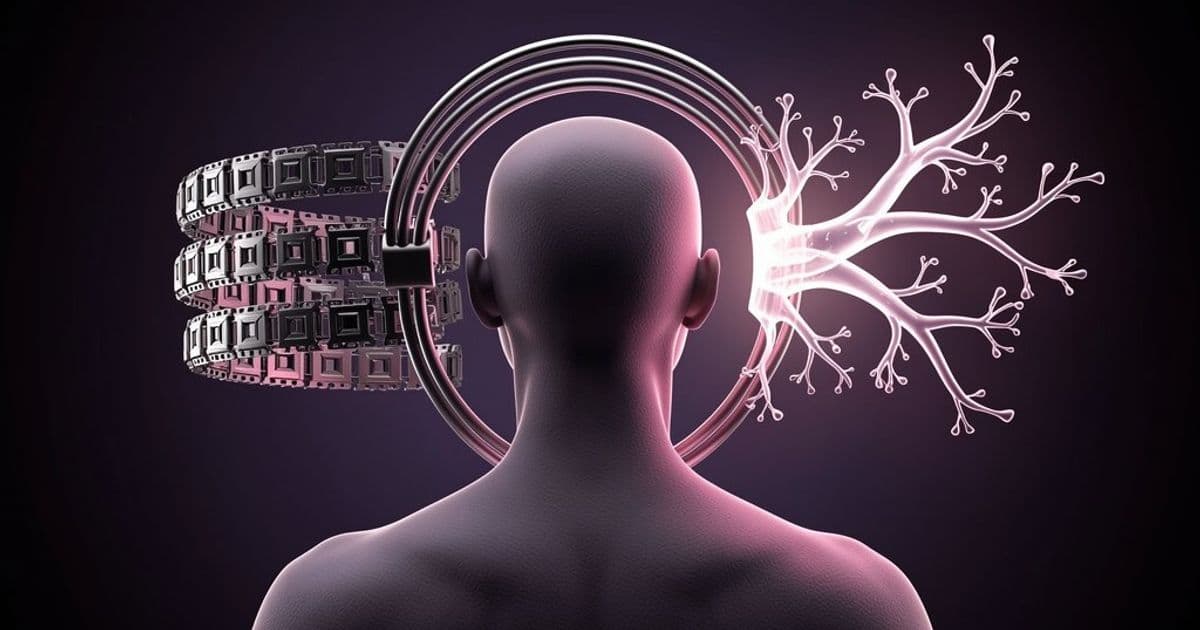
Isaac Asimov's 1957 short story "Profession" serves as a critical examination of a society reliant on rote learning via brain tapes, contrasting it with the necessity of original thought. The narrative follows George Platen, who discovers his inability to be 'Educated' is not a failure but a designation for a creative elite.
Isaac Asimov’s "Profession" is often cited as an allegorical critique of rigid educational systems, specifically those that prioritize rote memorization and standardized testing over critical thinking and creativity. Written in 1957, the story extrapolates the concept of vocational training to a galactic scale, where individuals are not taught but rather 'Educated' via direct neural imprinting of specialized knowledge tapes. The story functions as a warning about the limitations of automated learning and the danger of a society that outsources the development of its own intellectual capacity.
The Claim: Total Efficiency in Education
The story is set in a future where Earth functions as the exporter of specialized labor to the galaxy. The central premise is that human brains are patterned at birth to fit specific professions. On 'Education Day,' individuals receive tapes that implant the complete knowledge of a trade—be it Metallurgy, Computer Programming, or Pipe Fitting—directly into their minds. The claim is that this system is perfectly efficient: it produces a workforce with zero learning curves, instant expertise, and guaranteed job placement.
The protagonist, George Platen, believes in this system implicitly. He desires to be a Registered Computer Programmer and is confident that his aptitude, combined with the tape, will secure his future. He views the system as infallible, stating, "The analysts are never wrong." This belief represents the ultimate trust in institutional authority and standardized measurement.
What Is Actually New: The 'Feeble-Minded' Exception
The narrative twist reveals that the system is not designed for everyone. George fails his Education Day analysis not because he is unintelligent, but because his mind is structurally incapable of receiving superimposed knowledge. He is labeled 'feeble-minded' and sent to a care facility, a fate worse than death in a society that defines worth by profession.
However, the story reveals that this facility is actually an Institute for Higher Studies. The inability to be 'Educated' via tapes is a marker for a rare trait: the capacity for original, creative thought. Asimov posits that while 99.9% of the population is suited for rote application of existing knowledge, a tiny fraction (one in ten thousand) possesses the ability to generate new knowledge. These are the inventors, the scientists, and the social engineers who create the tapes and technologies that the rest of society consumes.
Limitations of the Tape System
Through George’s journey, Asimov exposes the fatal flaws of a tape-only education system:
Inability to Adapt: When George’s friend Trevelyan competes in a Metallurgy Olympics, he fails because the contest uses a new model of spectrograph (Beeman) while his education tapes covered the old model (Hensler). A tape-educated individual cannot adapt to new technology without a new tape. They lack the foundational problem-solving skills to figure out the new device.
Dependence on the Source: The story highlights a circular dependency. If all knowledge comes from tapes, who makes the tapes? Who invents the Beeman spectrograph? The system relies on a hidden class of un-Educated creatives to feed the data into the system. Without them, the technology stagnates.
Psychological Fragility: The tape-educated individuals, like Trevelyan, are helpless without the system. They cannot learn independently. George observes that Trevelyan wouldn't even attempt to learn about the new machine from a book because he believed it was impossible without a tape. The system creates a population that has lost the habit of learning.
The Narrative Conclusion
George eventually accepts his role as one of the creative elite. The story concludes with the revelation that the brutal process of being labeled a failure is a necessary filter. It ensures that only those with the sheer will to reject the status quo and create their own path survive to become the innovators society needs.
Asimov’s "Profession" remains a potent commentary on the difference between knowing facts and understanding concepts. It suggests that while automation can teach a man what to do, it cannot teach him how to think, and a society that relies solely on the former is doomed to stagnation.
You can read the full text of Profession by Isaac Asimov at abelard.org.
Comments
Please log in or register to join the discussion